KENGO KUMA (B. 1954) Wooden Cloud Pavilion
Лот 36
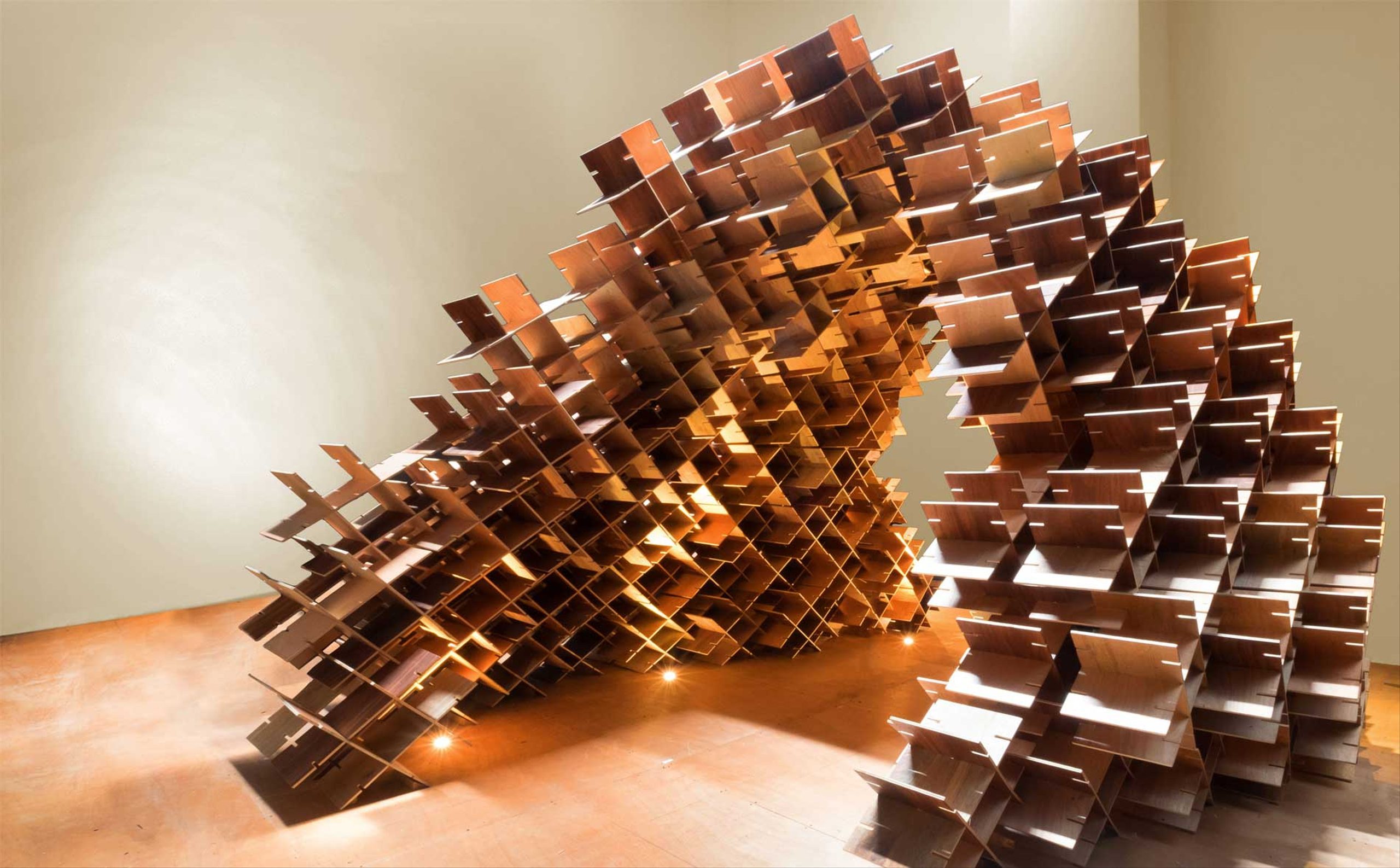
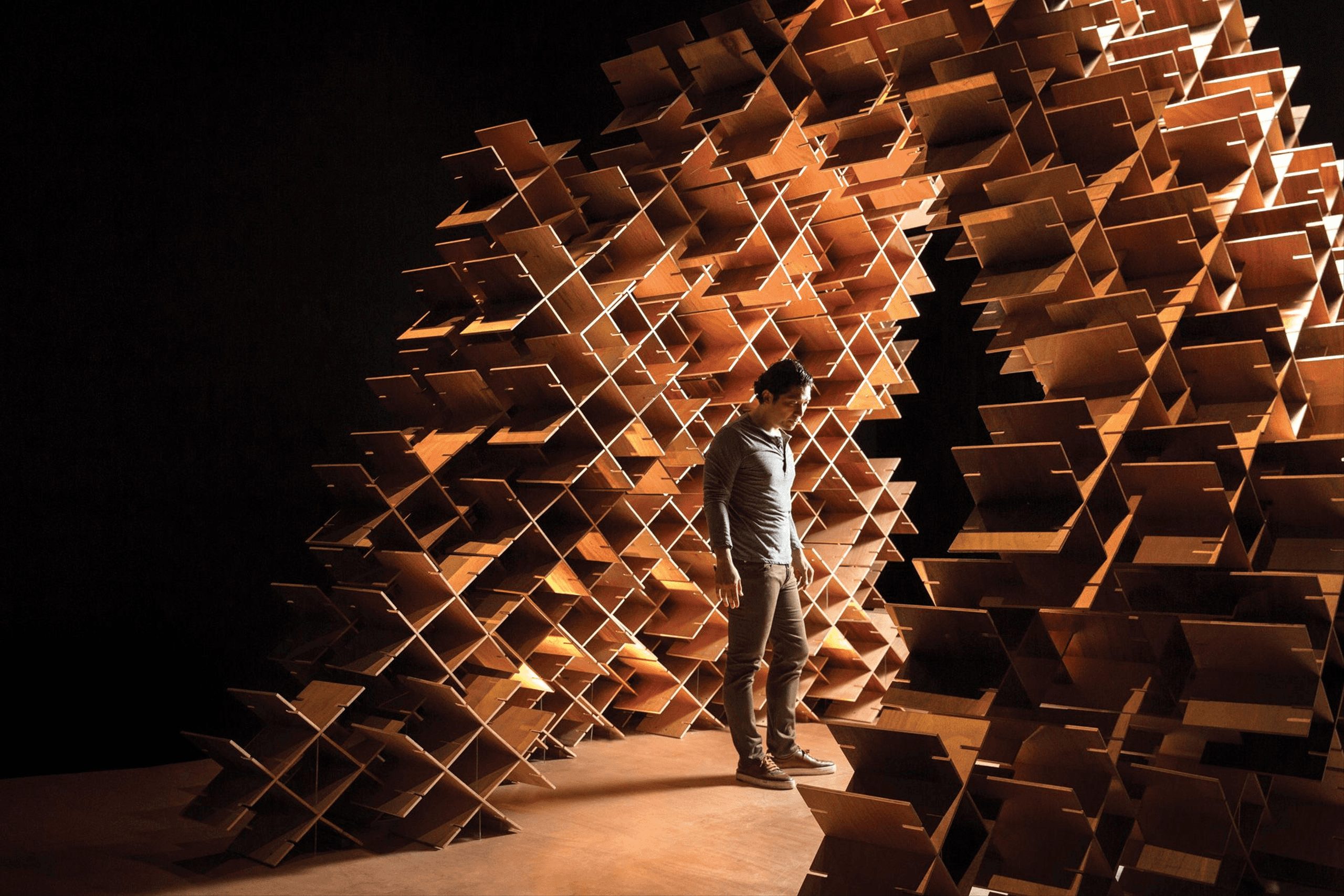

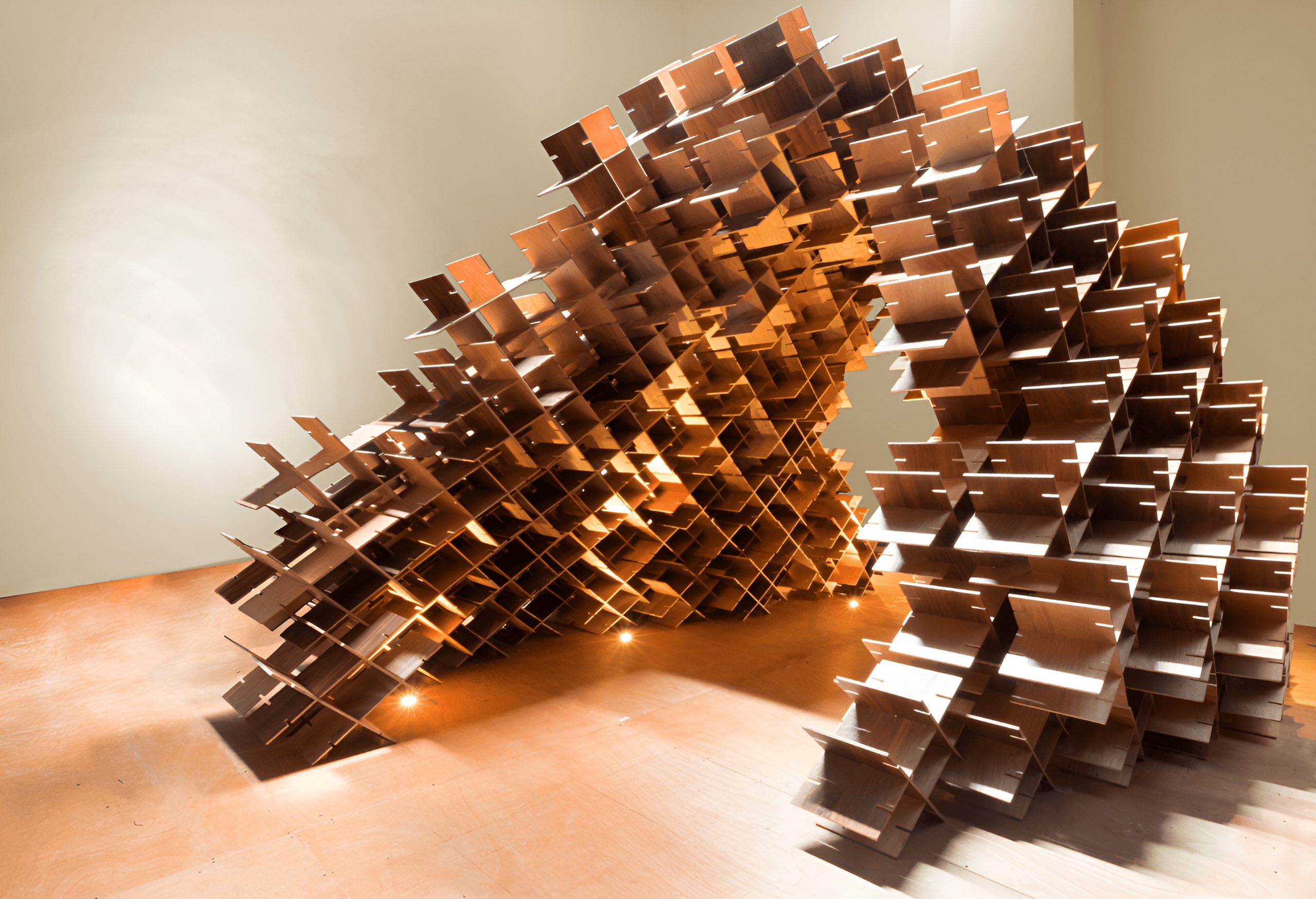
Dimensions: L 8 m × W 4 m × H 3 m
General area: 32 m², interior area: 10 m²
Provenance:
Private collection
The Wooden Cloud Pavilion is a mobile, multifunctional structure conceived as an intimate space for tea, meditation and quiet retreat. Its lightweight architecture is entirely made from a series of identical 6 mm-thick birch plywood panels, each measuring 300 × 600 mm.
Rather than relying on conventional hardware, the panels are assembled through traditional Japanese Kangou joinery, in which precisely cut slots allow the elements to interlock directly. The joints are initially left slightly loose, allowing the structure to be adjusted during assembly. Once the panels are connected, the pavilion's own weight gradually tensions the joints, creating a stable and self-supporting form.
This ingenious construction system allows the pavilion to be easily assembled, dismantled and adapted to different environments and uses. The resulting organic structure evokes the simplicity and warmth of a nest, while recalling the fundamental concept of architecture as a shelter: a lightweight, protective space designed around the essential needs of human habitation.
Kengo Kuma is one of Japan's most influential contemporary architects. He founded Kengo Kuma & Associates in 1990 and is renowned for an architectural language that combines traditional Japanese craftsmanship with innovative materials, natural textures and a sensitive integration into the surrounding landscape.
His internationally acclaimed projects include the V&A Dundee in Scotland, the Japan National Stadium in Tokyo and the Nezu Museum in Tokyo. His work often explores lightness, transparency and the relationship between architecture and nature, creating spaces that emphasise harmony, materiality and human experience.