JOSEPH KARL STIELER (1781-1858), ATTRIBUTED TO Prince Eugène de Beauharnais (1781-1824)
Лот 166
Продано
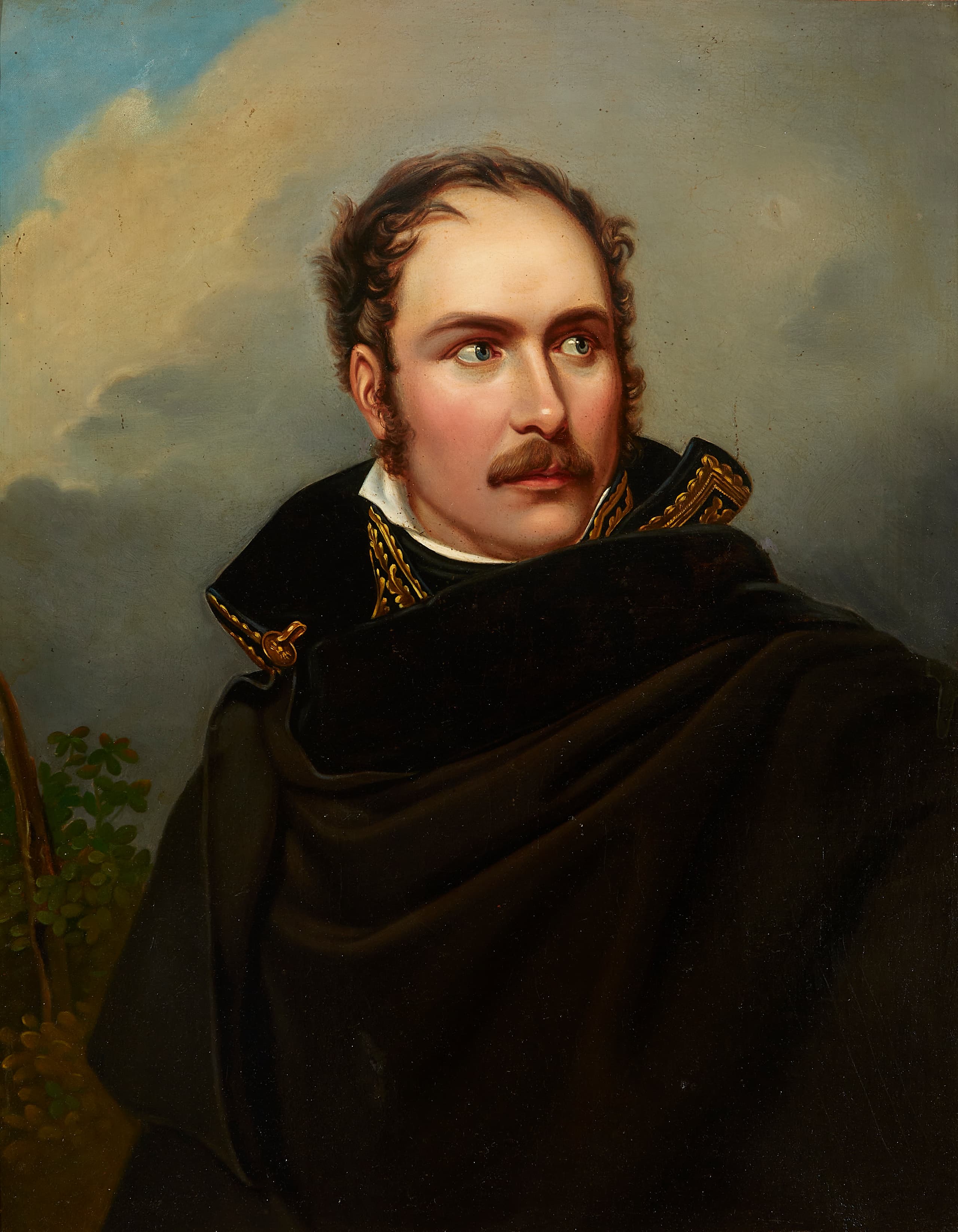
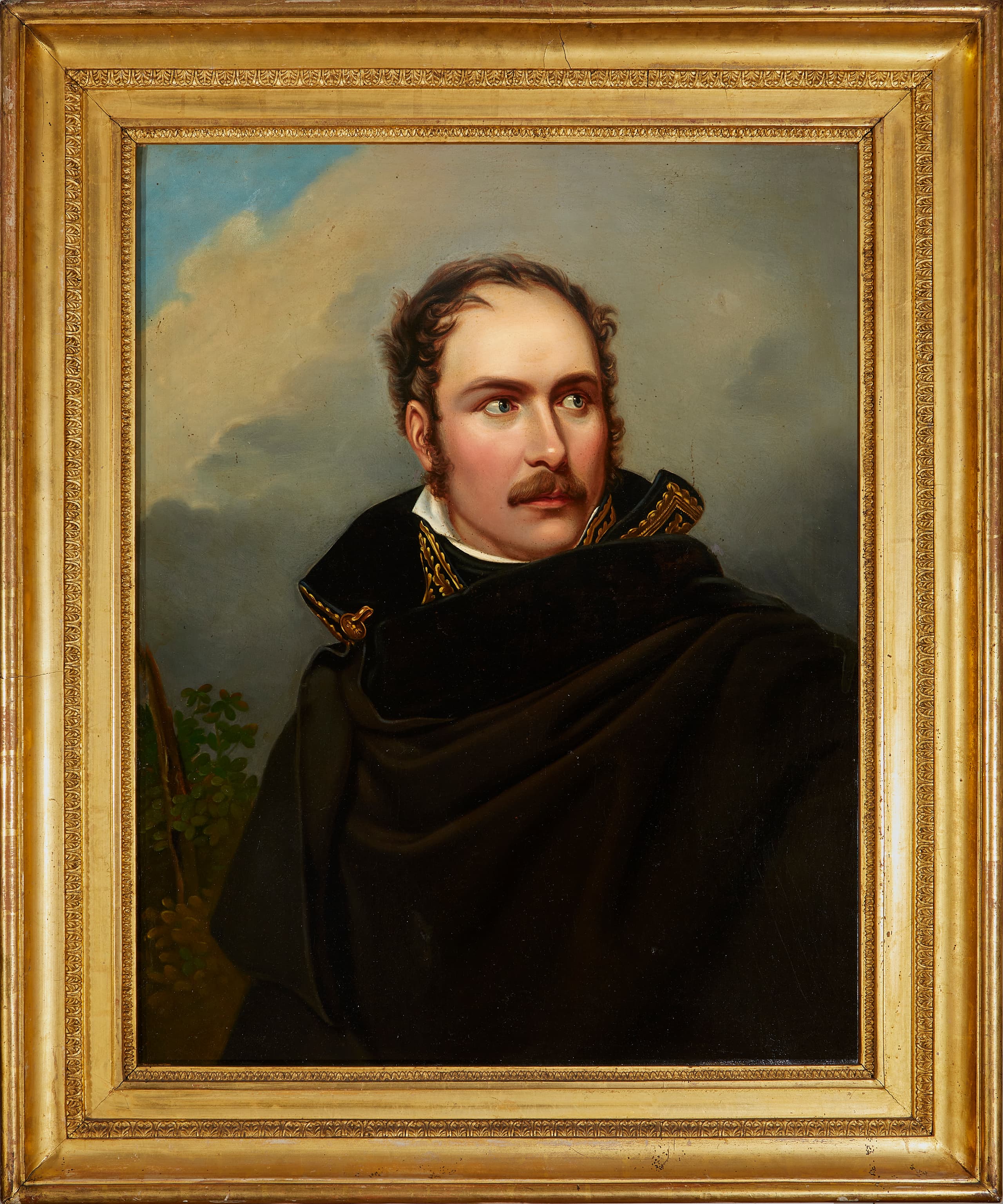
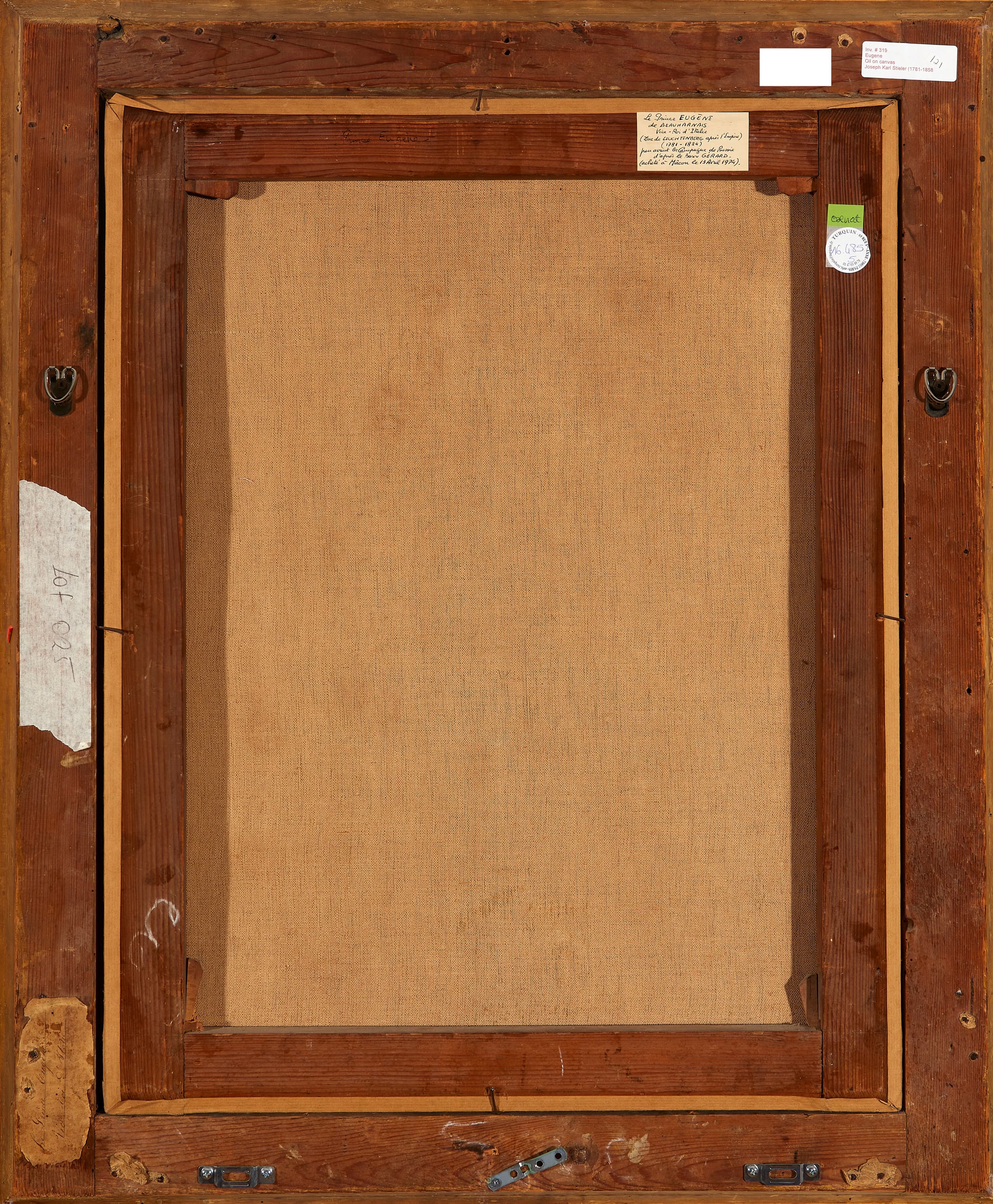
historical label 'Le Prince Eugène de Beauharnais/ Vice-Roi d'Italie (Duc de Leuchtenberg après l'Empire)/ (1781-1824)/ peu avant la Campagne de Russie/ D'après le Baron Gérard/ (acheté à Mâcon le 13 avril 1974' (on the reverse of the frame)
oil on canvas
71.2 x 56.3 cm
PROVENANCE:
Osenat, L'Empire à Fontainebleau, souvenirs historiques tableaux, dessins, souvenirs de l'Empereur Napoléon 1er et de la famille impériale, armes de collection, 20.11.16, lot 410
Private collection
There are several known portraits of Eugène de Beauharnais, the Emperor's adopted son: by Baron Gérard in military uniform (private collection), standing in the costume of the King of Italy (Versailles, Musée National du Château) and by Appiani (Château de Malmaison).
This portrait shows Eugène de Beauharnais aged, around 1815-1816, draped in a large coat (it is known that he was sensitive to cold After the Russian campaign). After the fall of the Empire and the riots in Milan in April 1814, Eugène abandoned his viceroyalty of Italy and took refuge with his family-in-law in Munich: he had married Augusta-Amélie de Wittelsbach, eldest daughter of King Maximilian of Bavaria, in 1806. In contrast to earlier official portraits, Joseph Karl Stieler (1781-1858) created a romantic image of Eugène de Beauharnais.
Stieler, pupil of David and Baron Gérard, was one of the painters of the Bavarian royal family, known for his portraits of Ludwig I and Beethoven. Around 1823, Stieler painted another portrait of Eugène, in uniform as a knight of the Order of the Golden Fleece (Paris, Musée de l'Armée).
Although the original of this portrait by Joseph Karl Stieler has not been located, another version of this portrait by Butz, After Joseph Karl Stieler, is exhibited in the Château de Malmaison.