PALEKH LACQUER PANEL, K.N. SAFONOV AFTER N.A. PRAVDIN, 1931
Lotto 382
8001 200
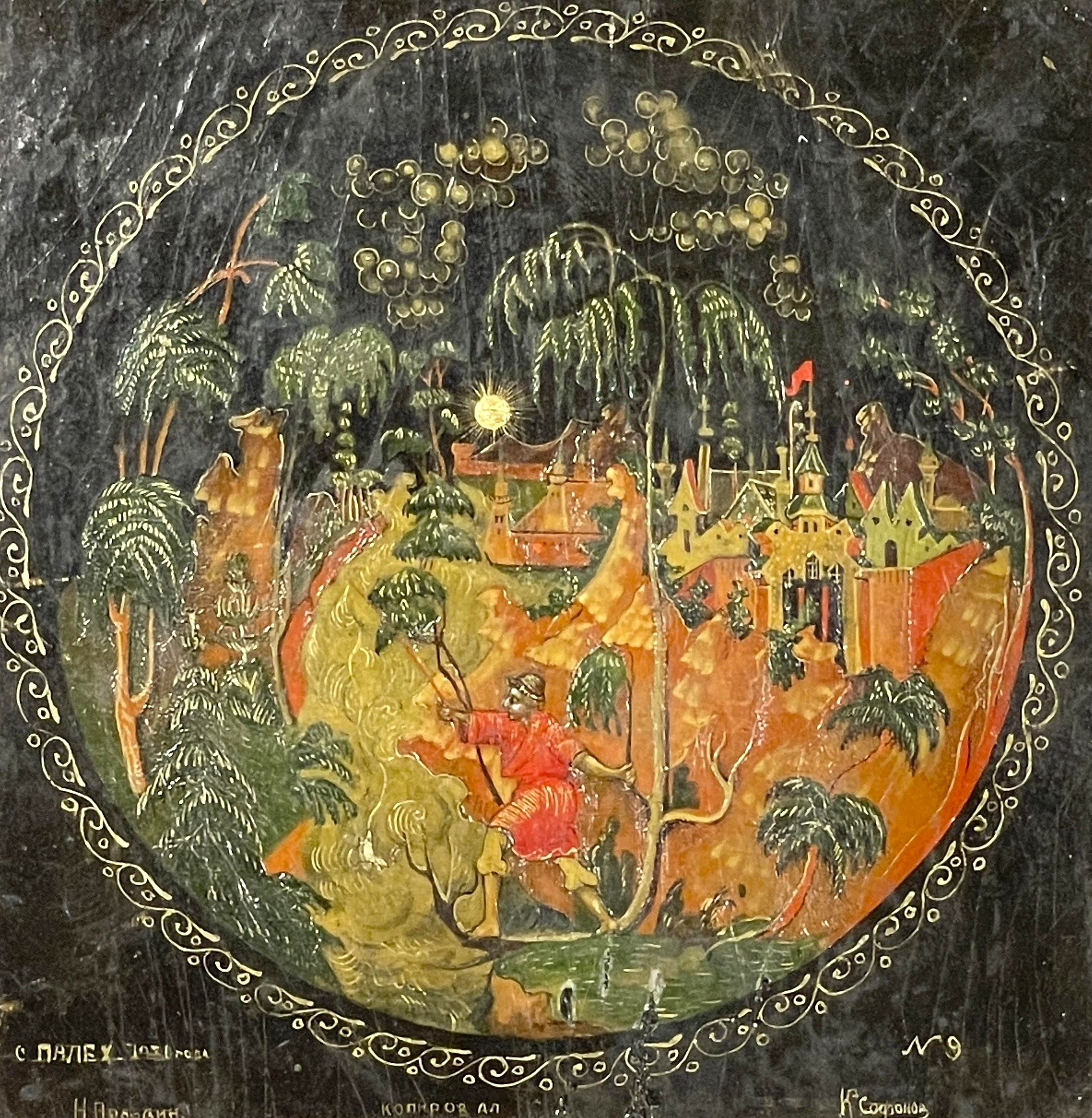
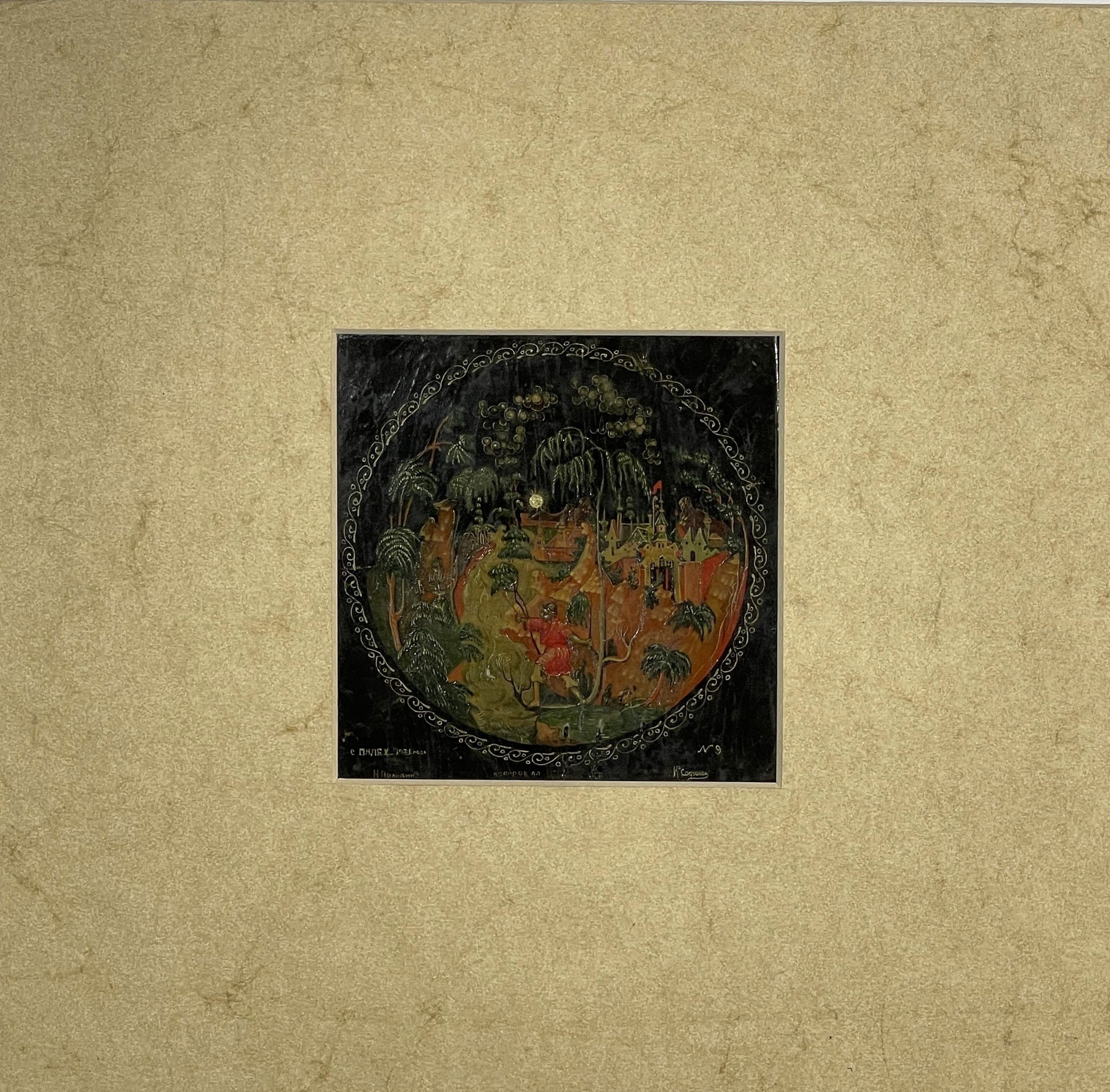
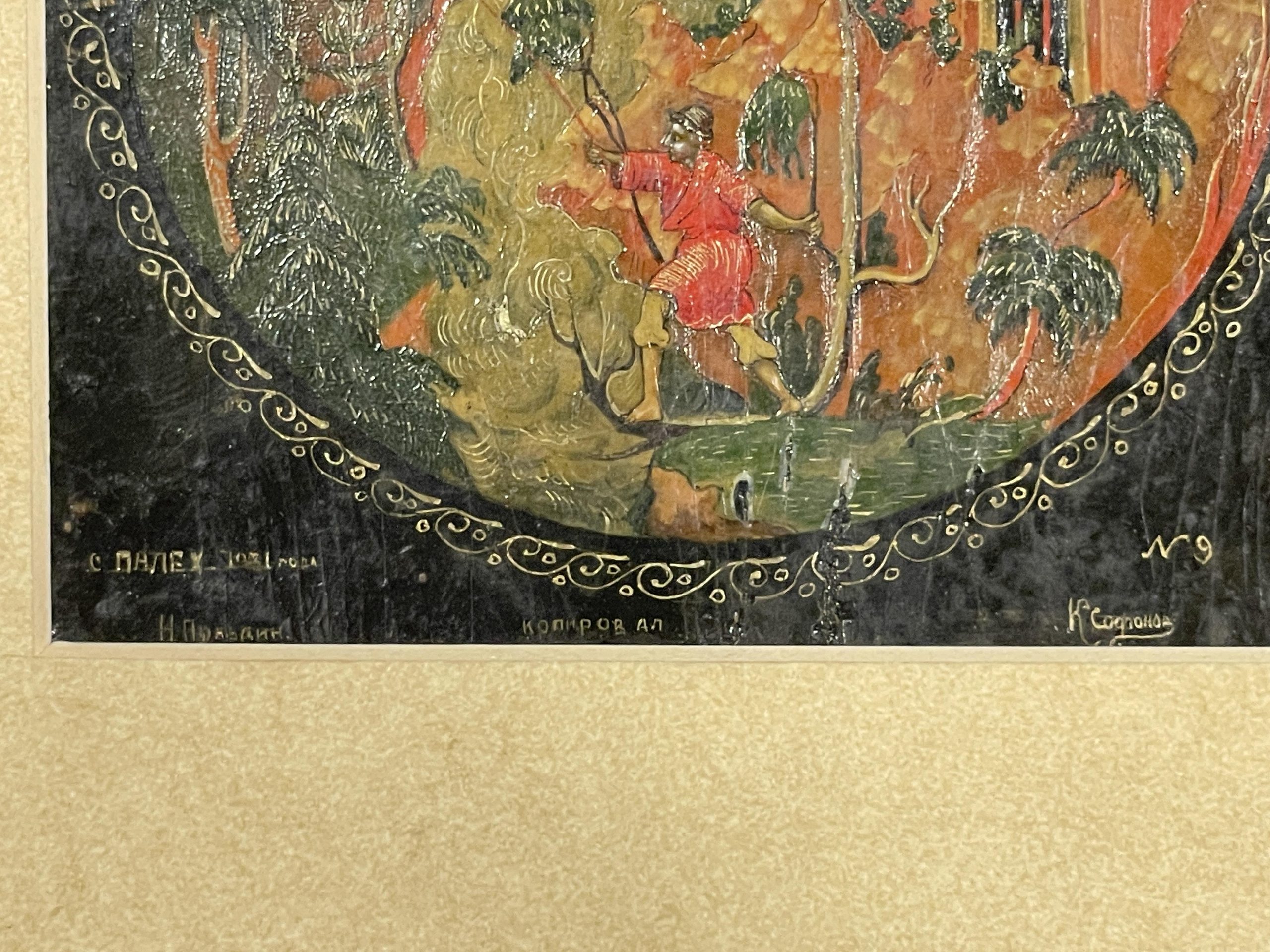
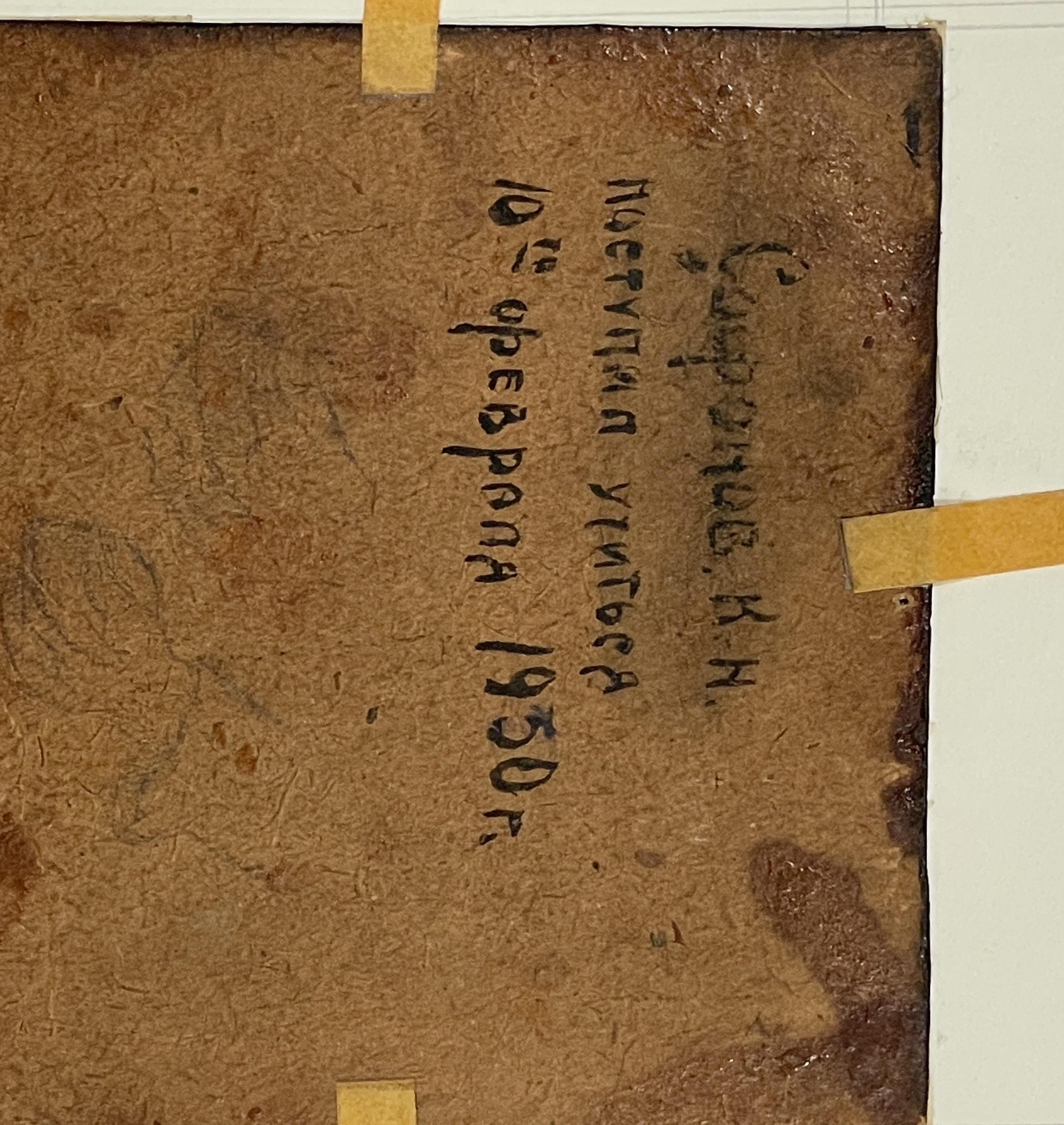
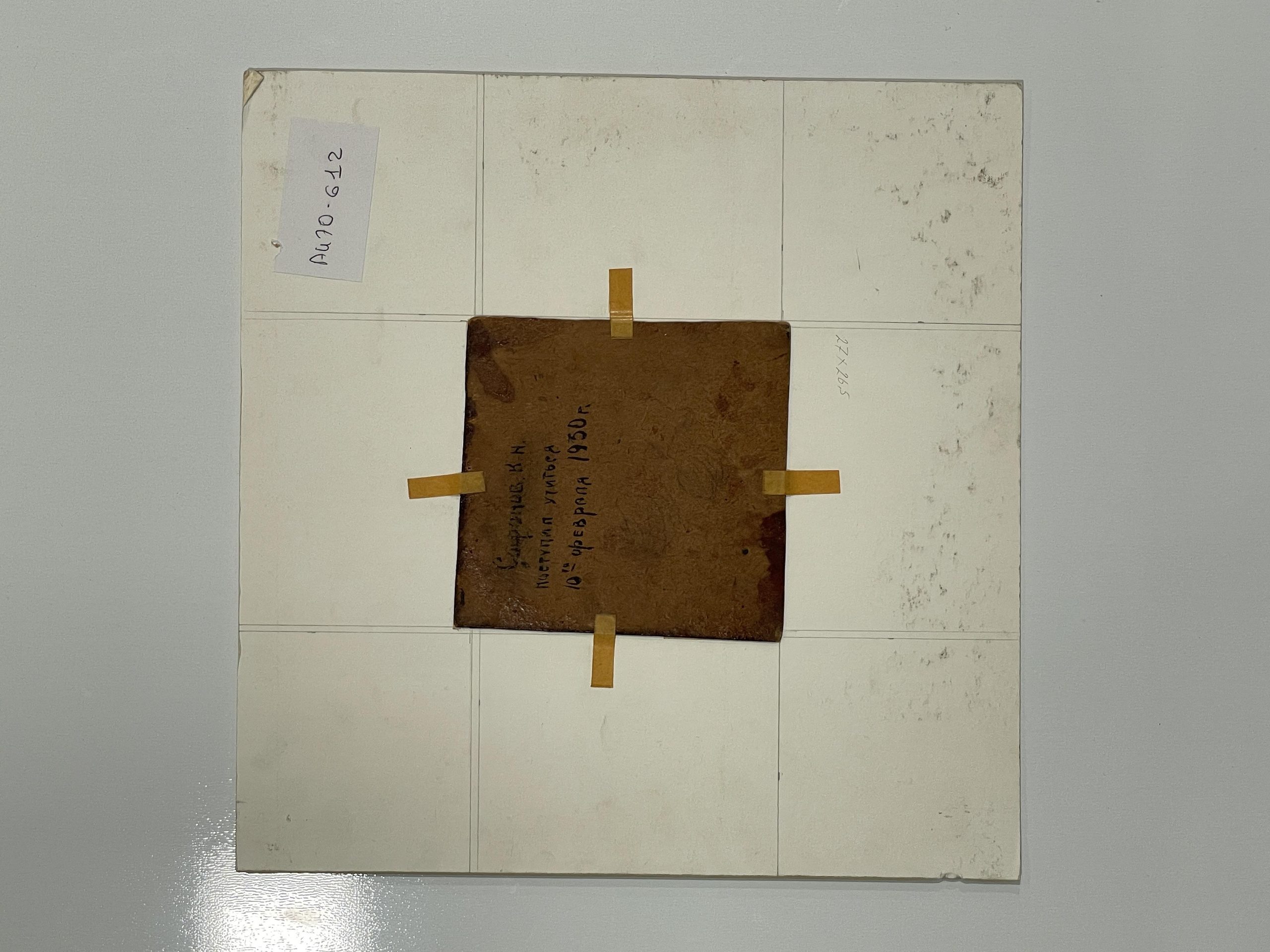
signed in Cyrillic and dated ‘Palekh 1931 goda’ (lower left) and inscribed in Cyrillic ‘N Pravdin kopiroval K Sofonov’ (along the lower edge), inscribed in Cyrillic ‘Sofonov K.N. / postupil ichitsya / 10 February 1930’ (on the reverse)
10.9 × 10.5 cm
The present panel is a rare example of early Soviet Palekh lacquer painting, dating from the period associated with the emergence of so-called Agit-Palekh during the 1920s and 1930s.
Following the Russian Revolution, Palekh’s traditional icon painters adapted their centuries-old techniques to lacquer miniature painting, replacing religious imagery with secular subjects inspired by Russian folklore, fairy tales, rural life and Soviet ideology. Founded in 1924, the Artel of Ancient Painting aimed to preserve the traditions of Russian icon painting by adapting its techniques to lacquer miniature painting.
Dated 1931, the present work depicts a scene inspired by Russian folklore. The inscription indicates that it was copied by Konstantin Safonov (1914–1942) after Nikolai Pravdin (1893–1981). Trained in traditional icon painting, Pravdin joined the Artel of Ancient Painting in 1930, initially producing genre and rural scenes before turning primarily to portrait miniatures, including representations of Soviet leaders such as Lenin and Stalin. Safonov, a Palekh-born artist from a family of icon painters, also joined the Artel in 1930. The inscription on the reverse, recording his entry into training on 10 February 1930, suggests that the present panel may have been executed as a student exercise.