FRANCESCO LOCATELLI (1687–1770) Lettres moscovites. Paris: Huart l'ainé, 1736. In French.
Lotto 937
200250
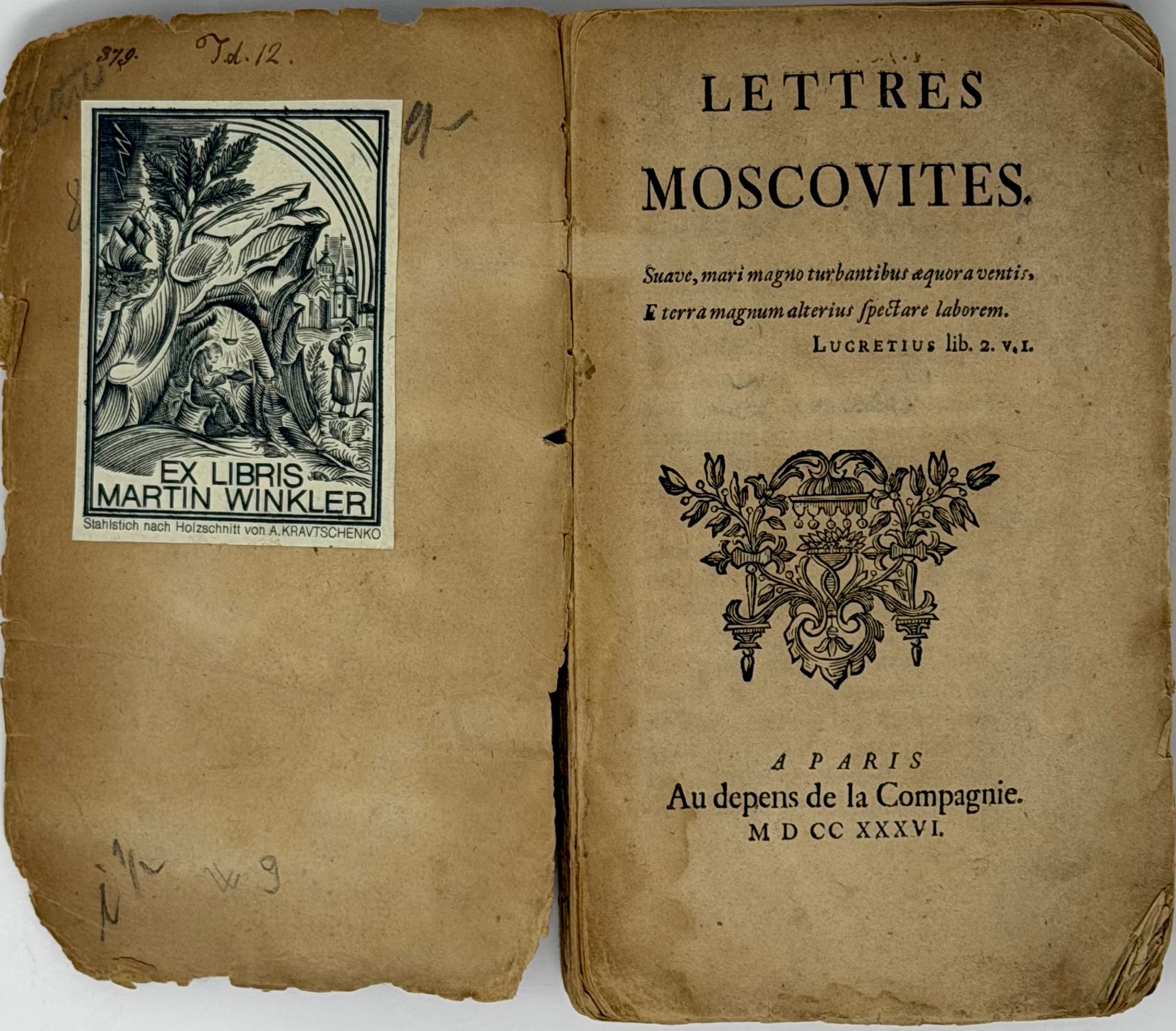
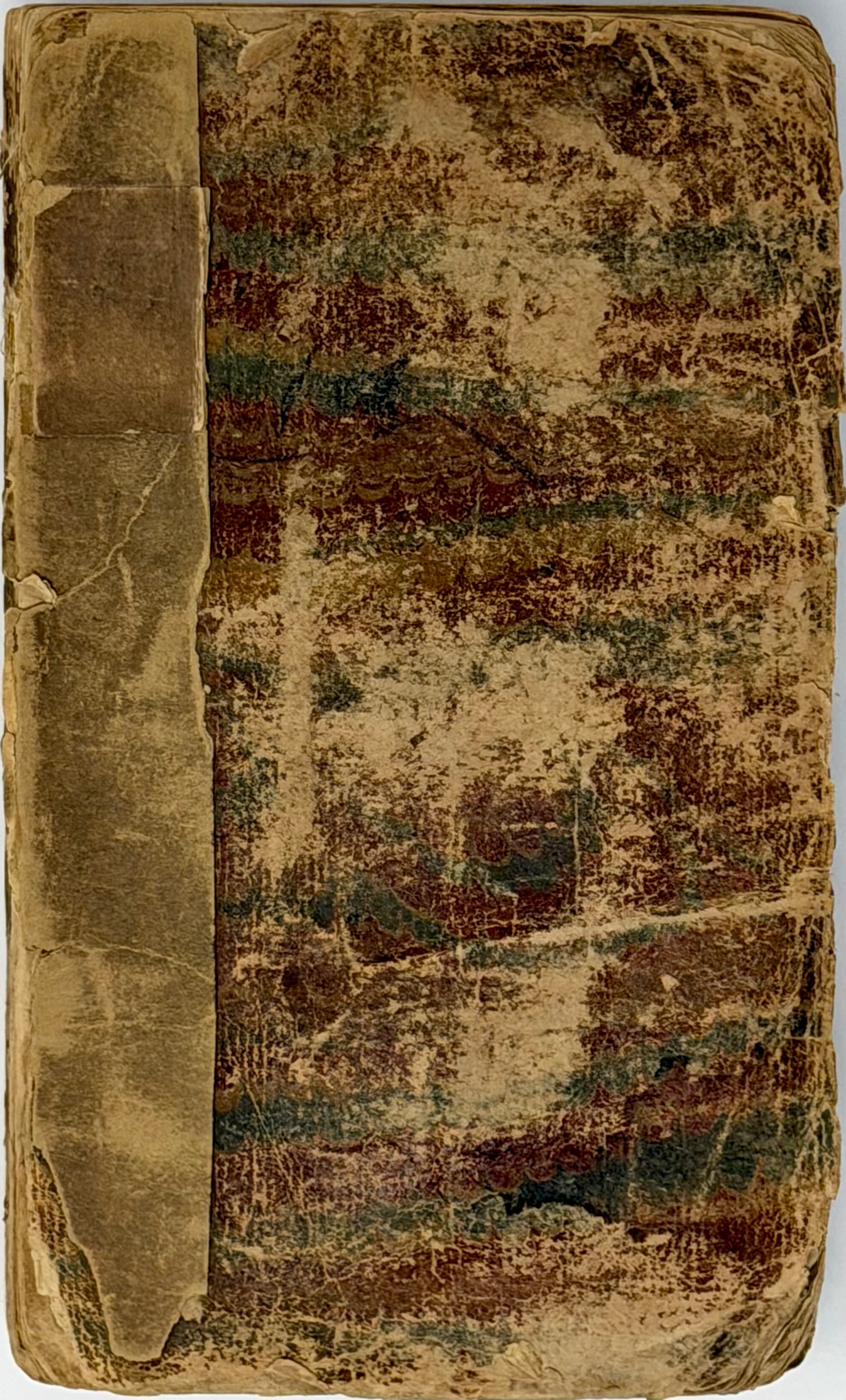
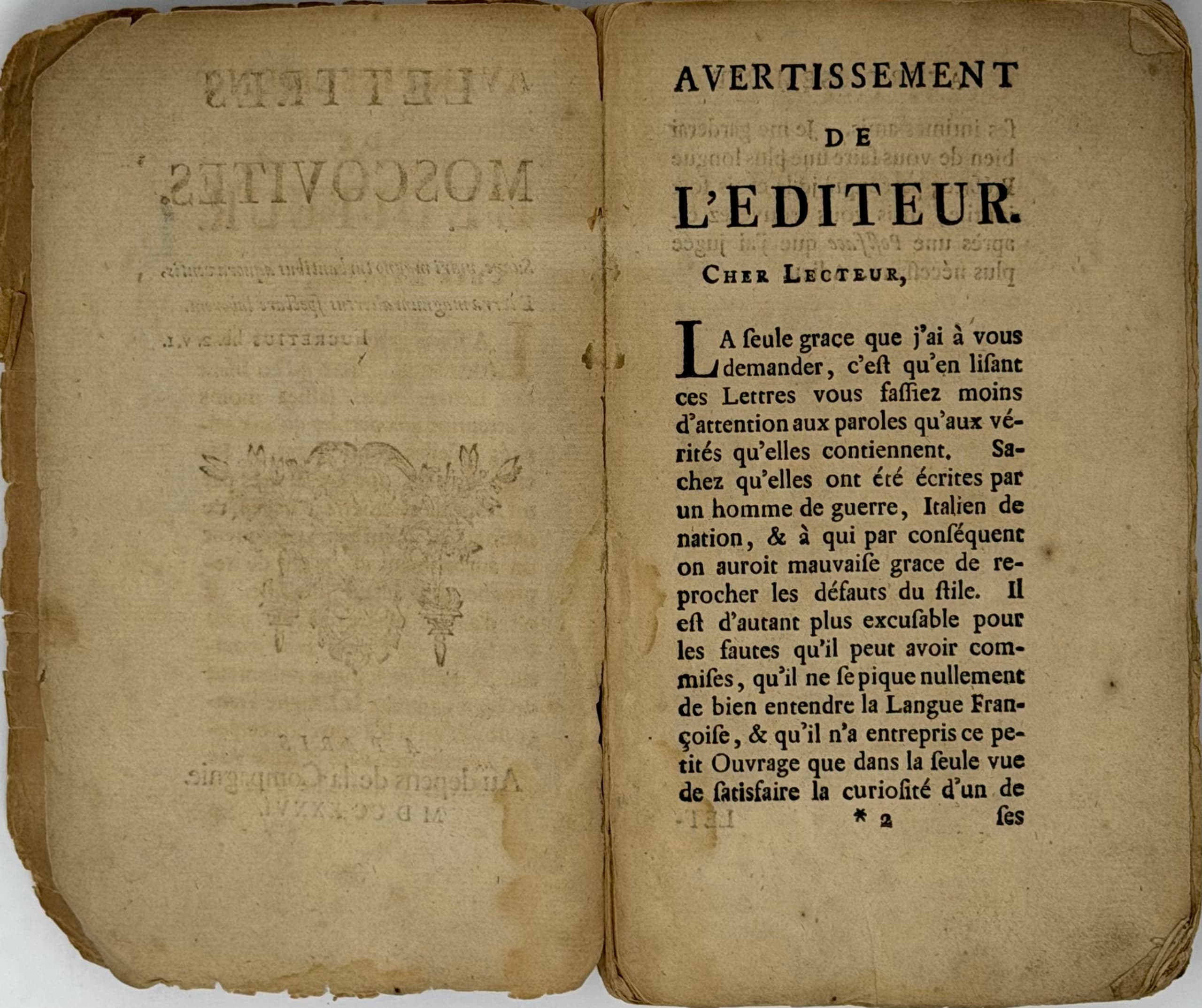
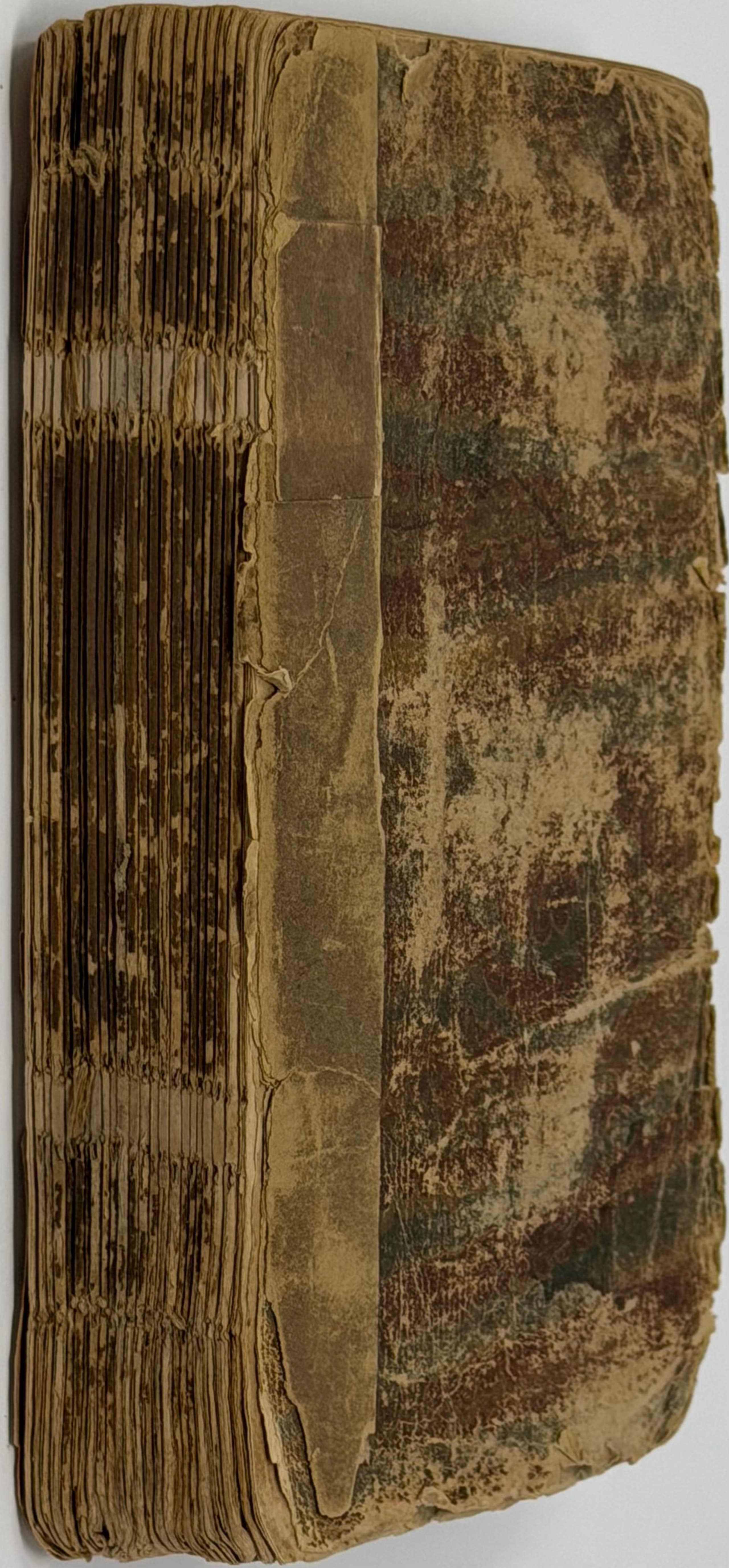
In the publisher’s paper cover. Loss of spine and fragments of paper at the edges of the cover, wear and soiling; the text block split into several parts, otherwise in good condition. An engraved bookplate by Martin Winkler, designed by A. Kravchenko, on the inside front cover.
Francesco Locatelli’s ‘Muscovite Letters’, published anony-mously in Paris in 1735, are considered among the most fa-mous and earliest Italian accounts of 18th-century Russia; it was effectively a pamphlet which, with its mocking tone and popularity in Europe, greatly offended the Russian govern-ment. Locatelli believed that the Russians were descendants of Scythian slaves who had rebelled and fled to the northern forests. The Russians are fundamentally different from Eu-ropeans, striving to return to old customs and hating all the innovations of the Petrine era. Russian barbarism, in his view, threatened Europe. The Russians sought to bring the Baltic Sea under their control and to seize neighbouring lands, including the Kingdom of Poland. Locatelli believed that Russia was a weak state and that European armies could easily deal with it. He called for the Russians to be driven back into ‘their forests’.
Authorship established according to: Barbier, Diction-naire des ouvrages anonymes. Vol. 2. Paris, 1874. Column 1280.
Provenance:
Martin Winkler (1893–1982) – German cultural and art his-torian, professor, specialist in Old Russian art, member of the German Society for the Study of Eastern Europe.
Rare.
Francesco Locatelli Lanzi (1687–1770) – a nobleman from Bergamo, he served France for several years in the War of the Spanish Succession, then led a dissolute life between Bergamo and Paris; in 1733, he fled from Paris to Russia un-der a false name, hoping to be accepted into military ser-vice. In Russia, he was suspected of espionage — subse-quent events revealed him to be a talented and sought-after intelligence analyst.