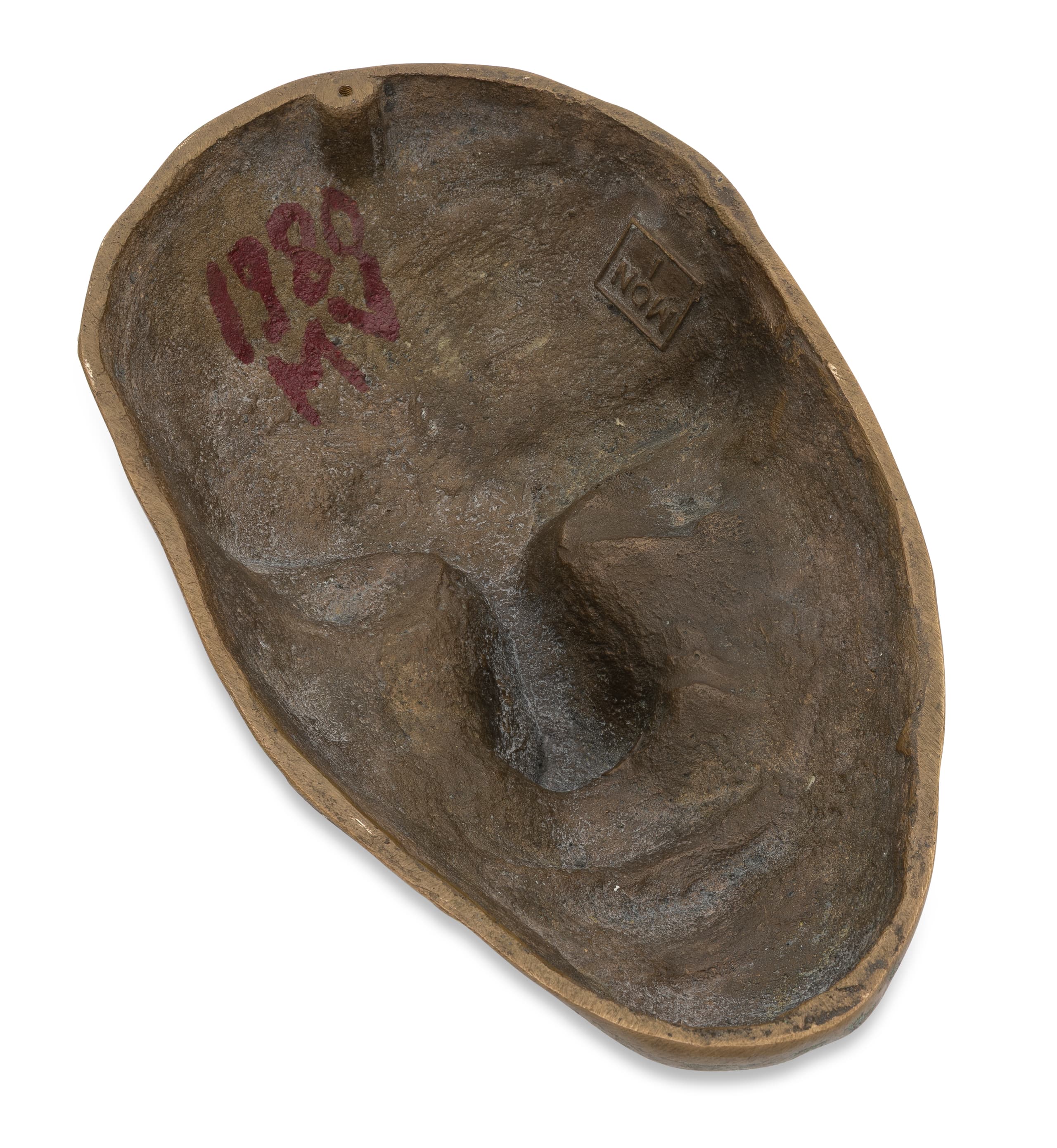
DEATH MASK OF VLADIMIR VYSOSTKY bronze, inscribed on the reverse: number 1 and in red lacquer ‘M.V. [Marina Vlady] 1980.’ sculpted by Yuri Vasiliev (1925–1990)
Lotto 183
100 000120 000
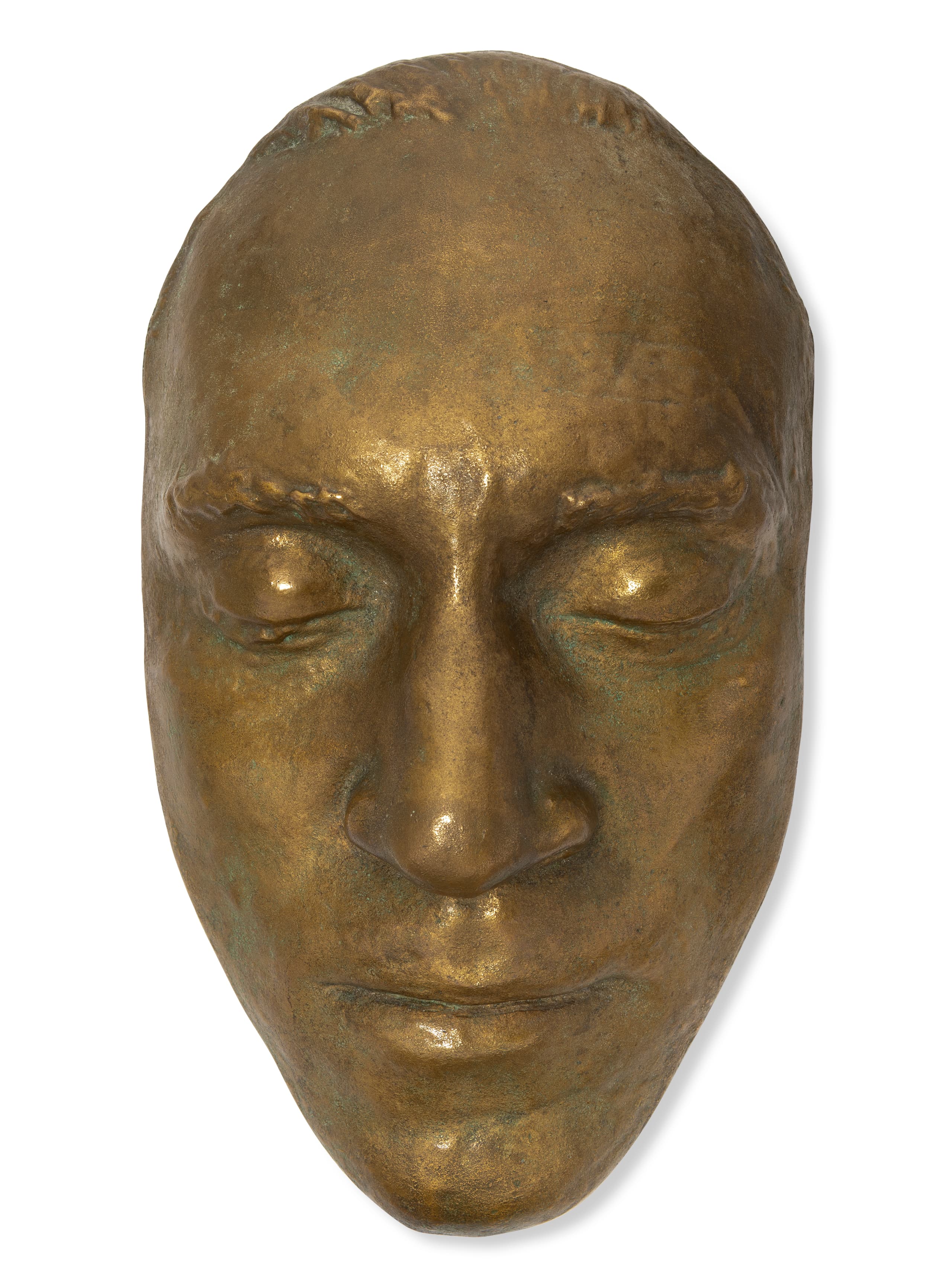
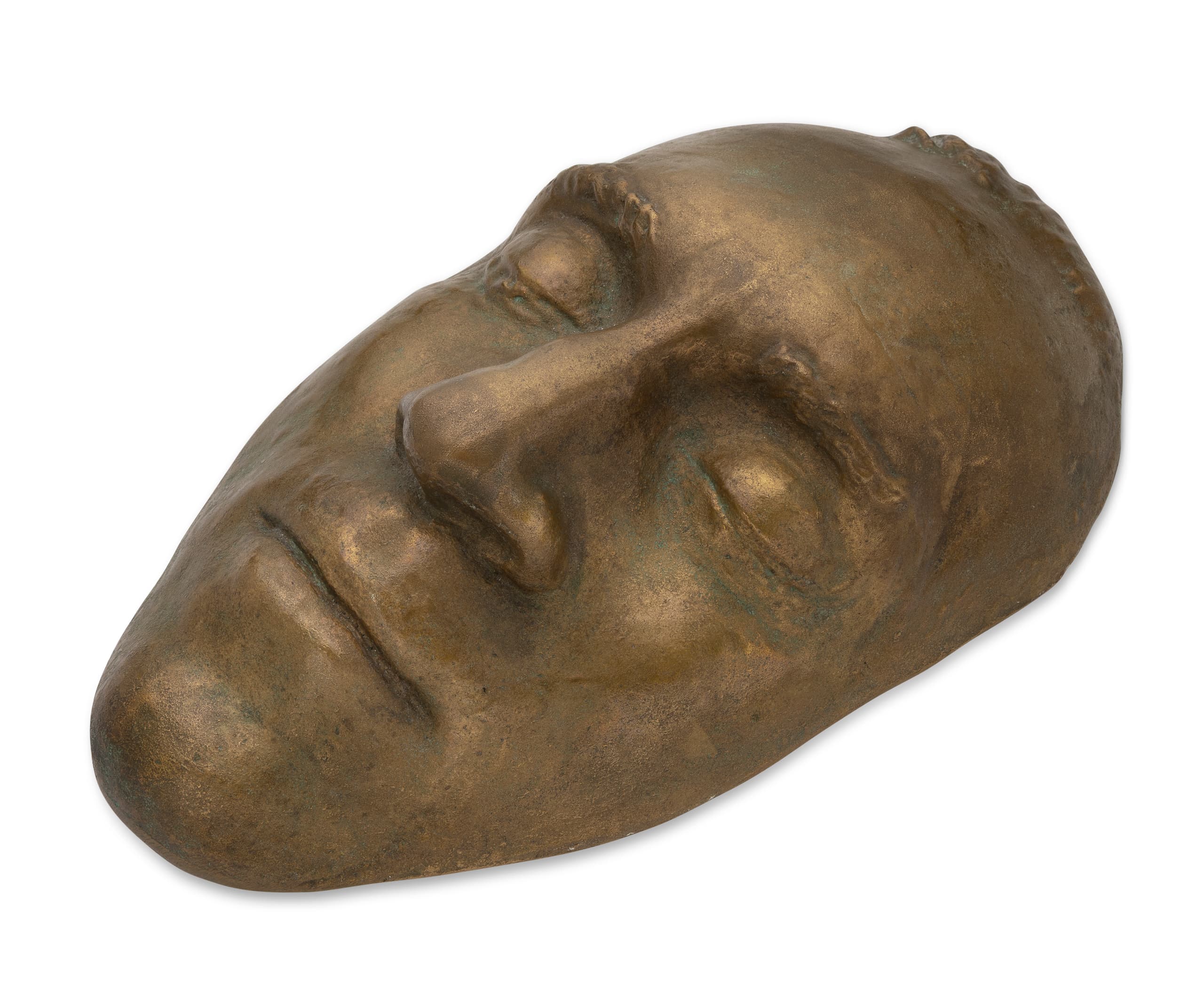
23.4 × 13.2 × 5.7 cm
Provenance :
Marina Vlady
Kapandji Morhange, Paris, 24.11.2015, Souvenirs de Marina Vlady, lot 90
Private collection
At four o'clock in the morning on 25 July, I wake up drenched in sweat, [...].
'Volodia is dead'. That's all. Three short words, mumbled by an unknown voice. The ice has buried you. You couldn't break free from its grip. [...]
It's night now. I turn on our bedside lamp. The golden light softens your face. I bring in my sculptor friend to help me make the death mask. He is an elderly man. Very pious, his simple gestures calm me. While he prepares the plaster, I coat your face with Vaseline.
I smooth it, and it seems to me that it relaxes under my fingers. A final caress, like a last soothing touch. Then we work in silence.
I studied sculpture for a few years, so I know how to take a cast. I rediscover the almost forgotten movements, the manual labour plunging me back into the simplicity of life. The old sculptor says a final prayer, and it's over. Three copies of the mask will be reproduced in bronze.
On your desk, you had Pushkin's death mask. Some find this tradition morbid, others are shocked to see such an object on the wall. But I believe that an artist belongs to everyone. He has given himself once and for all and forever to those who love him.
Pp 268-269. Marina Vlady. Vladimir ou le vol arrêté. Paris, Fayard, 2005
A posthumous bronze mask of Vladimir Vysotsky from the estate of Marina Vlady, cast in 1980 under the supervision of his widow, Marina Vlady.
Numbered 1 and bearing Vlady’s red lacquer initials and date 1980, the present mask is the first of three known bronze casts, taken from the original plaster mould made shortly after the artist’s death.
The original plaster death mask was taken by the Soviet sculptor Yuri Vasiliev, who also made a cast of Vysotsky’s left hand at the same time.
Yuri Vasiliev (1925–1990) was a Soviet artist and sculptor, trained at the Moscow Academic Art College in Memory of 1905 and the Surikov Institute. A member of the Moscow Union of Artists since 1954, he collaborated with Yuri Lyubimov at the Taganka Theatre and was active in stage design and monumental sculpture. His personal exhibitions were held in 1993 and 2003.
Vladimir Vysotsky (1938–1980) was a towering cultural figure - poet, songwriter, and actor whose voice became synonymous with authenticity, resistance, and truth in late Soviet society. A legend of authorial song, actor of theatre and cinema, and symbol of his generation, Vysotsky’s work spanned music, poetry, and performance. His songs addressed themes of life, freedom, and politics, resonating deeply across the Soviet Union. From 1964, he served as a leading actor at the Taganka Theatre of Drama and Comedy in Moscow.
Marina Vlady, French actress of Russian origin, was a prominent figure in postwar European cinema, celebrated for her roles in films such as Jean-Luc Godard’s Two or Three Things I Know About Her (1967). She met Vysotsky in 1967, becoming his third wife; the couple married in 1970, dividing their lives between France and the USSR. Vlady remained his muse and steadfast support until his untimely death in Moscow on 25 July 1980, aged 42.