EMMANUEL DE LAS CASES (1766-1842) Letter signed to Princess Elisa Bonaparte in Trieste. Frankfurt, 2 April 1819.
Lotto 63
Venduto
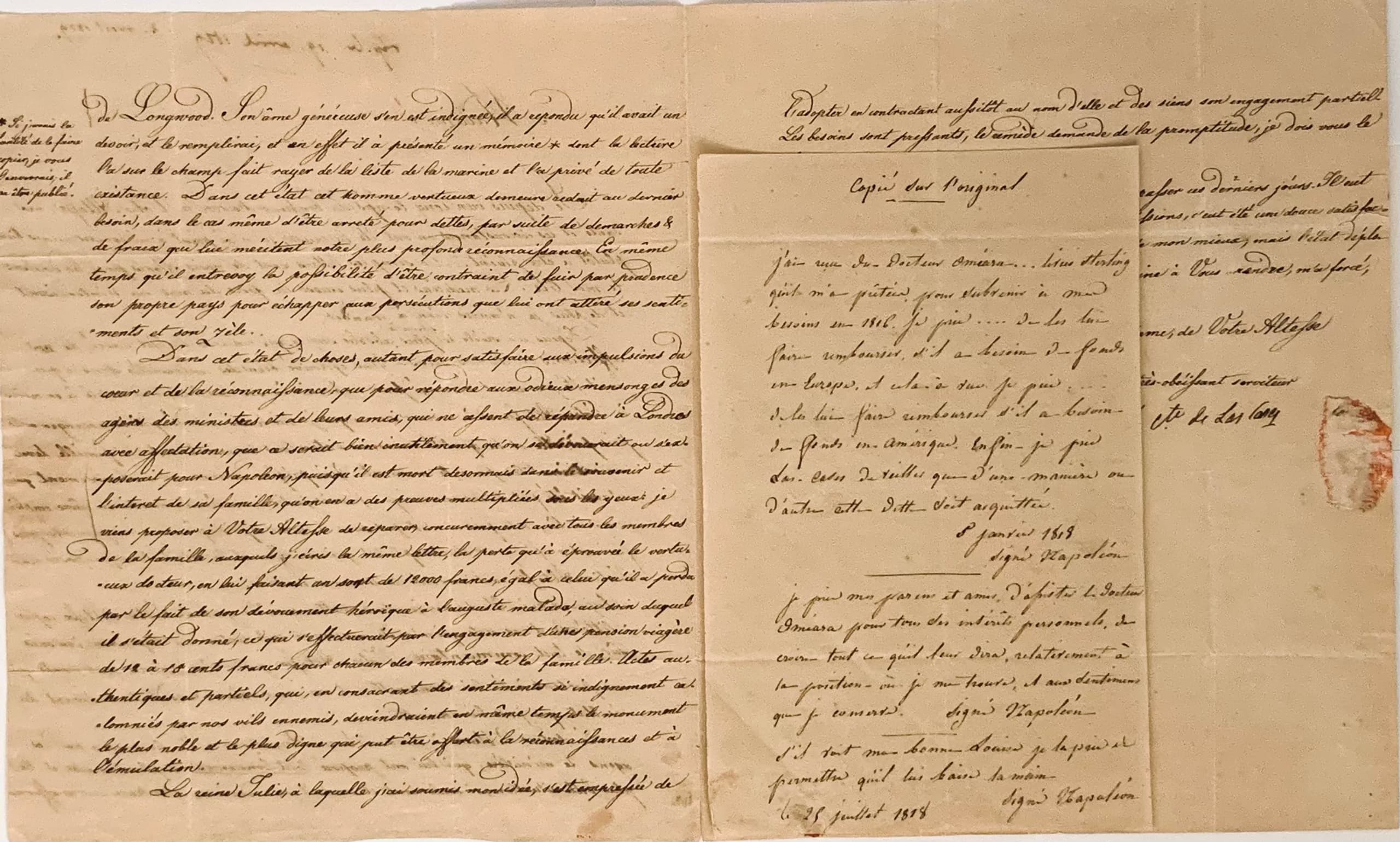
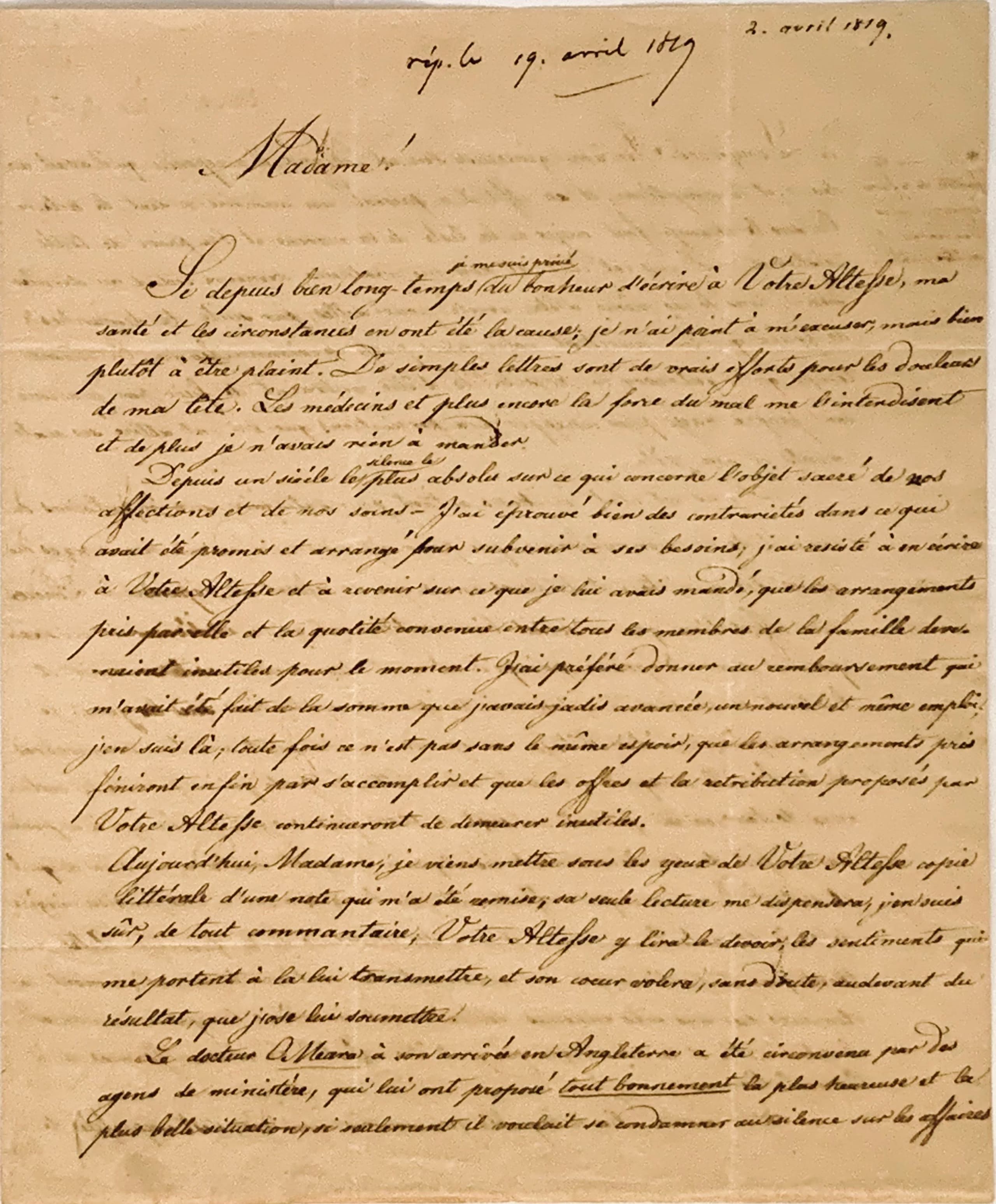
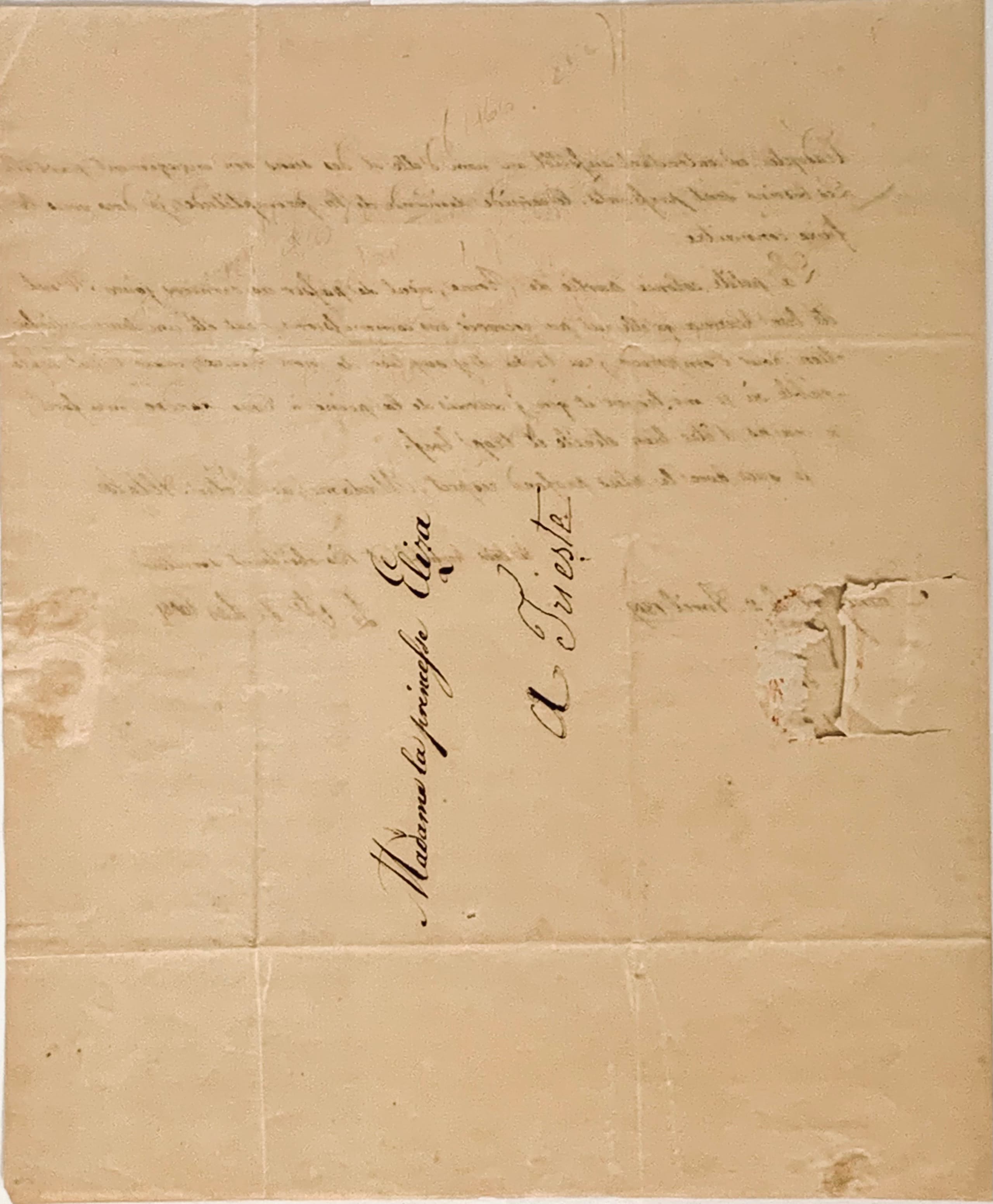
2 1/2 pages, in-4 format, address on the back.
Small tear due to opening, affecting one word.
Attached to the second page is the handwritten copy of Napoleon I’s note mentioned above by Las Cases:
‘I have received from Dr O’Meara... pounds sterling which he lent me to support myself in 1816. I beg you... to repay him if he needs funds in America. Finally, I ask Las Cases to ensure that this debt is settled in one way or another. 3 January 1818. Signed Napoleon.
I ask my relatives and friends to assist Dr O’Meara in all his personal interests, to believe everything he tells them about my situation and the feelings I still hold. Signed Napoleon.
If he sees my dear Louise [Empress Marie-Louise], I beg him to allow him to kiss her hand. Signed Napoleon. 25 July 1818.’
Emmanuel-Auguste-Dieudonné, Count of Las Cases (1766-1842) – French historian. Chamberlain and memoirist of Napoleon I. Former State Councillor and chamberlain to Napoleon I, he was chosen to accompany him into exile. With his easy manner, Las Cases was one of the emperor’s closest confidants and recorded their conversations from 20 June 1815 to 25 November 1816. He was arrested the day After this last session on the orders of the island’s governor, Hudson Lowe, who accused him of attempting to send a secret letter criticising Napoleon I’s conditions of detention and confiscated his papers. On 30 December 1816, Las Cases was expelled from the island to the English colony of Cape Town, then repatriated to Europe in November 1817.
On 30 December 1816, Las Cases was expelled from the island to the English colony of Cape Town, then repatriated to Europe in November 1817: expelled from England (where his papers were confiscated again), refused by France and the Netherlands, he found refuge in December 1817 in the free city of Frankfurt, capital of the German Confederation, thanks to the protection of the Austrian ambassador. From the second half of 1818, Las Cases settled in the Grand Duchy of Baden, where the husband of Stéphanie de Beauharnais, Joséphine’s niece, reigned. During his stay in Germany, he actively served as a liaison officer between Napoleon I and his family, taking numerous steps to raise funds for the exiled emperor and to recover his own manuscripts from Saint Helena.
In March 1818, After recovering his papers confiscated in England, he published a sensational pamphlet alerting Europe to the situation of Napoleon I. In 1823, he published his Mémorial de Sainte-Hélène, which became the most famous account of the emperor’s captivity.
Élisa Bonaparte, born Maria-Anna di Buonaparte (1777-1820) – French princess and imperial highness, princess of Lucca and Piombino (1805), grand duchess of Tuscany (1809). The eldest of Napoleon’s three sisters.