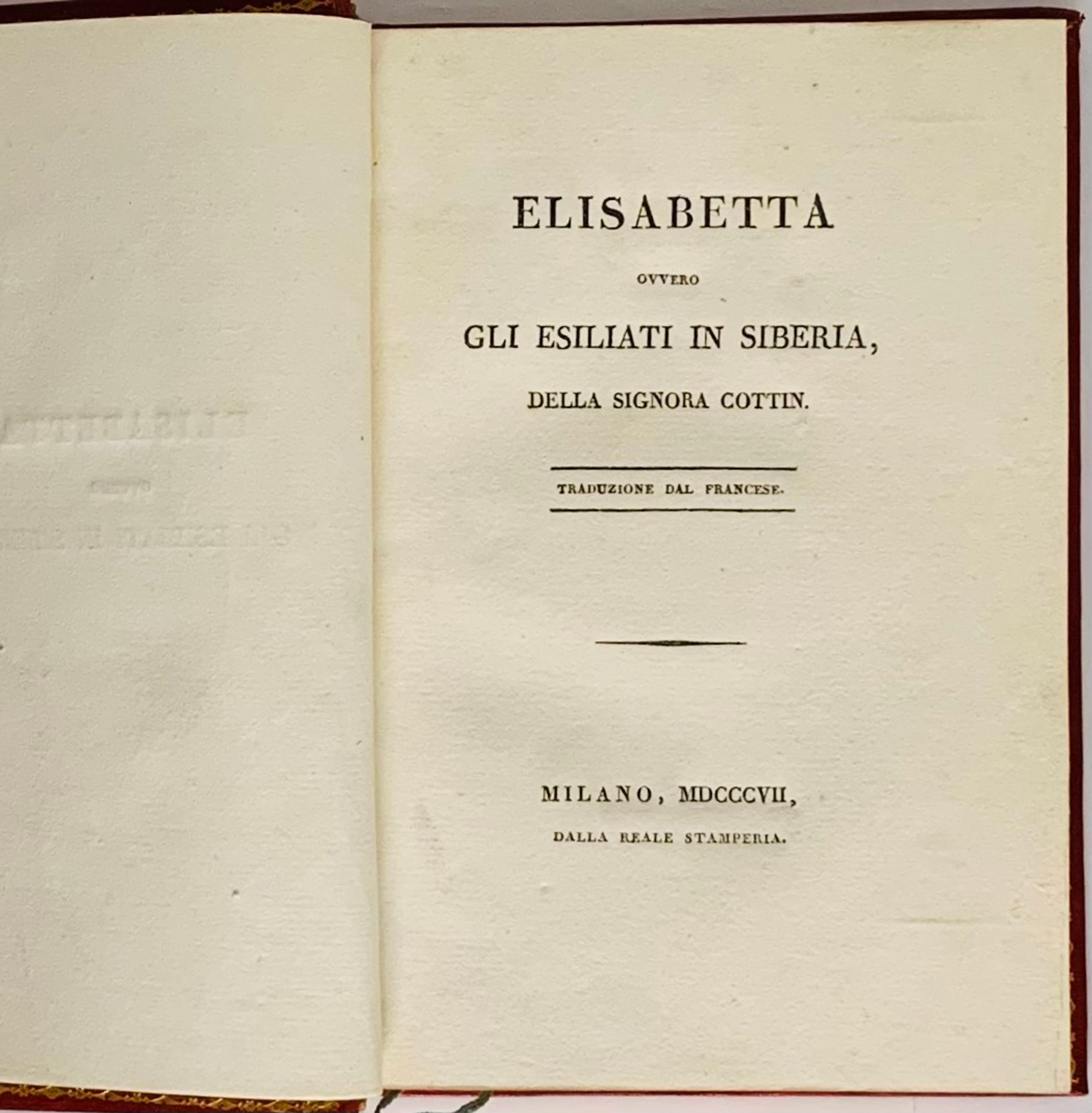
COTTIN SOPHIE (1770-1807) Elisabetta ovvero gli Esiliati in Siberia. Milan: De l’Imprimerie royale, 1807.
Lotto 22
Venduto
In-8.
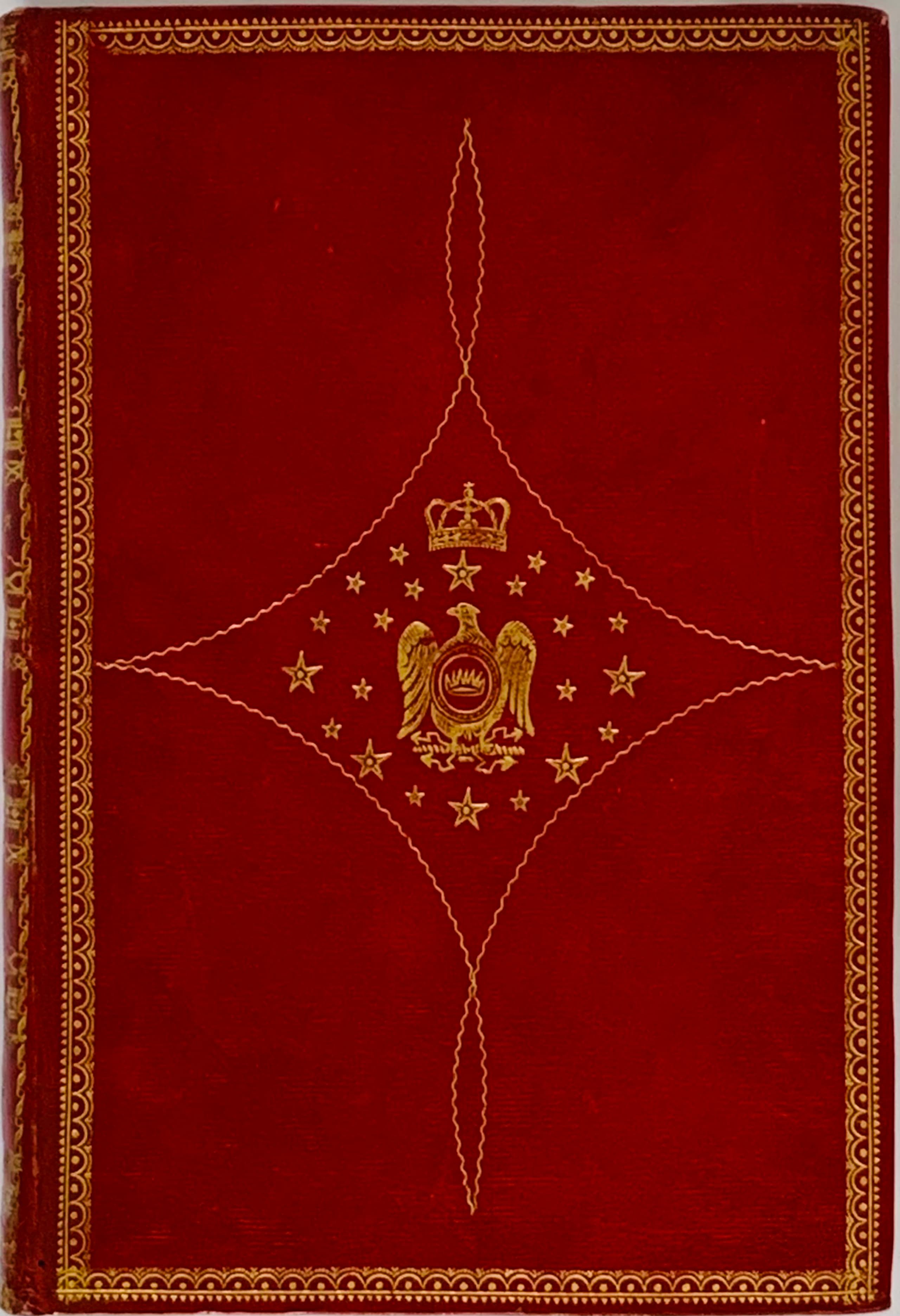
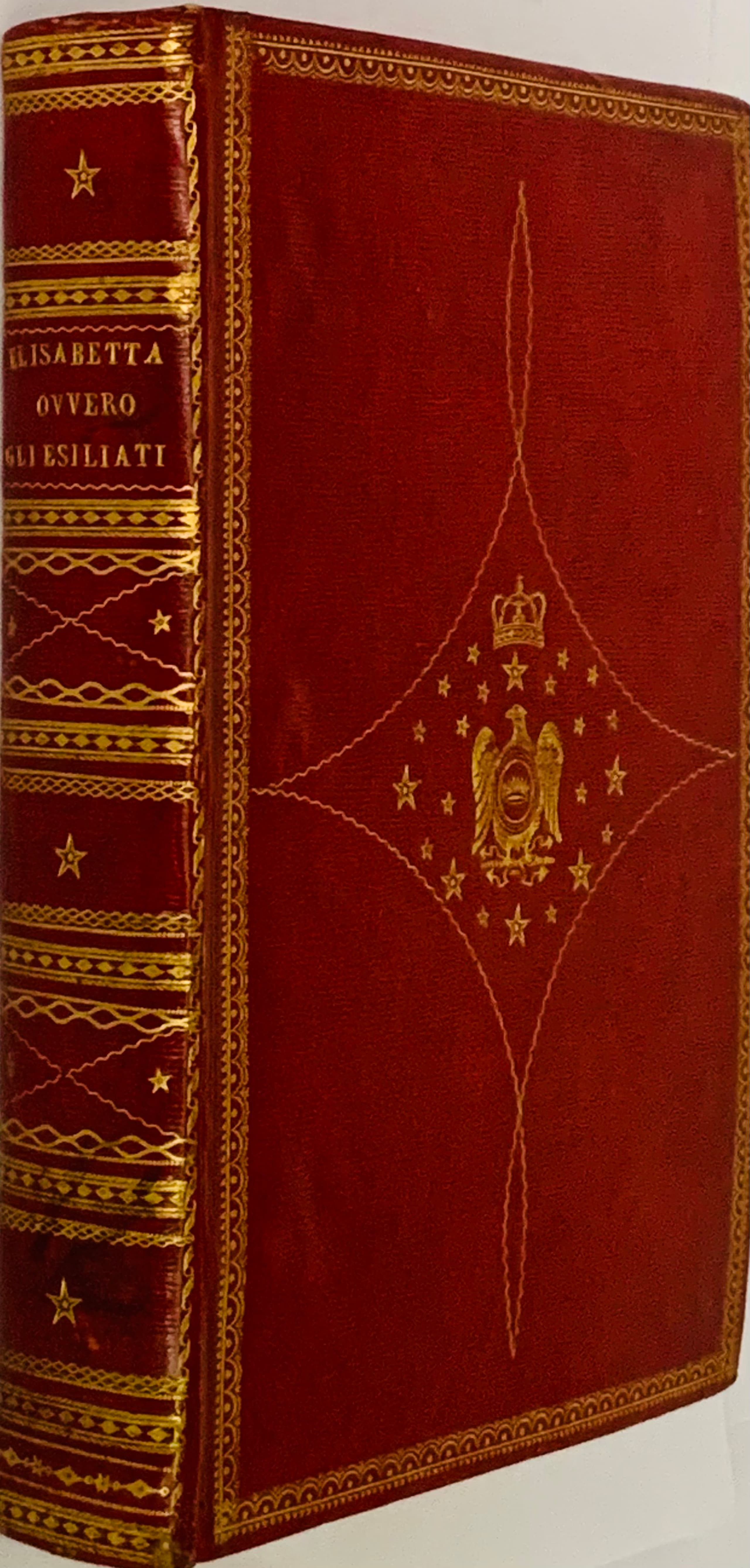
Bound in red long-grain morocco, gilt roulette, cartouche bearing an imperial emblem (eagle perching on a thunderbolt) surmounted by a crown and surrounded by a field of gilt stars, smooth decorated spine, inner roulette, gilt edges (contemporary binding).
Light foxing to endpapers and a few leaves. Small black mark on the spine.
A fine copy on thick paper, bound in morocco with the arms of Eugène de Beauharnais (1781-1824), son of Joséphine, Viceroy of Italy, and Prince of Venice. The binding is likely of Italian origin.
The decoration on this volume features the prince’s coat of arms, consisting of an emblematic iron and a scattering of golden stars, arranged in a concave diamond-shaped cartouche drawn with wavy lines. This binding bears similarities to the one reproduced by Anne Lamort in Reliures impériales, Bibliothèque napoléonienne by Gérard Souham, p. 103, also bearing the coat of arms of Eugène de Beauharnais and covering an Italian edition of a draft penal code, published in Brescia in 1807. Both bindings share similar stylistic elements, including the wavy fillet cartouche and the spine’s chained roll flanked by gilt fillets.
First edition of the Italian translation, compiled by C.G. Lafolie and dedicated to Princess Amélie of Bavaria, wife of Eugène de Beauharnais.
Originally published in 1806 under the title Élisabeth ou les Exilés de Sibérie, this novel for young readers by Sophie Cottin tells the story of a young girl who leaves from Siberia for St. Petersburg, where she hopes to meet the Tsar and ask him to pardon her exiled father.
PROVENANCE:
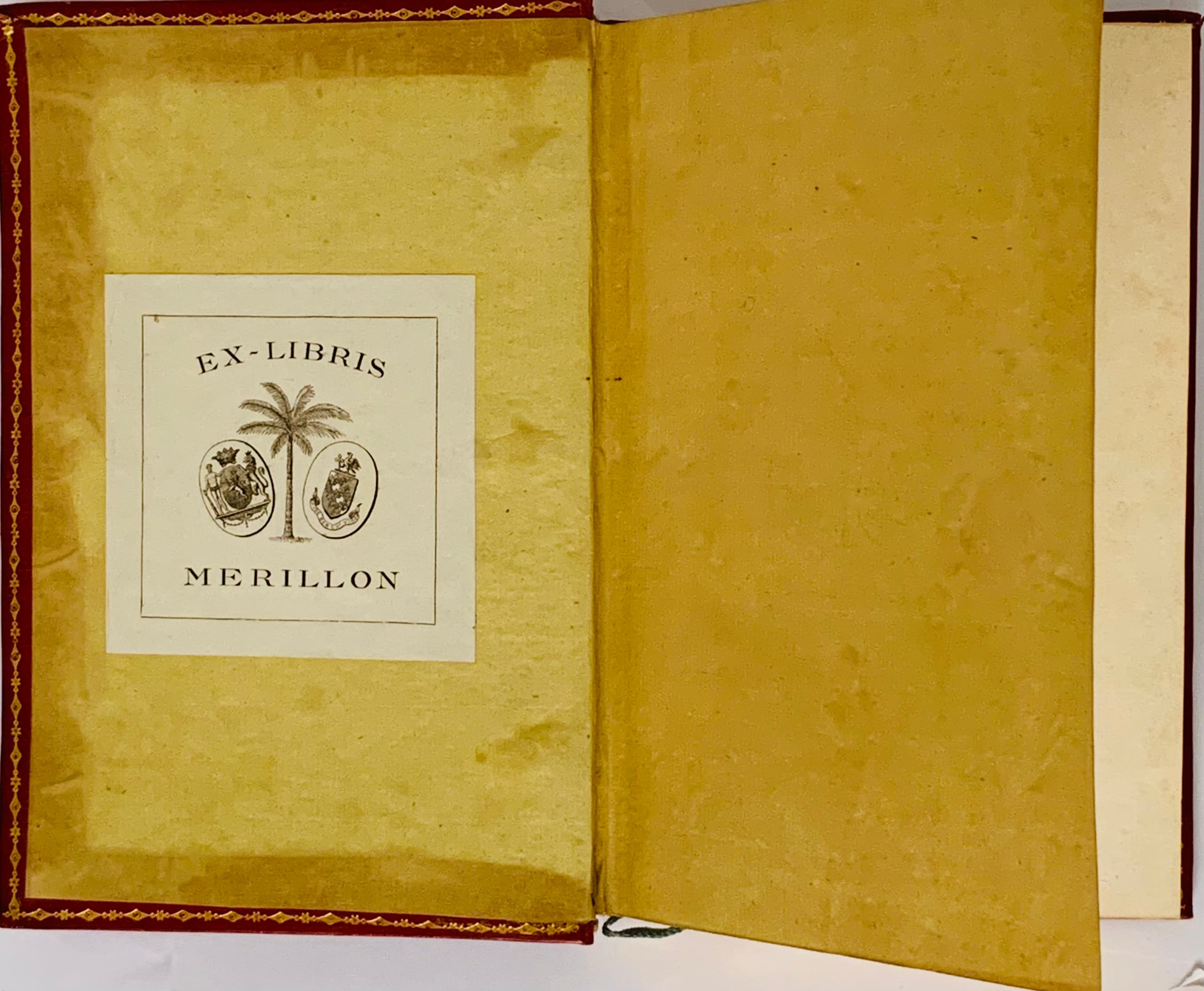
Bookplate of Merillon.