ECRITOIRE CASE BELONGING TO GENERAL SAVARY DUC DE ROVIGO (1774-1833) Martin-Guillaume Biennais (1764-1843), First Empire Period
Lotto 172
12 00015 000
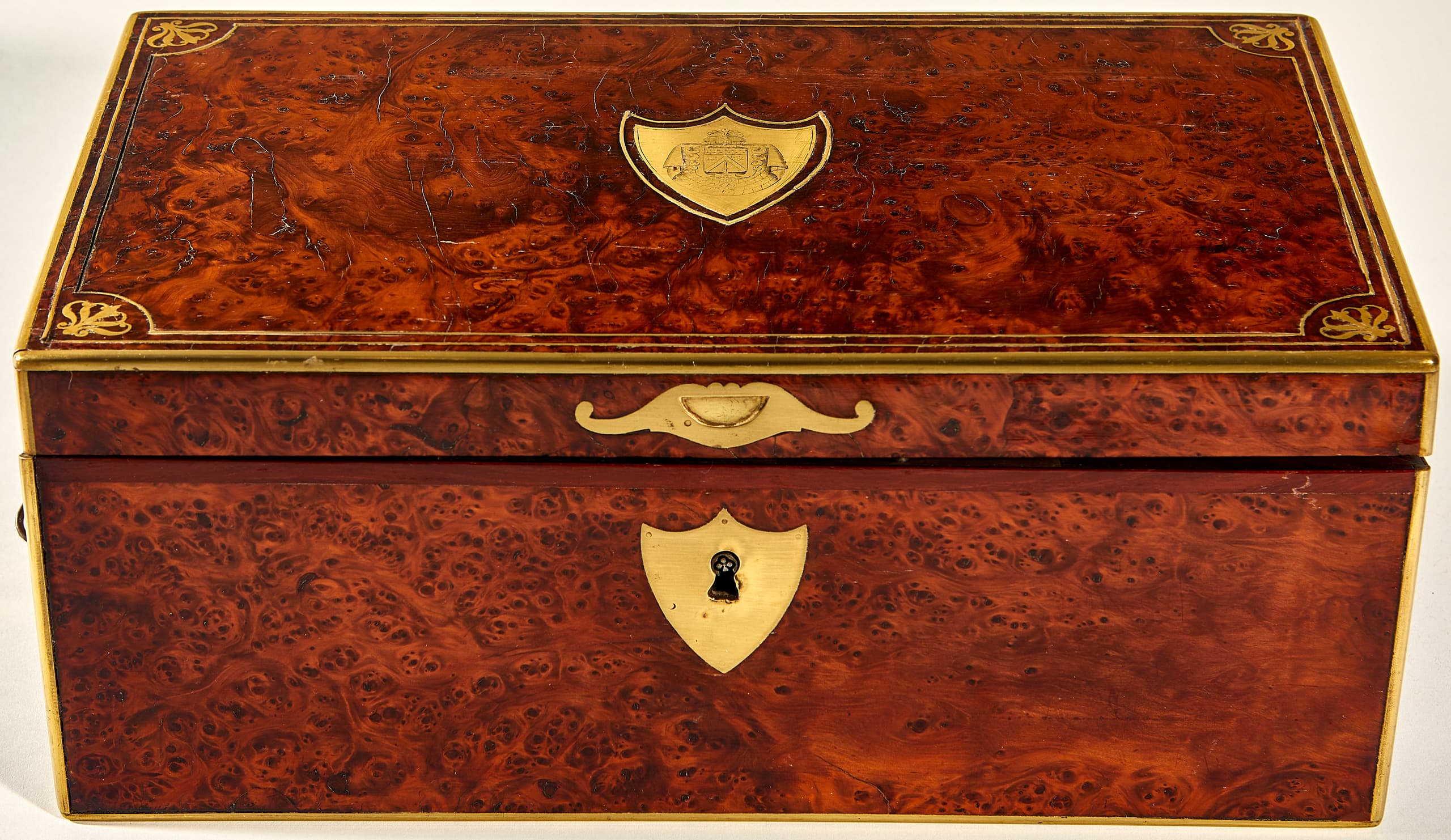
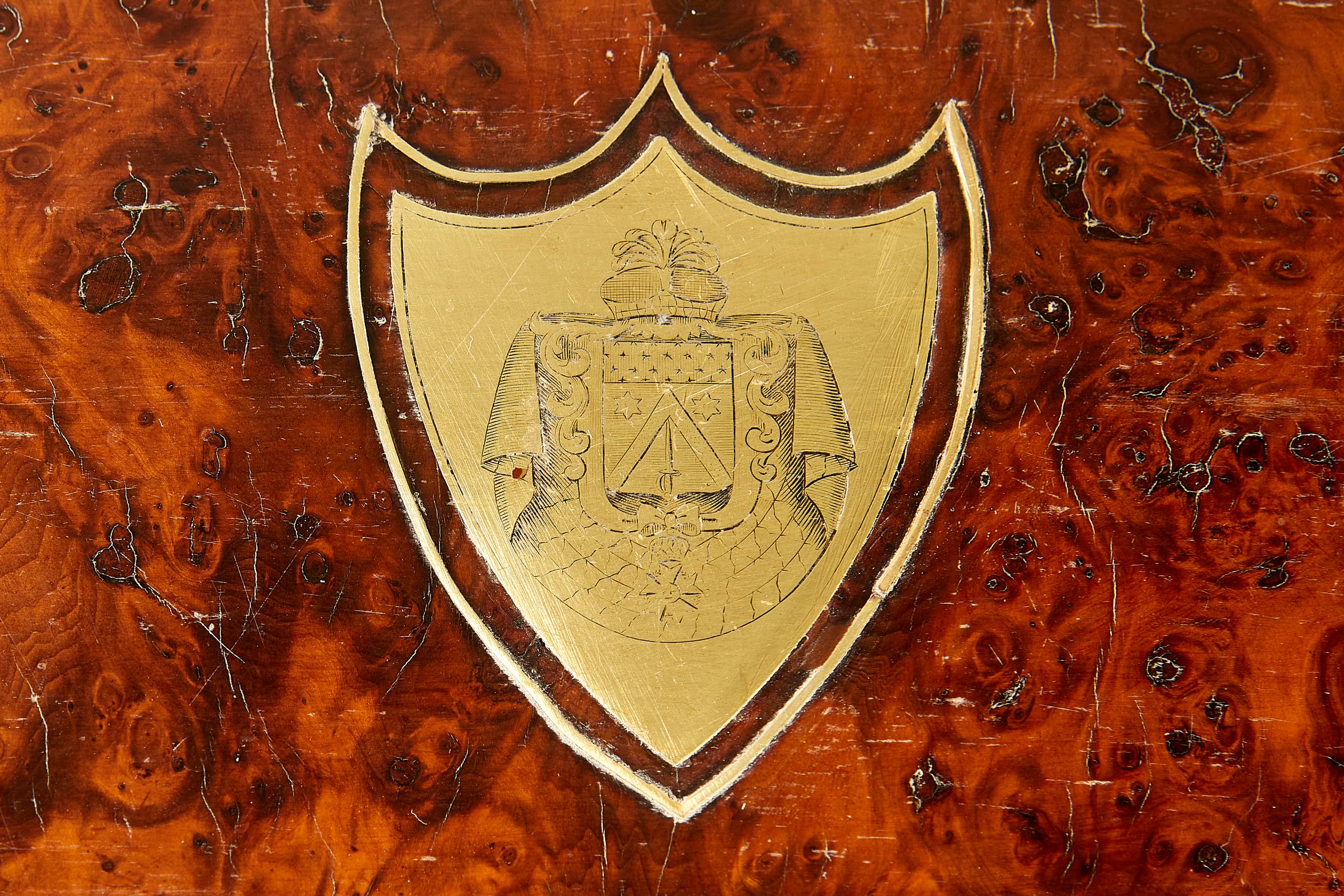
Mottled mahogany veneer case. Lid decorated with inlaid palmettes and brass reinforcing straps, decorated on the lid with a shield with the large engraved coat of arms of the Duke of Rovigo.
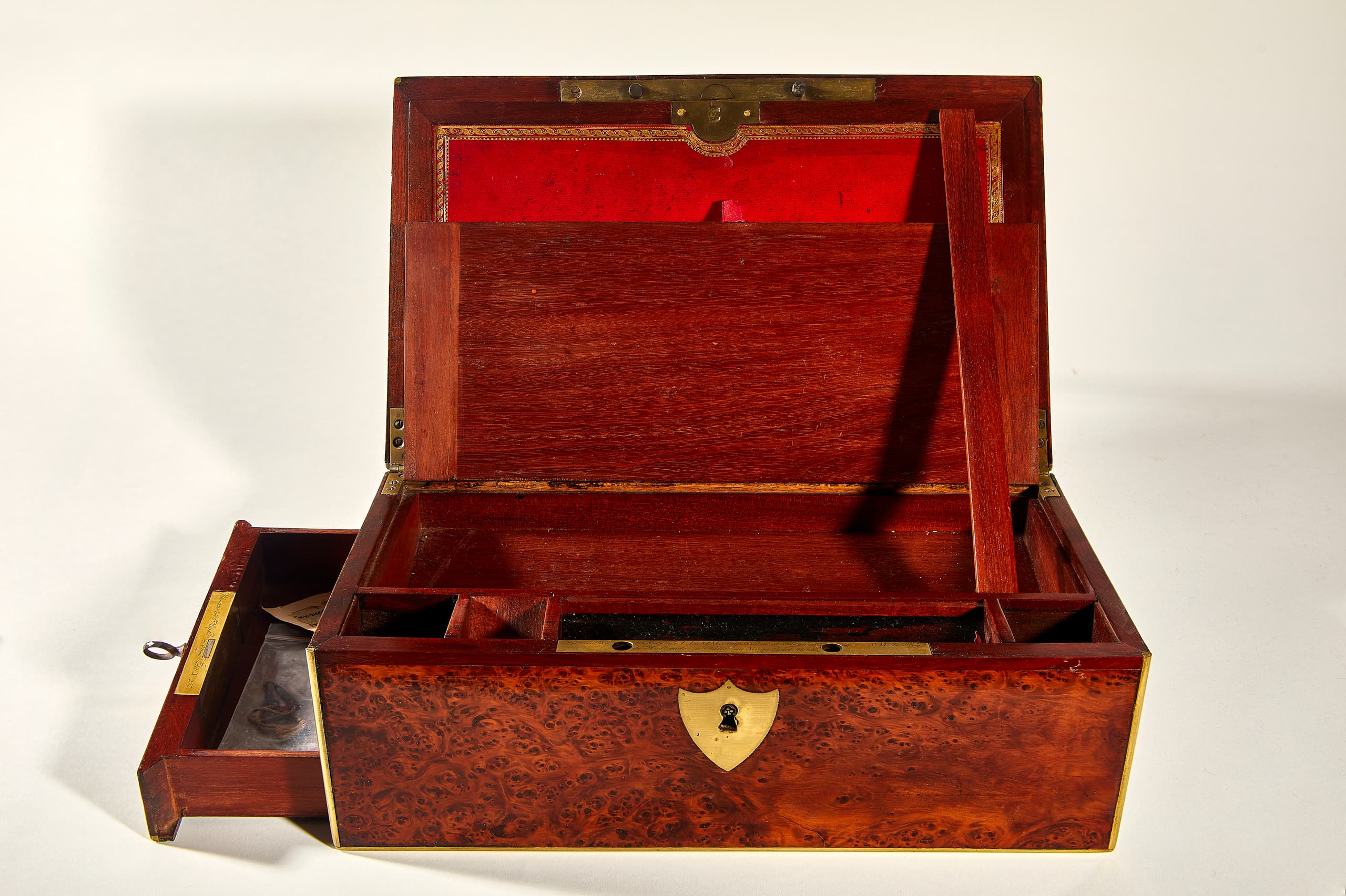
Lock signed 'Biennais, Goldsmith to LL. MM. Impériales et Royales, et de S.M. le Roi de Hollande à Paris, au Singe violet, rue Saint-Honoré n°283', side drawer with lock of the same shape and turntable engraved with 'Biennais, rue St-Honoré au Singe Violet N°283'.
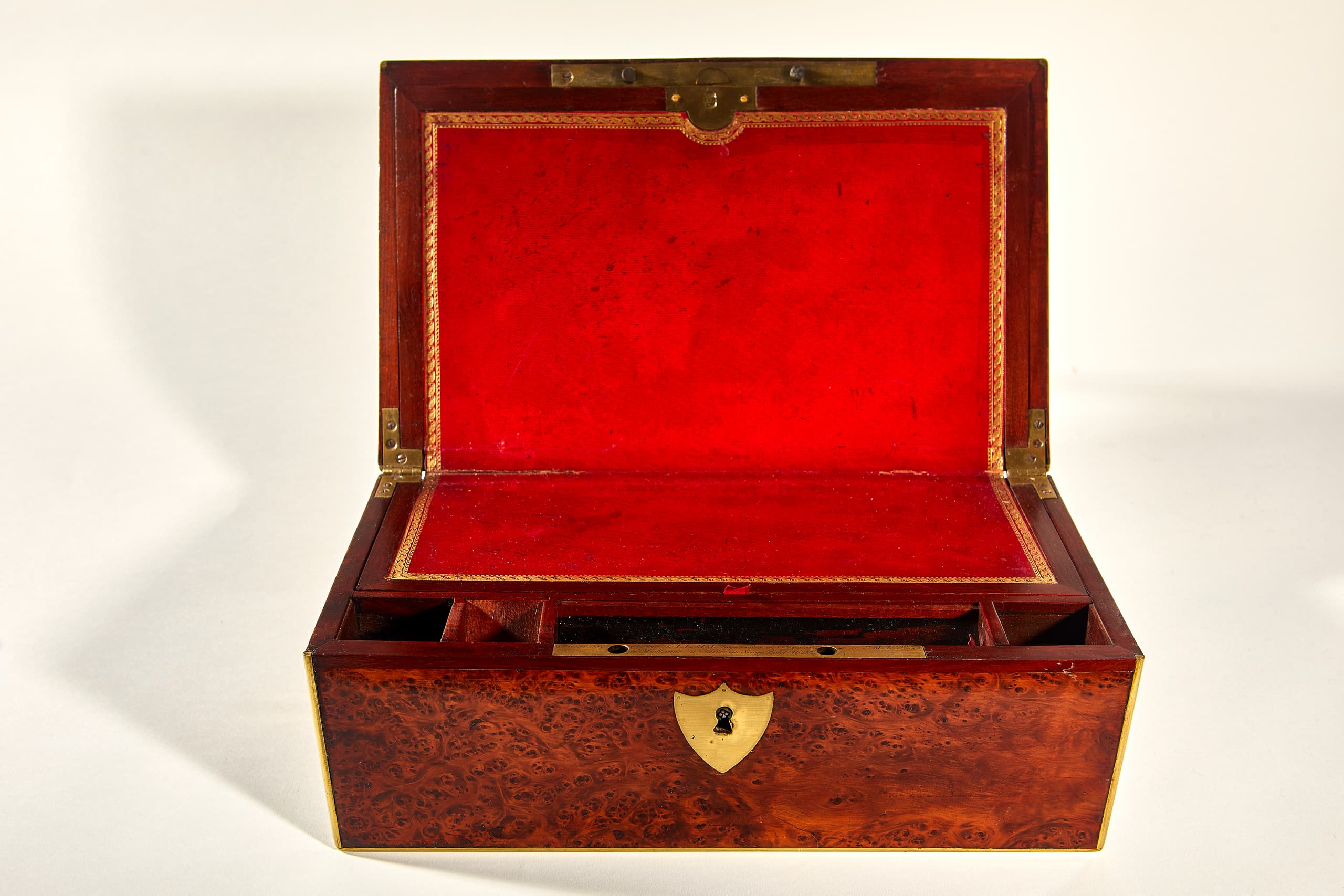
The interior features a red morocco-covered writing case decorated with a fine gilded guilloche garland, double opening with clips leaving two secret storage compartments, compartments for two inkwells, a storage space for wax stamps and another for pens.
H: 14 cm W: 21 cm L: 35 cm
Anne-Jean-Marie-René Savary, duc de Rovigo (1774–1833)
A loyal officer and diplomat, Savary was one of Napoleon I's closest collaborators. Present in major military campaigns, he was appointed head of the Imperial Police in 1810 and played a key role in maintaining control across the Empire. He was granted the title of Duke of Rovigo in 1808, embodying loyalty and efficiency in service of Napoleonic power.
PROVENANCE:
Xavier Versini (1926-2020). Xavier Versini was Xavier Versini a magistrate and President of the Paris Court of Assizes, originally from Ajaccio, Corsica, and noted for his writings and collection on Corsican and Napoleonic history.
Osenat, Fontainebleau, L'Empire à Fontainebleau – collection du Président Versini, 09.07.2023, l. 239
Private collection
Martin-Guillaume Biennais (1764–1843) was a renowned French goldsmith and cabinetmaker. He became Napoleon's official silversmith and crafted the Emperor's coronation regalia. His elegant Empire-style works are now held in major museums like the Louvre.