ILYA REPIN (1844-1930) Portrait of Vera, 1867-1868
Lotto 373
Venduto
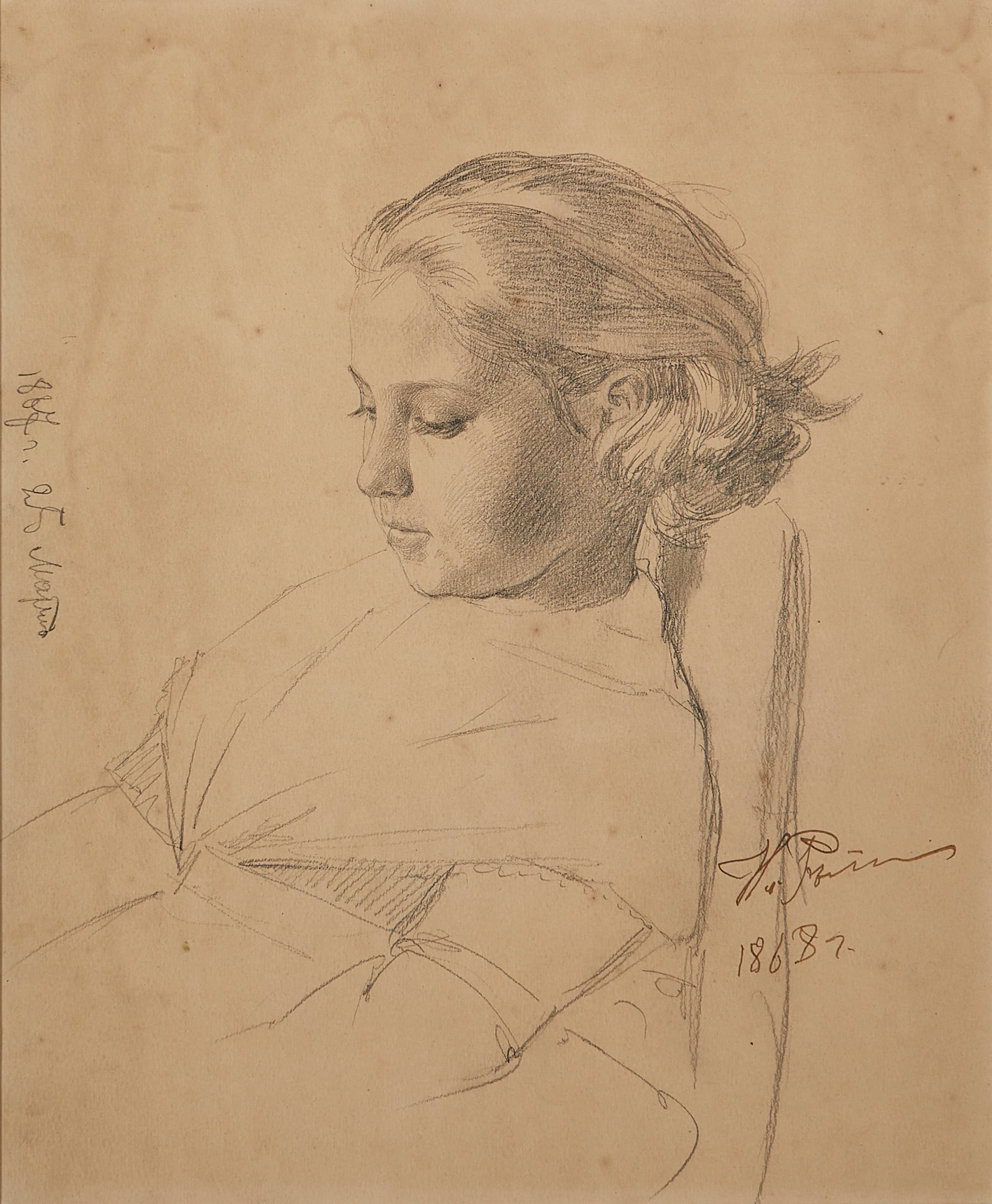
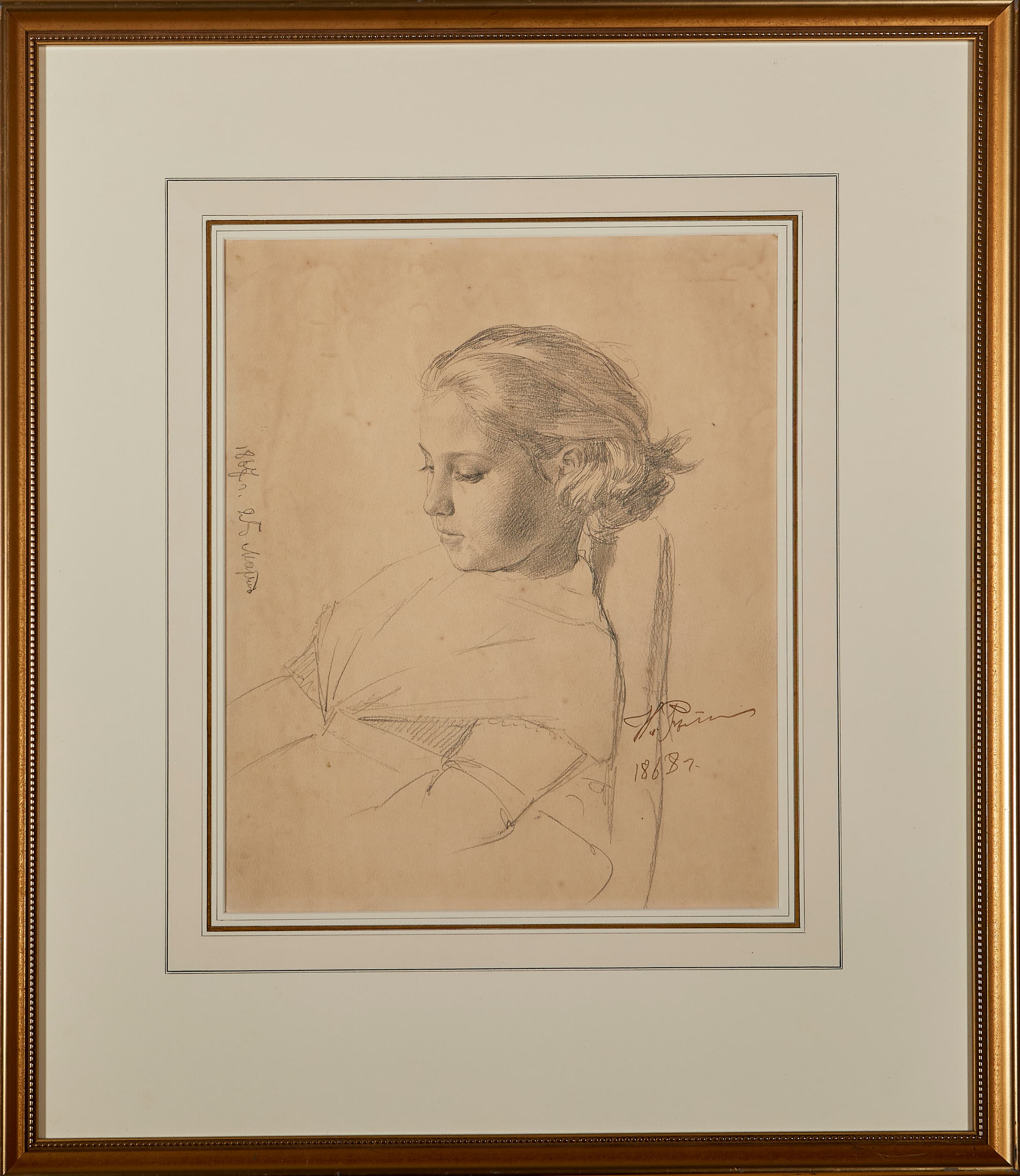
signed in Cyrillic and dated ‘I Repin 1868’ (lower right), dated ‘1867 g 25 mart’ (along the left edge)
pencil on paper
32.2 x 26.5 cm (à vue)
Among his contemporaries, Ilya Repin was celebrated as one of the greatest portraitists of his time. Unlike any other Russian artist working in this genre, Repin was uniquely able to infuse his portraits not only with his outstanding artistic skills, but extraordinary insight and sensuality, close observation and emotional intensity, psychological depth and temperament.
One of the most personal and cherished subjects in Repin’s work was always his wife, Vera Alekseyevna Shevtsova.
Repin first became acquainted with the family of architect Aleksey Shevtsov (c. 1815–after 1869) in the early 1860s. In 1872, he proposed to Shevtsov’s youngest daughter, Vera Alekseyevna (1854–1918), and they were married that same year. From that moment onward, Vera became a significant and constant presence in Repin’s life and frequently served as a model for his art. Vera was not merely a subject; she was his muse, his confidante, and his emotional anchor, supporting him through the most productive years of his career. Even as Repin moved in elite cultural circles across Europe, his work remained profoundly rooted in his personal relationships, and his portraits of Vera are among his most heartfelt and revealing.
Yet before the official proposal, Vera was often modelling for Repin’s drawings. The present early one is dated 1867, when Vera was mostly posing for Repin as a model. It stands out for its intimacy and sensitivity, capturing not only Vera’s outward likeness but also her character. Repin’s skilful use of light and delicate pencil strokes conveys Vera’s gentle grace, while his subtle attention to expression and posture reveals the artist’s interest in the sitter. In this drawing, Vera is shown sitting on a chair, possibly reading. A quiet, domestic scene reflects Repin’s profound respect and affection. With light, careful strokes and a sensitivity to detail, he emphasises her thoughtful expression and delicate features. Vera appears here with natural dignity and composure — an image shaped as much by quiet familiarity as by artistic devotion.