LEON BAKST (1866-1924), ATTRIBUTED TO Ida Rubinstein
Lotto 320
60 00080 000
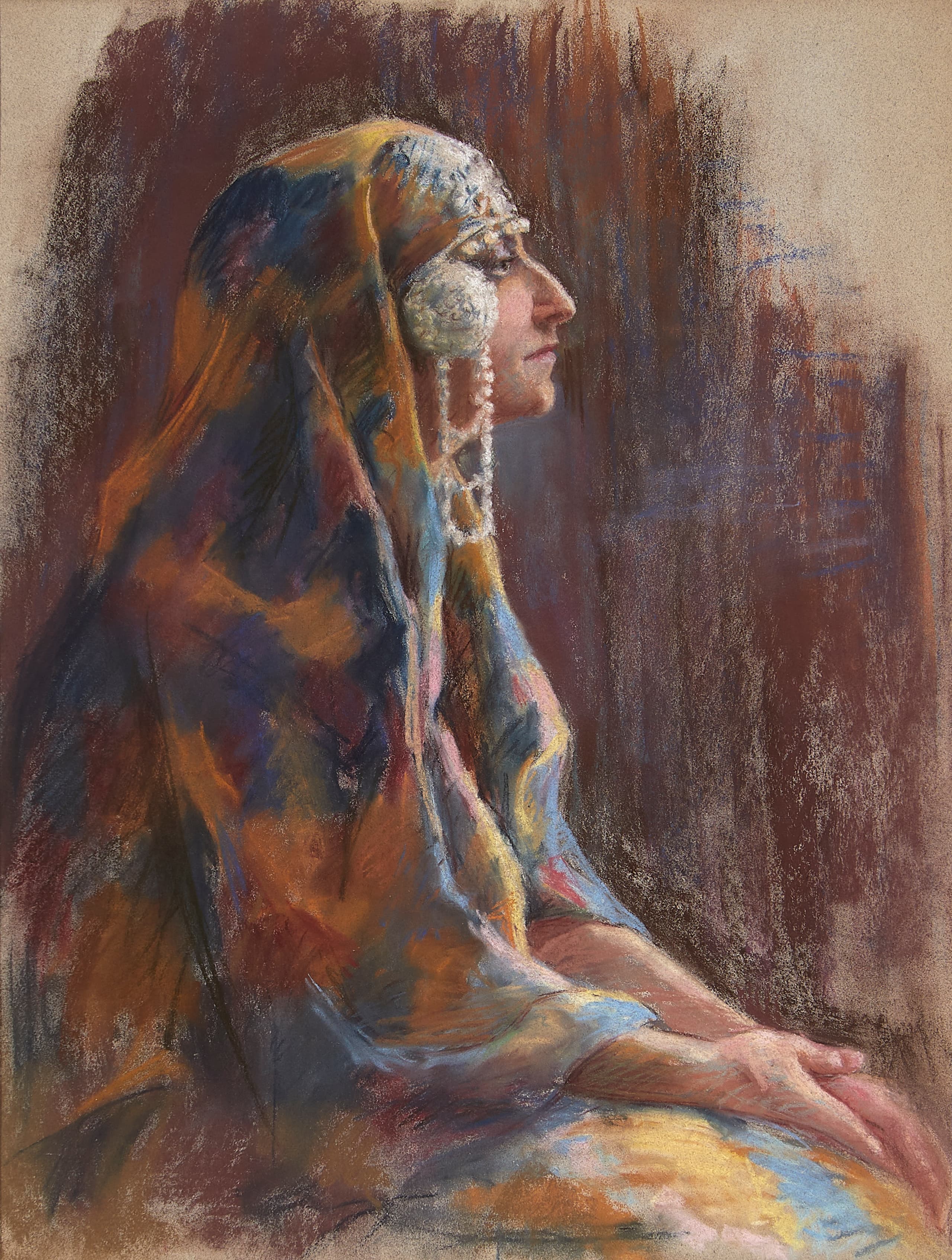
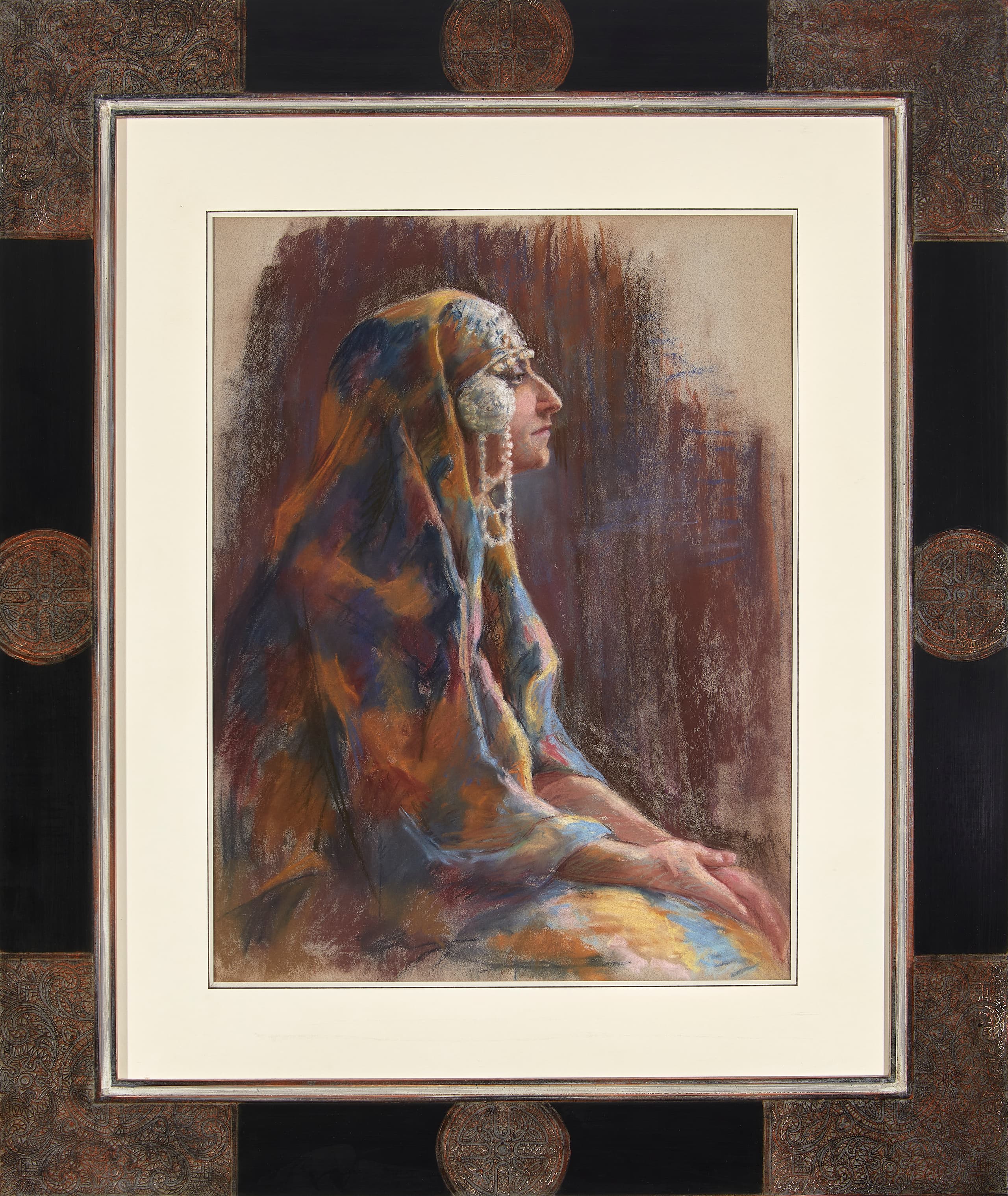

Pastel on paper
62 x 47 cm (à vue)
EXHIBITED:
Ballets Russes. I Classici della modernità, Castello Carlo V, Lecce, 3 November 2019 – 30 January 2020
In Diaghilev’s Circle. Fates Intersecting, Sheremetev Palace, 14 November 2020 – 12 February 2021.
LITERATURE:
In Diaghilev’s Circle. Fates Intersecting, exhibition catalogue, Sheremetev Palace, St Petersburg, 2020, illustrated p. 170.
Ida Rubinstein (1883–1960) was a dancer, dramatic actress, patroness of the arts, and fashion icon. She was born into one of the Russian Empire’s wealthiest Jewish families in Kharkov and, at the age of 8, upon her father’s death, inherited a huge fortune. She was raised in Saint Petersburg, where she lived in her aunt’s mansion on the Promenade des Anglais. There, she received an exceptional education and became fluent in several languages.
From an early age, Rubinstein expressed a desire to become an actress. Her first production, which she financed herself as she would many times later in life, was Antigone (1904). She played the title role, wearing opulent, classical robes designed by Lev Rosenberg, and it was performed for invited guests. Rosenberg, better known by the name of Léon Bakst, would ultimately become one of the leading scenographers of Sergei Diaghilev’s Ballets Russes. Through him, Rubinstein met Diaghilev and choreographer Mikhail Fokine. In 1908, she gave a bold private performance of Salomé, choreographed by Fokine.
Between 1909 and 1911, Rubinstein performed with Diaghilev’s Ballets Russes, gaining acclaim in Cléopâtre (1909) and Schéhérazade (1910).
Ida then founded her own company, commissioning iconic works like Ravel’s Boléro.
Her last major production was Joan of Arc at the Stake, an oratorio by Arthur Honegger with text by Paul Claudel, which she commissioned and first performed in 1938. Though not a ballet, it was a dramatic and staged performance with Rubinstein in the lead role.
A visionary patron, Rubinstein collaborated with some of the most influential artists, composers, and designers of her time.
Ida’s performances and bold personality challenged boundaries of nationality, religion, sexuality, and artistic convention.
Rubinstein was renowned for the opulence of her productions and costumes, and her taste in fashion was considered impeccable. She wore clothes with the carriage of a goddess. She was also known for being a difficult subject, as she disliked long sittings.
In 1934, she was awarded the Légion d’honneur, and in 1939, the Grand Cross, its highest distinction.