SERGUEI SOLOMKO (1867-1928) Portrait d'Ida Rubinstein en Salomé
Lot 314
Vendu
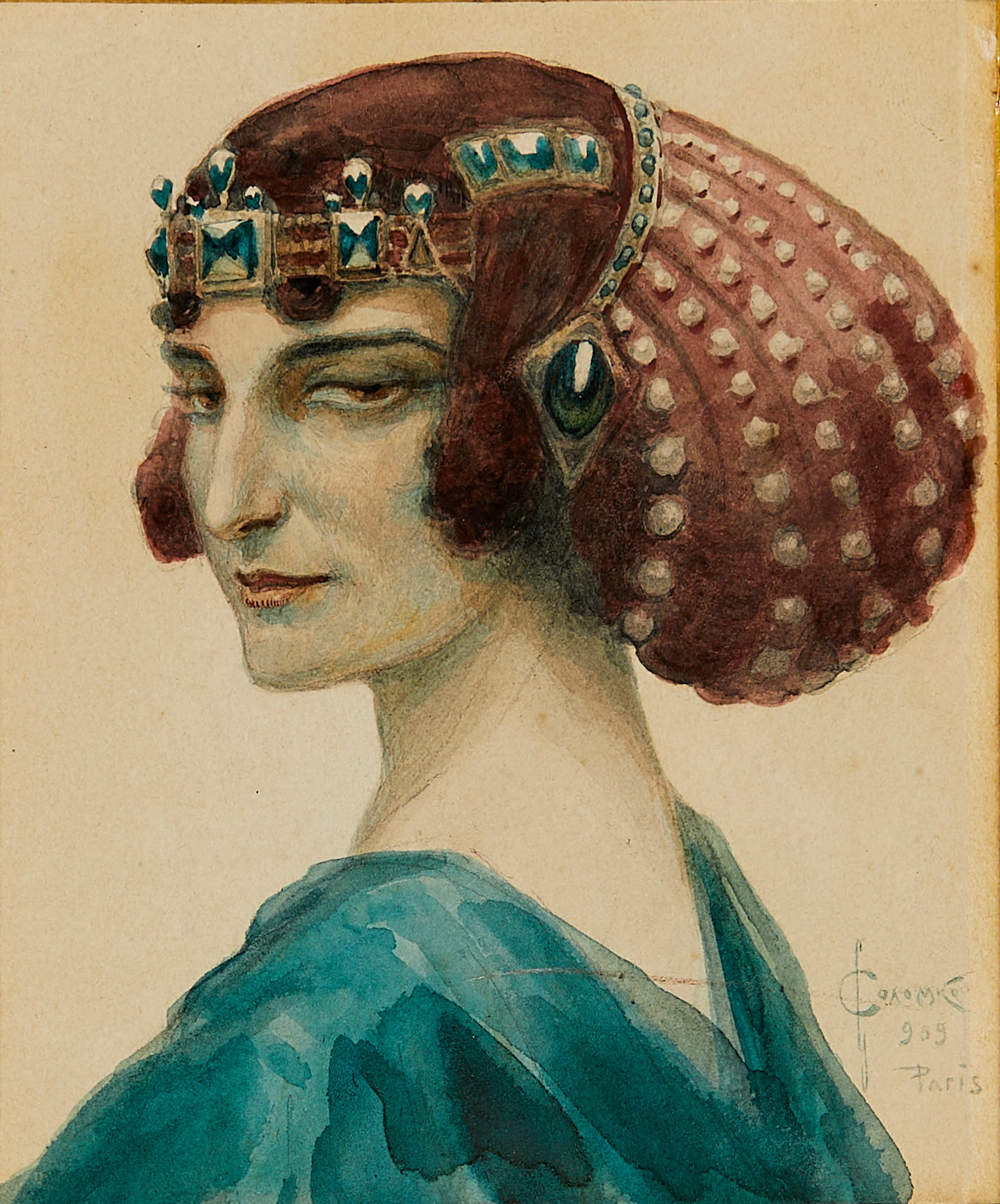
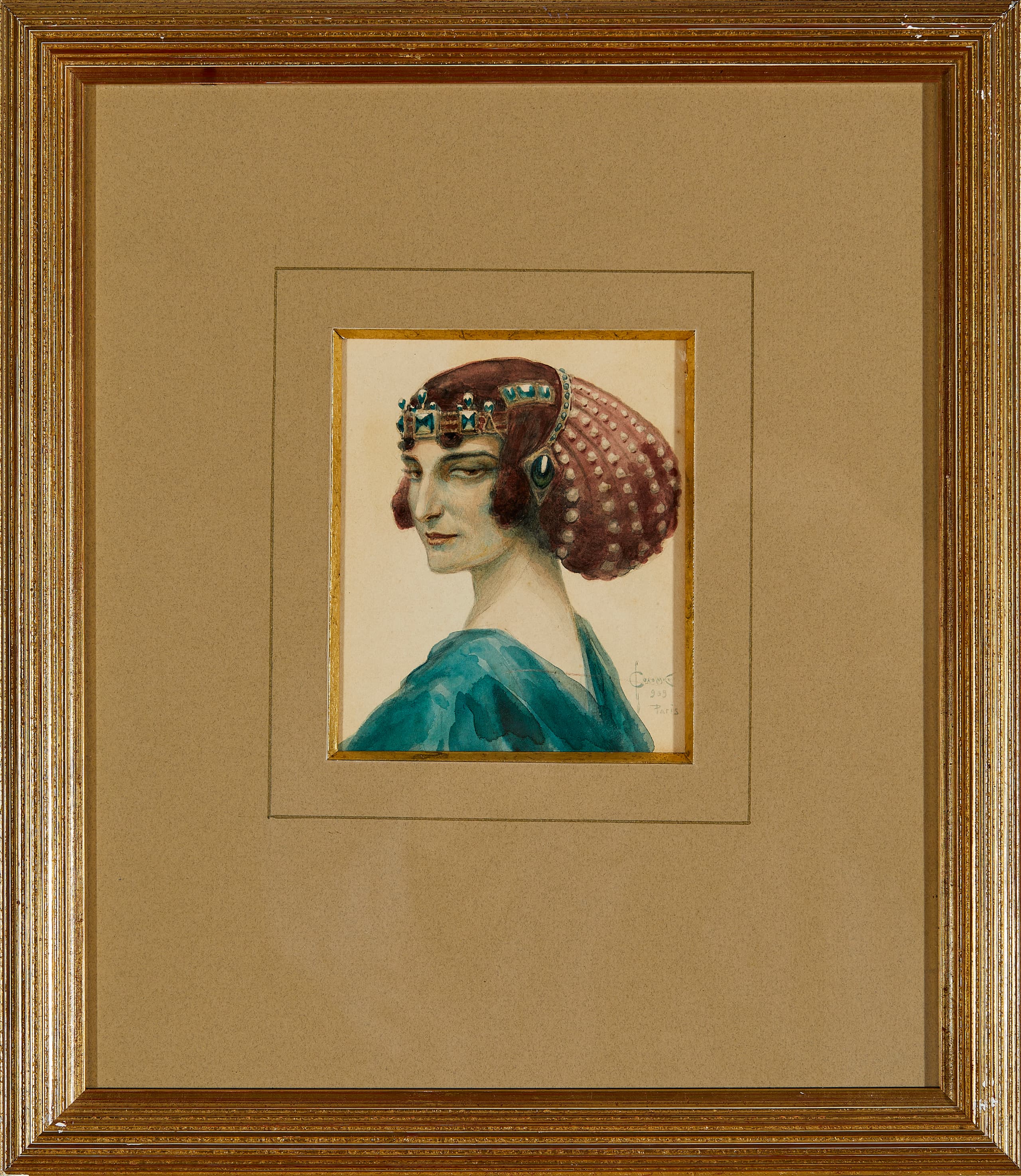
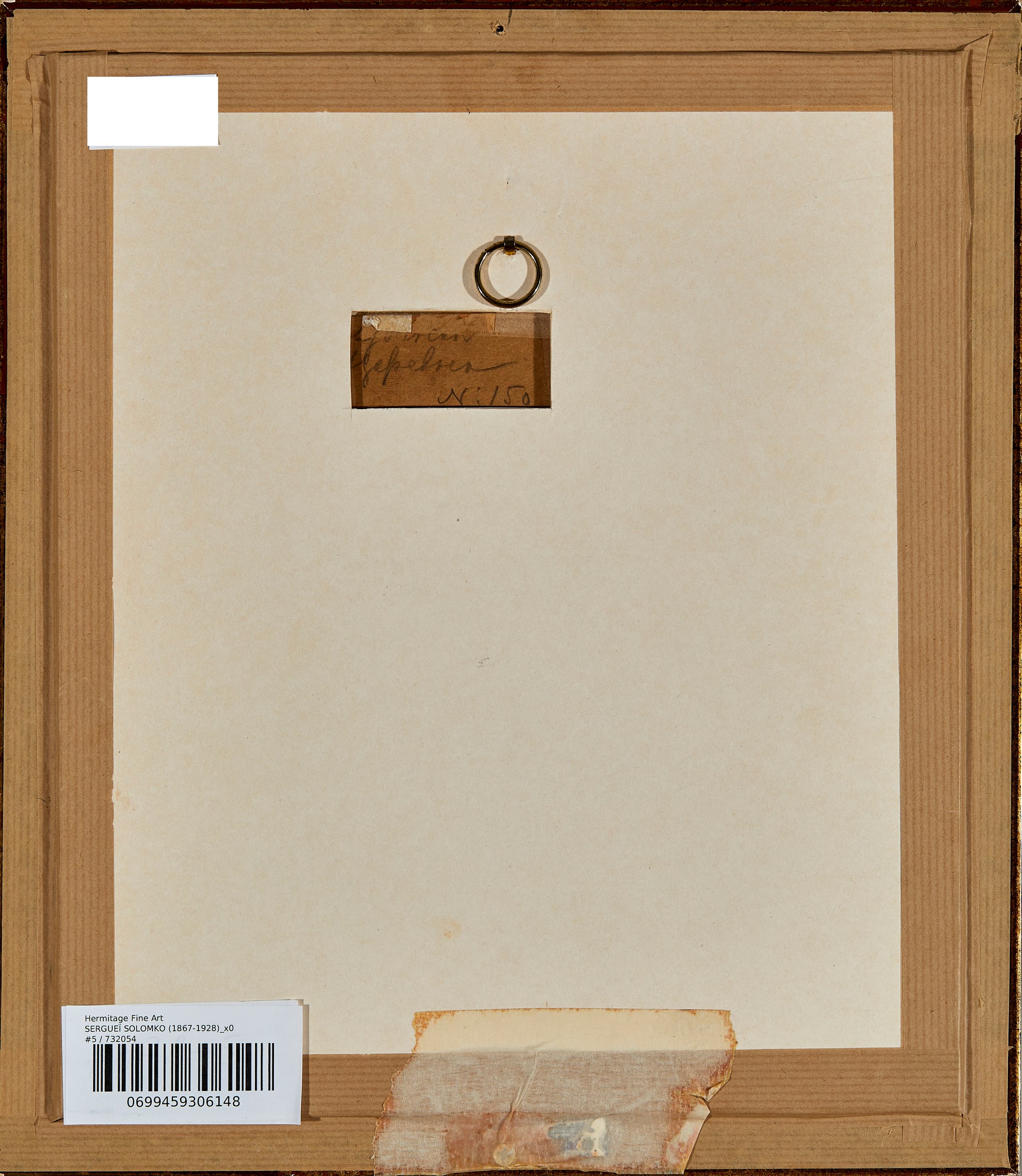
signé en cyrillique et daté ' Solomko 909 Paris ' (en bas à droite), inscrit en cyrillique et numéroté ' Iudeyskaya Tsarevna N 150 ' [princesse juive] (au verso)
aquarelle sur papier
12 x 10 cm
EXHIBITED:
Castello Carlo V, Lecce, Ballets Russes. I Classici della modernità, 3 November 2019 – 30 January 2020
Sheremetev Palace, St Petersburg, In Diaghilev’s Circle. Fates Intersecting, 14 November 2020 – 12 February 2021
In 1908, Ida Rubinstein made her debut in a private production of Oscar Wilde's Salome, which she both organized and financed. With minimal formal ballet training, she collaborated with Mikhail Fokine, who choreographed the Dance of the Seven Veils.
Originally planned for the Mikhailovsky Theatre in St. Petersburg as a charity event for the Russian Theatrical Society, the production, with music by Alexander Glazuno, was directed by Vsevolod Meyerhold, and the designs were created by Leon Bakst. However, the production was banned by the censors.
A single private performance did take place, in which Rubinstein famously stripped nude during the Dance of the Seven Veils, provoking both scandal and fascination. Salome was performed without linguistic articulation, using only mimic language, as the Russian Orthodox Church had prohibited staging Wilde’s text. The script was distributed to the audience in advance. A staging of the dance took place on 20 December (2 January 1909) at the Theatre of the Conservatoire
Fokine recalled:
'The work on the Salome dance was unique in my life.
I had to teach Rubinstein simultaneously the art of dance and to create for her the Dance of Salome. Before this, she had studied dancing very little, and showed very little progress in it. Her energy and endurance were of great assistance, as was her appearance. I felt that it would be possible to do something unusual with her in the style of Botticelli. She was tall, thin, and beautiful, and was interesting material from which I had hopes of moulding a unique scenic image.'
-Michel Fokine, Memoirs of a Ballet Master. London 1961, p. 137–138.
Sergey Solomko (1867–1928) was a Russian painter, watercolorist and illustrator born in Saint Petersburg into the family of a general. He studied at the Moscow School of Painting, Sculpture and Architecture from 1883 to 1887, and then at the Imperial Academy of Arts in Saint Petersburg from 1887 to 1888. Solomko became renowned for his masterful watercolours depicting historical, allegorical and fairy-tale scenes, particularly images of Russian boyar life and folklore. Solomko collaborated with leading magazines such as Mir Iskusstva, Golden Fleece, Pole, and Shut, and illustrated works by Pushkin, Lermontov, and Gogol. His art also appeared on popular postcards.
Solomko also designed for the Imperial Porcelain Factory and created miniatures for the Fabergé firm.
In 1914, Empress Alexandra Feodorovna acquired his watercolour Cuirassier. A member of several Russian art societies, he moved to Paris in 1910, where he continued illustrating for French publishers and created postcard series celebrating Russian heritage. He participated in exhibitions of Russian émigré artists and was active in the Russian artistic community in Paris