'Life as Divine Comedy' by Maxim Kantor
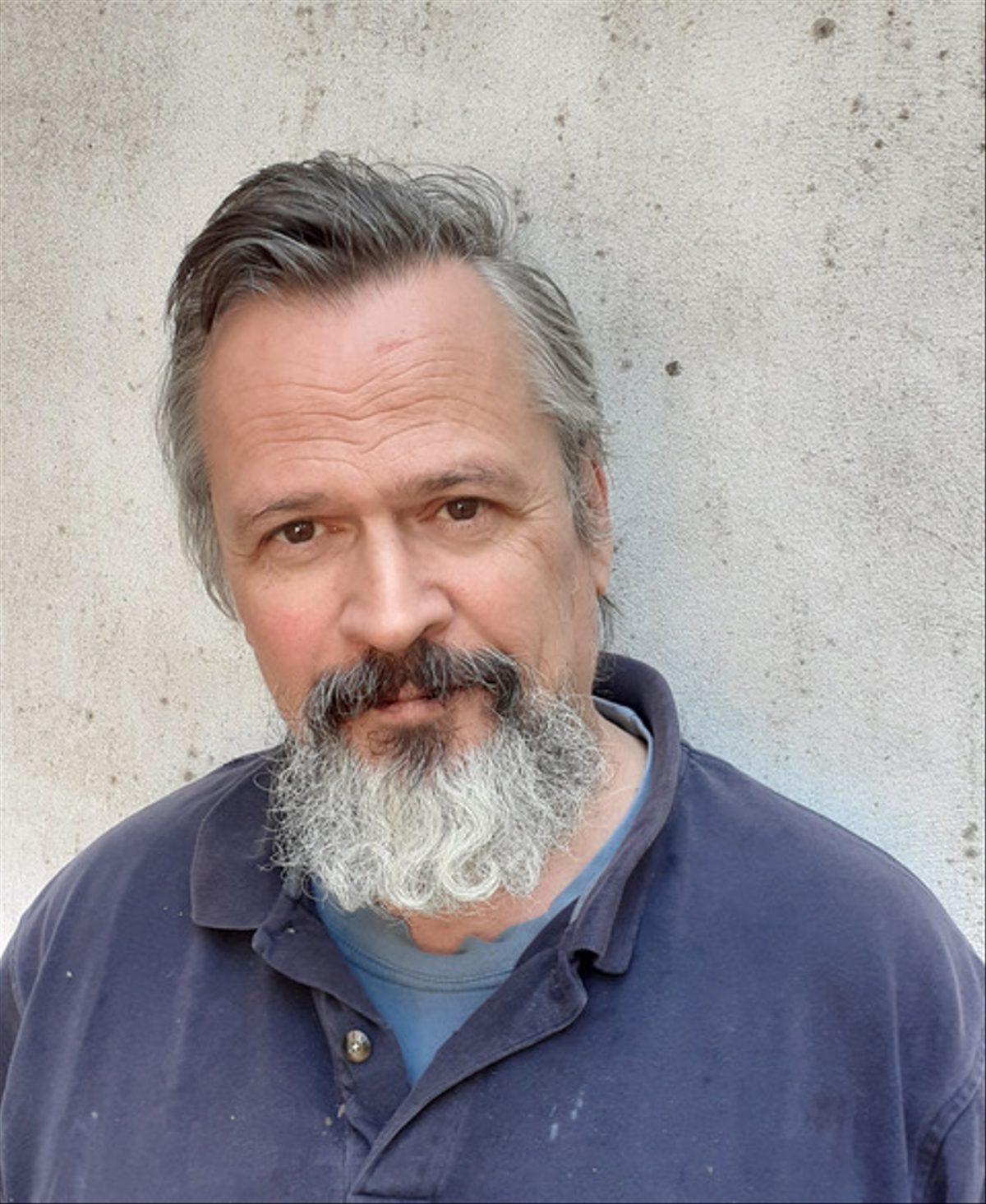
Hermitage Fine Art is pleased to present, alongside its July auctions, an exhibition entitled 'Life as Divine Comedy' by the artist Maxim Kantor.
The exhibition will feature 13 works by the artist, offering visitors a unique insight into his powerful artistic vision and distinctive visual language.
Hôtel Métropole Monte-Carlo, Salon 'Le Théâtre'
Vernissage: 10 July, 19:30–21:00
Exhibition: 11–15 July, 11:00–18:00
Art History Lectures — 12 July 2026, 3:00 pm: Katia Lehaut & Maxim Kantor. Programme & booking
Life as a Divine Comedy
It is no coincidence that this exhibition opens with a portrait of Dante.
Dante Alighieri did more than propose a structure for the universe—he established a far greater precedent: he made the artist’s consciousness the driving force of artistic narrative. What, then, could be more essential for an artist than to project the structure described in Dante’s Divine Comedy onto his own existence?
The path of ascent followed by Dante—from the circles of Hell, through Purgatory, to the realms of Paradise—has become a model of artistic self-awareness. From the analysis of lived experience to broader reflection, and from reflection to pure contemplation: this is how artistic creation unfolds, retracing the journey from Hell to Purgatory to Paradise.
The artist rises from examining personal experience, through the awareness of oneself as a participant in the universal mystery of existence, toward pure creativity, which is ultimately experienced as complete Freedom. This journey— from reflection on experience to freedom—is one that Maxim Kantor has undertaken throughout his artistic career.
Maxim Kantor began his career with sharply social, almost “infernal,” paintings. Red apartment blocks, prisons, hospitals, and railway stations became settings in which the protagonist appears oppressed, exhausted, and lost. Kantor also painted The State, a work that directly evokes the circles of Dante’s Hell. This period also includes his graphic cycle Waste Ground, consisting of seventy etchings. The series serves as a summation of the artist’s life in Russia, which he left some twenty years ago.
The second stage of Maxim Kantor’s work is associated with his life in Europe and, paradoxically, with nature. Forests and the ocean become the protagonists of his paintings. It is here that his analysis of contemporary society emerges once again, now understood within the continuum of “long history” stretching back to antiquity. Works such as Cathedral in the Ocean and Atlantis place modern society within the greater mystery of existence. The dilemmas of the free individual—yet one deprived of grace—echo Dante’s conception of Purgatory.
For Dante, Purgatory is a kind of waiting room that prepares the soul for its ascent toward light. For Kantor, Purgatory is embodied in the living, freedom-filled forces of nature. This period also includes the graphic albums Metropolis and Volcano. Metropolis (seventy etchings) examines Western society with the same uncompromising severity that the artist had previously directed toward Russia. In Volcano (seventy lithographs), Kantor offers a satirical vision of twentieth-century political history. The perspective of this series is likewise rooted in nature: it is as though the human world were seen through the eyes of eternal natural forces. Its protagonists resemble ants; monstrous moles undermine entire states; and technological progress is repeatedly confronted by the rebellion of matter itself.
Finally, Kantor’s oeuvre enters a third phase, which may best be described as metaphysical. Having explored the mysteries of the natural elements, the artist turned to the lives of Christian saints—Saint Sebastian, Saint Christopher, and Saint Francis. He created The Last Judgment (Luxembourg Museum of Art), painted the Chapel of the Resurrection at the Luxembourg Religious Centre, and produced works for the Vatican as well as for the Church of Saint-Merry in Paris. In the present exhibition, the artist presents Saint George and Madonna and Child.
It cannot be said that Kantor’s “paradisal” paintings are serene—quite the contrary. At times they contain even greater despair than his earlier “infernal” works. In Thomas More and Erasmus, for example, the severed head of Thomas More plays chess within a strangely blood-soaked and deeply ambiguous paradise.
Today, it seems that Kantor has reached a stage of artistic development that Dante never described in the Divine Comedy. He seeks to answer a different question: how can the artist move beyond the clear hierarchy of good and evil in a world where Heaven, Hell, and Purgatory have once again become inseparably intertwined, as they were in the ancient Celtic mysteries? His recent phantasmagorical works—such as The Battle of the Centaur and the Unicorn—appear to be an attempt to address precisely this question.
The present work is included in Life as a Divine Comedy, Maxim Kantor’s exhibition at the Hôtel Métropole Monte-Carlo, on view from 10 to 15 July 2026. The exhibition is accompanied by a programme of art history lectures; please contact the organisers for reservations.