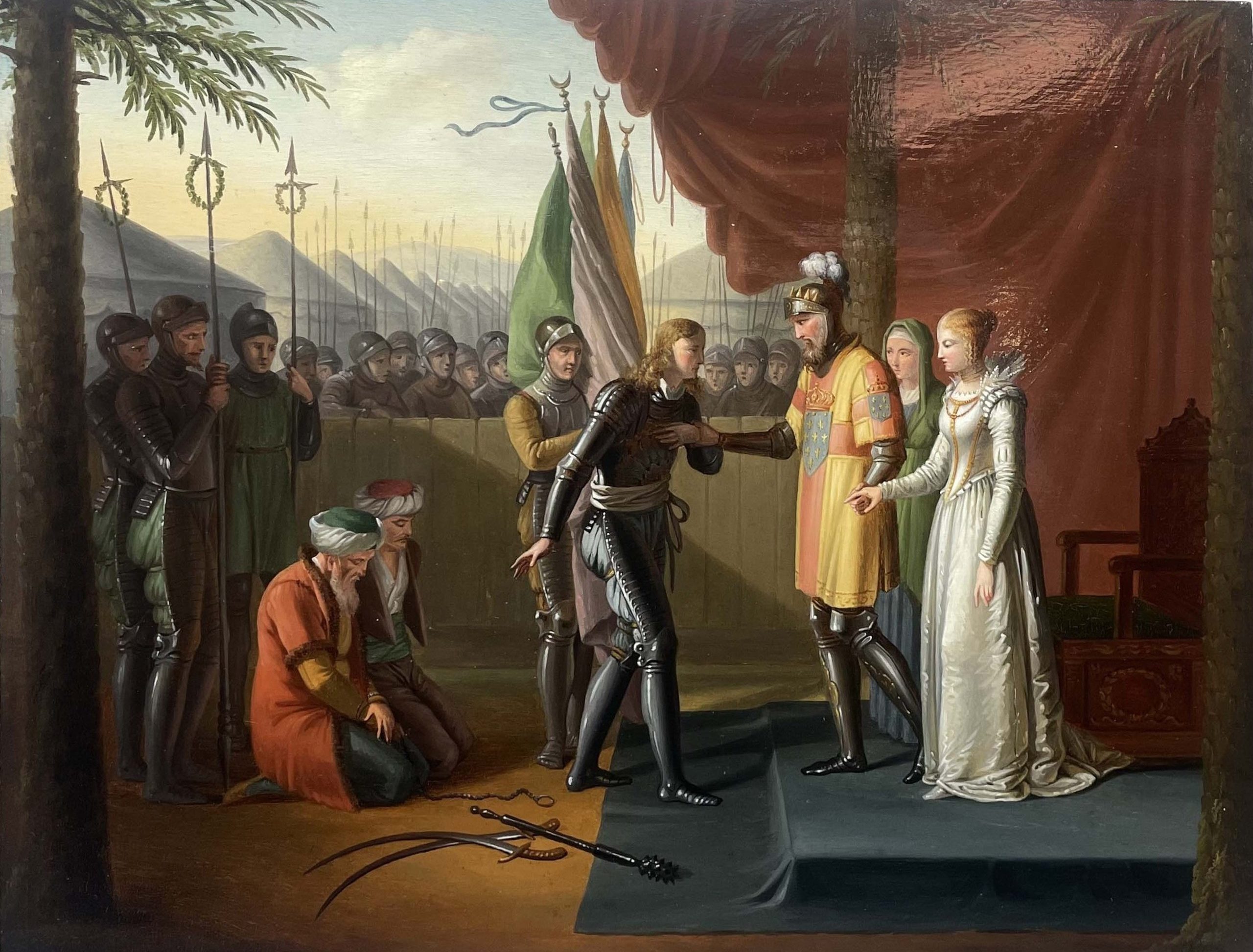
ATTRIBUTED TO JEAN-BAPTISTE MALLET (1759–1835) Le Beau Dunois, no. 3
Lot 49
6 5008 000
oil on panel
21 × 27 cm
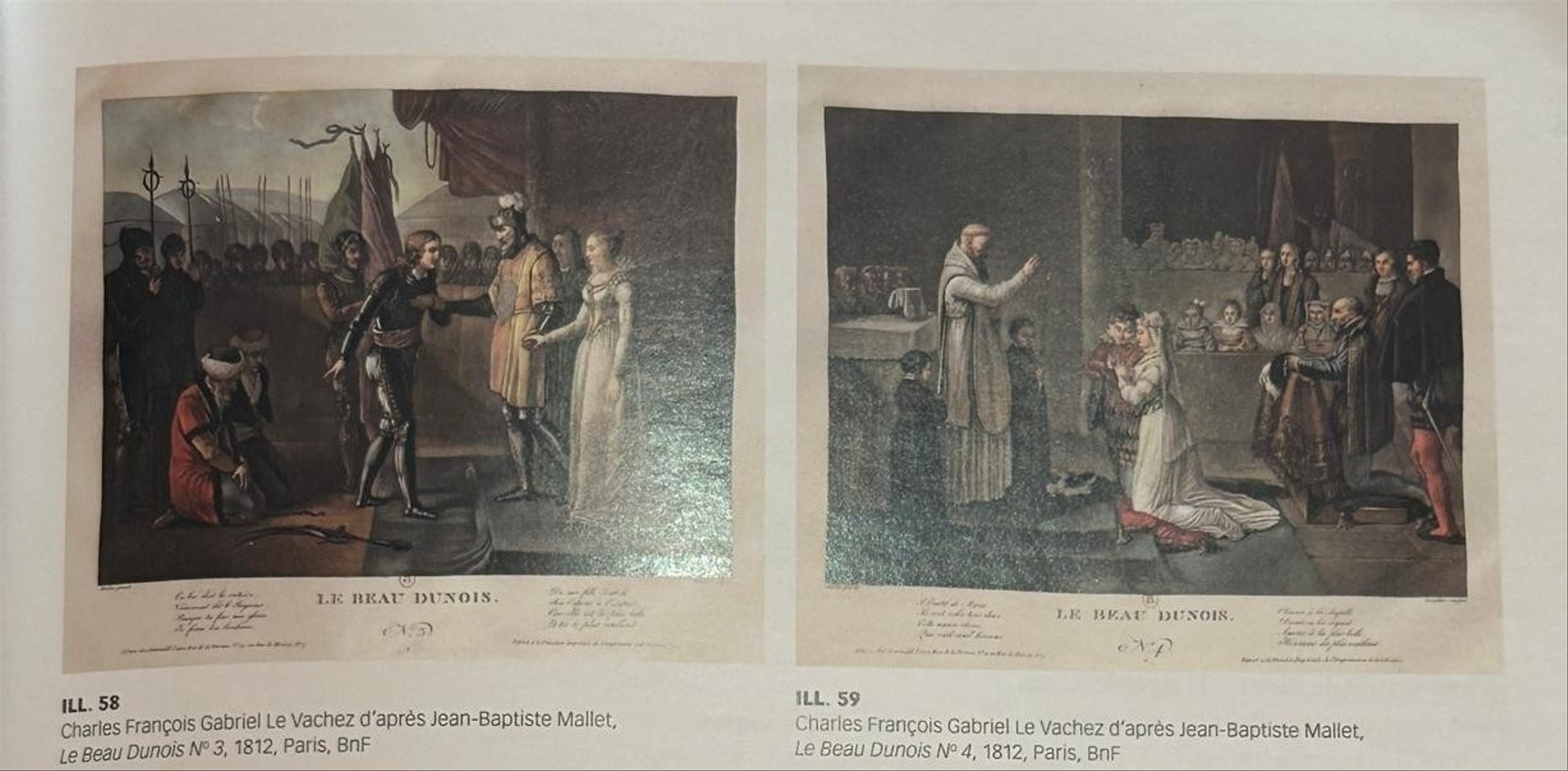
Our painting corresponds closely to the engraving by Charles-François Le Vachez after Jean-Baptiste Mallet, Le Beau Dunois, no. 3, 1812, published in Caroline Blumenfeld, Jean-Baptiste Mallet: La route du bonheur, exhibition catalogue, Musée Jean-Honoré Fragonard, Grasse, 4 June–2 October 2022, ill. 58, p. 41.
Le Beau Dunois refers directly to a famous nineteenth-century French poem and historical romance, better known under the title Partant pour la Syrie. The lyrics, written by Alexandre de Laborde, recount the chivalric story of the “young and handsome Dunois”, inspired by the celebrated Jean de Dunois, companion-in-arms of Joan of Arc. Before departing for the Crusades, Dunois prays before the Virgin Mary, asking her to bless his exploits. Returning victorious, he is granted the hand of his lord’s daughter, the beautiful Isabelle, whom he marries in the chapel. The poem was set to music by Queen Hortense de Beauharnais, mother of Napoleon III.
The song subsequently became the unofficial national anthem of France under the Second Empire.