LEV ZEVIN (1903–1942) Meeting of collective farmers
Lot 211
2 0003 000
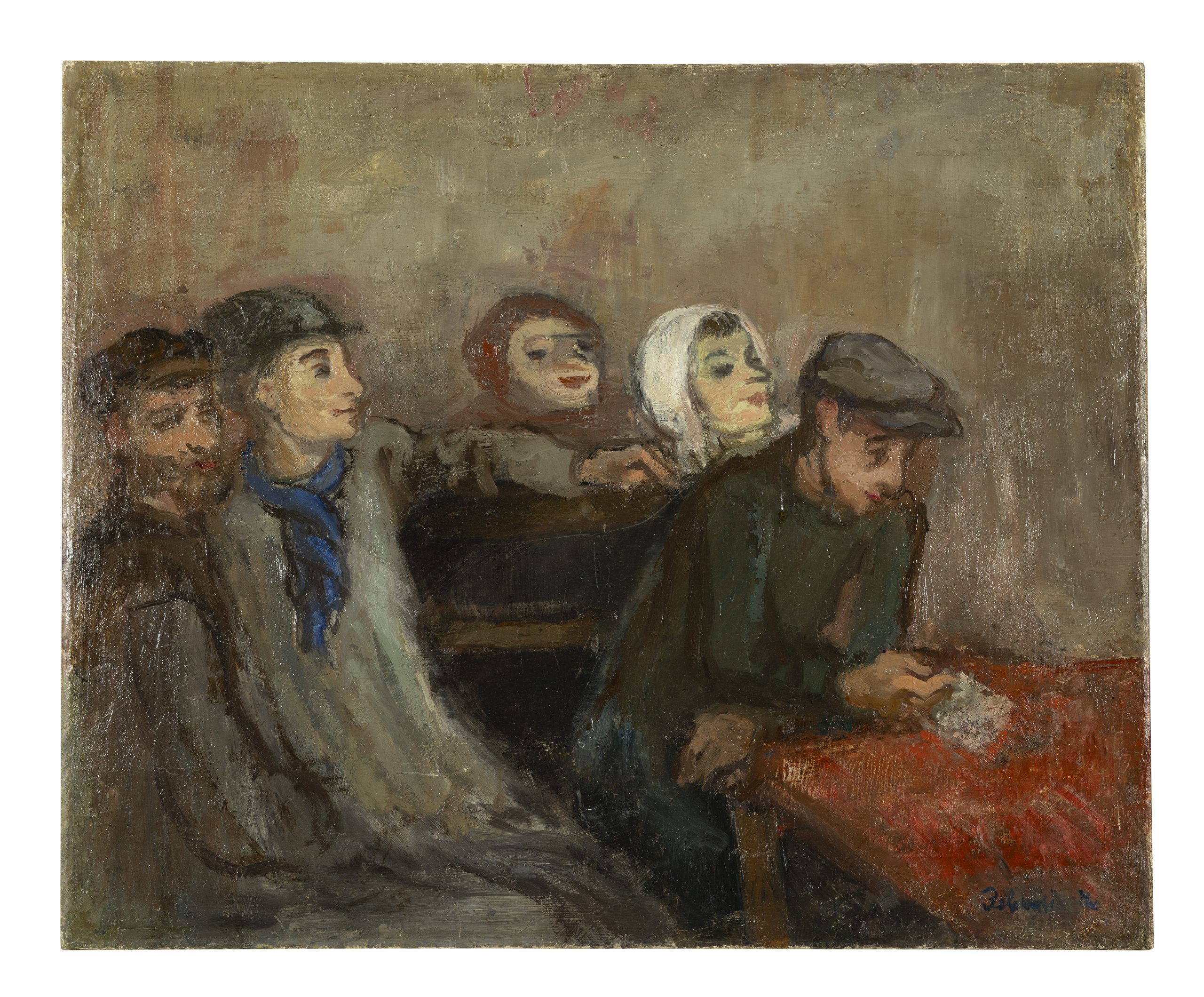
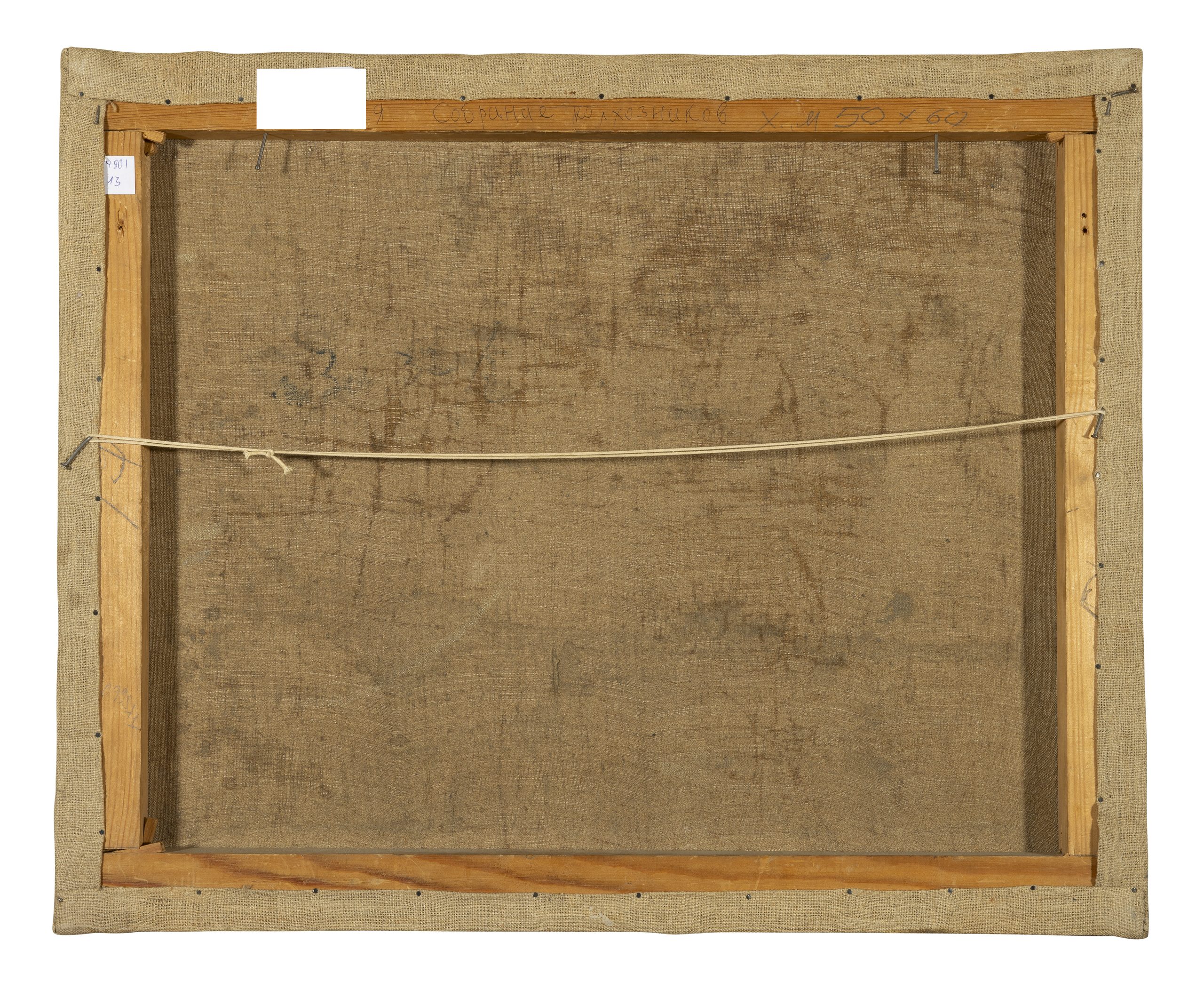
signed in Cyrillic ‘Zevin L.’ (lower right), inscribed in Cyrillic ‘Sobranie kolkhoznikov’ (on the reverse of the stretcher)
oil on canvas
50 × 60 cm
A pupil of Yuri Pen, Marc Chagall, Kazimir Malevich and Robert Falk, Lev Yakovlevich Zevin (1903–1942) belonged to a generation of Russian artists whose work was shaped by the artistic experimentation of the early twentieth century. Despite his short career, Zevin developed a distinctive painterly style, characterised by an improvisational approach, expressive brushwork and particular attention to the texture of paint and subtle variations of colour.
Born in Vitebsk, Zevin studied at the Vitebsk People’s Art School, where he joined the avant-garde collective UNOVIS in 1920. He subsequently moved to Moscow to study under Robert Falk at Vkhutemas, later becoming his assistant. He was associated with several important artistic groups, including the Group of Thirteen and, later, the Group of Five.
As the art historian Alexandra Shatskikh observed in her 1991 essay on Zevin, the artist’s sensitivity to the changing qualities of his subjects informed his improvisational technique. He placed particular emphasis on the material qualities of paint, striving to achieve both richness and subtlety in his use of colour.
During the 1930s, Zevin undertook several artistic journeys to Soviet collective farms, including those in the Kherson region, which provided subjects for his paintings.
Zevin volunteered for military service in July 1941 and is believed to have died near Vyazma in 1942, bringing his artistic career to a premature end.