BALMONT KONSTANTIN (1867-1942), AUTOGRAPH A notebook with handwritten poems—translations from Polish, Lithuanian, Serbian, Croatian, and Bulgarian poetry. 1928.
Lot 702
Sold
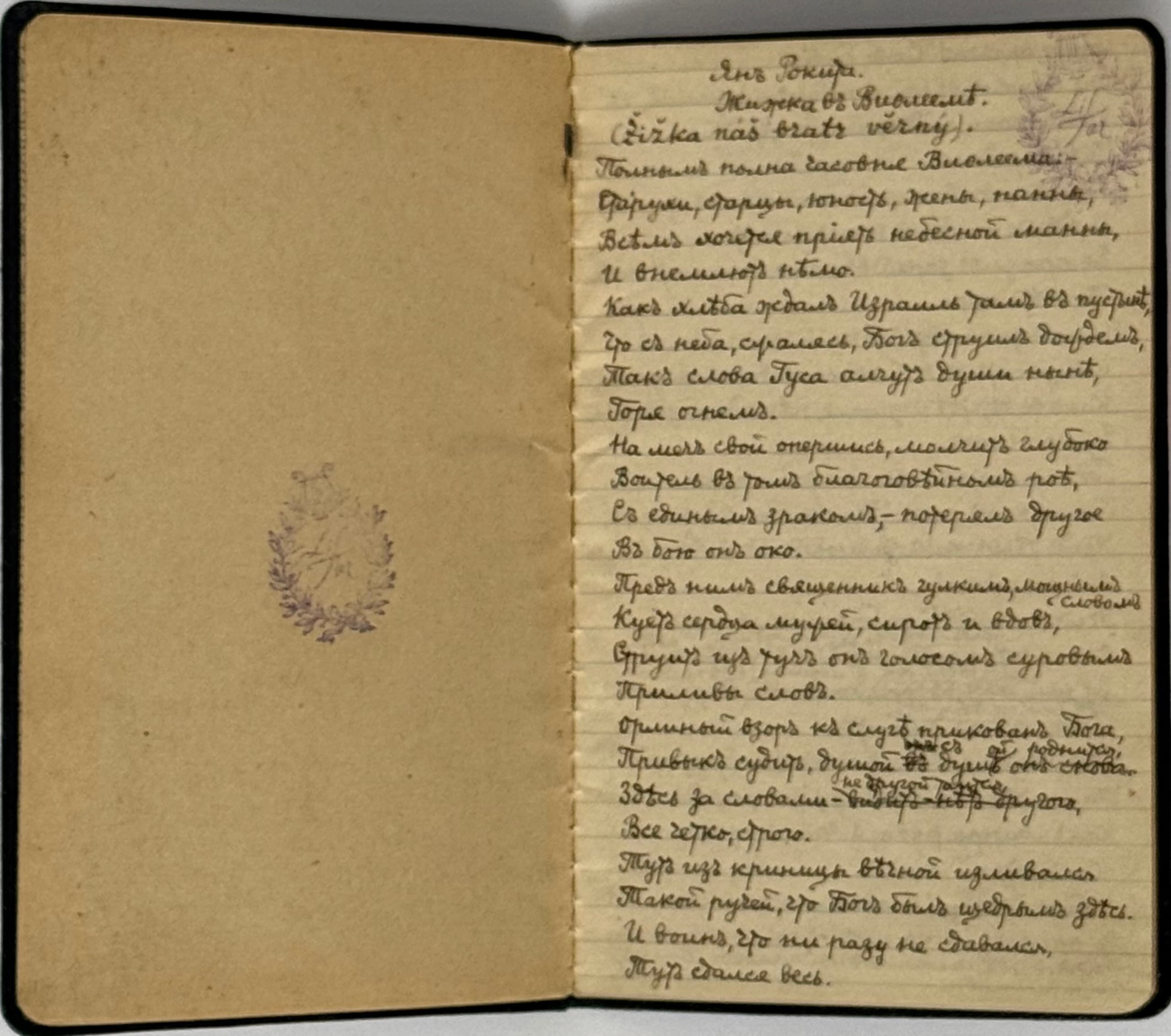
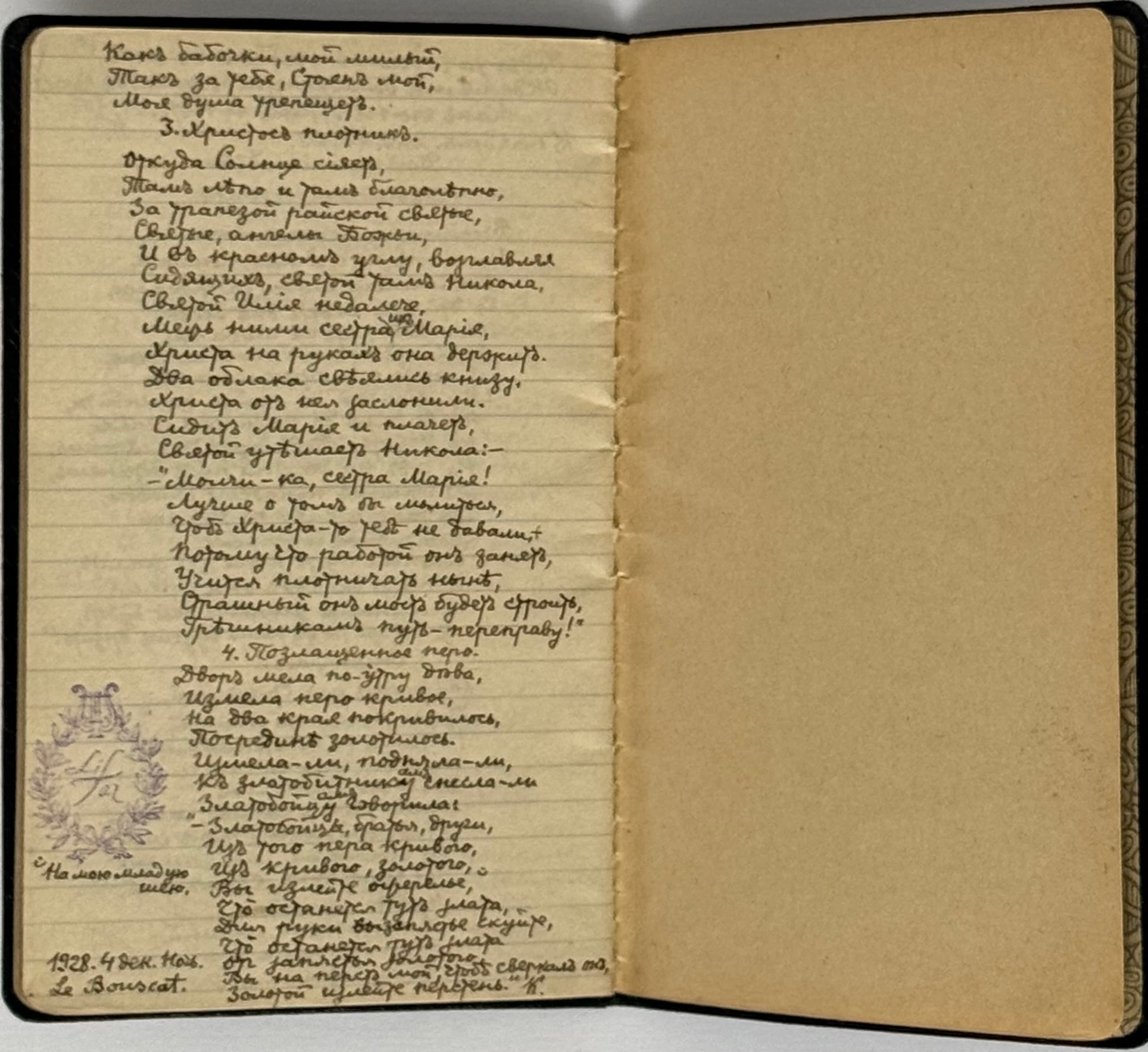
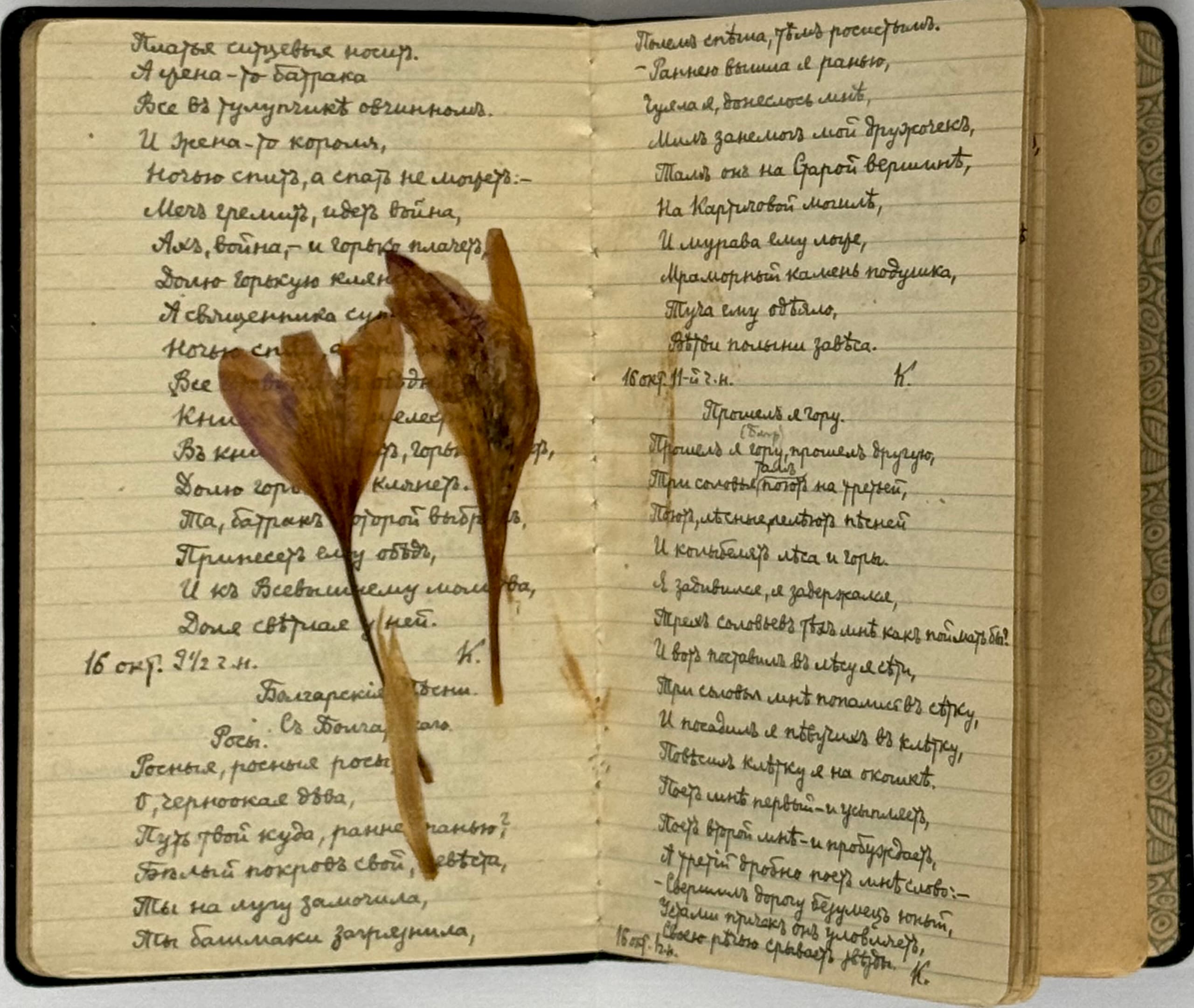
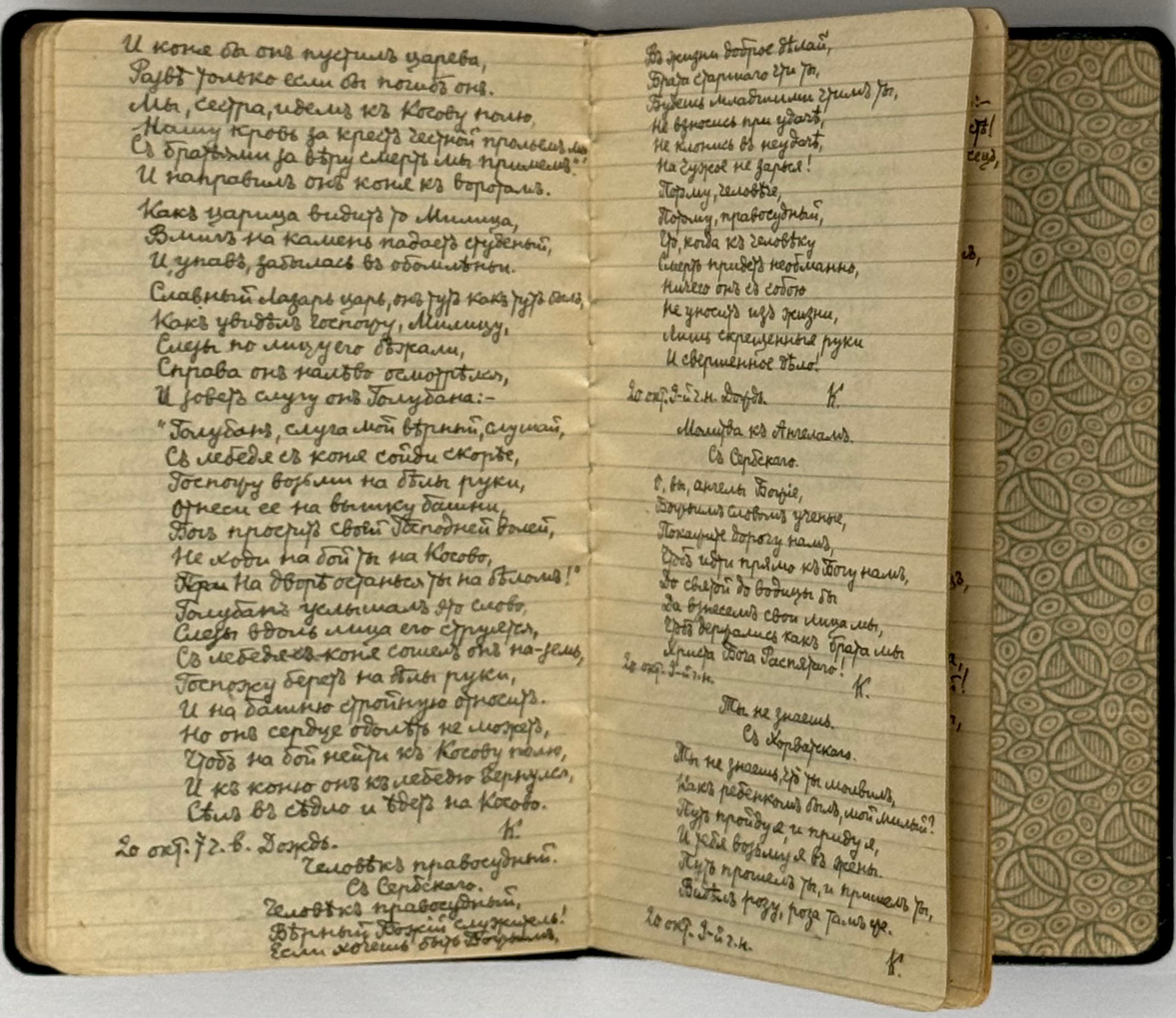
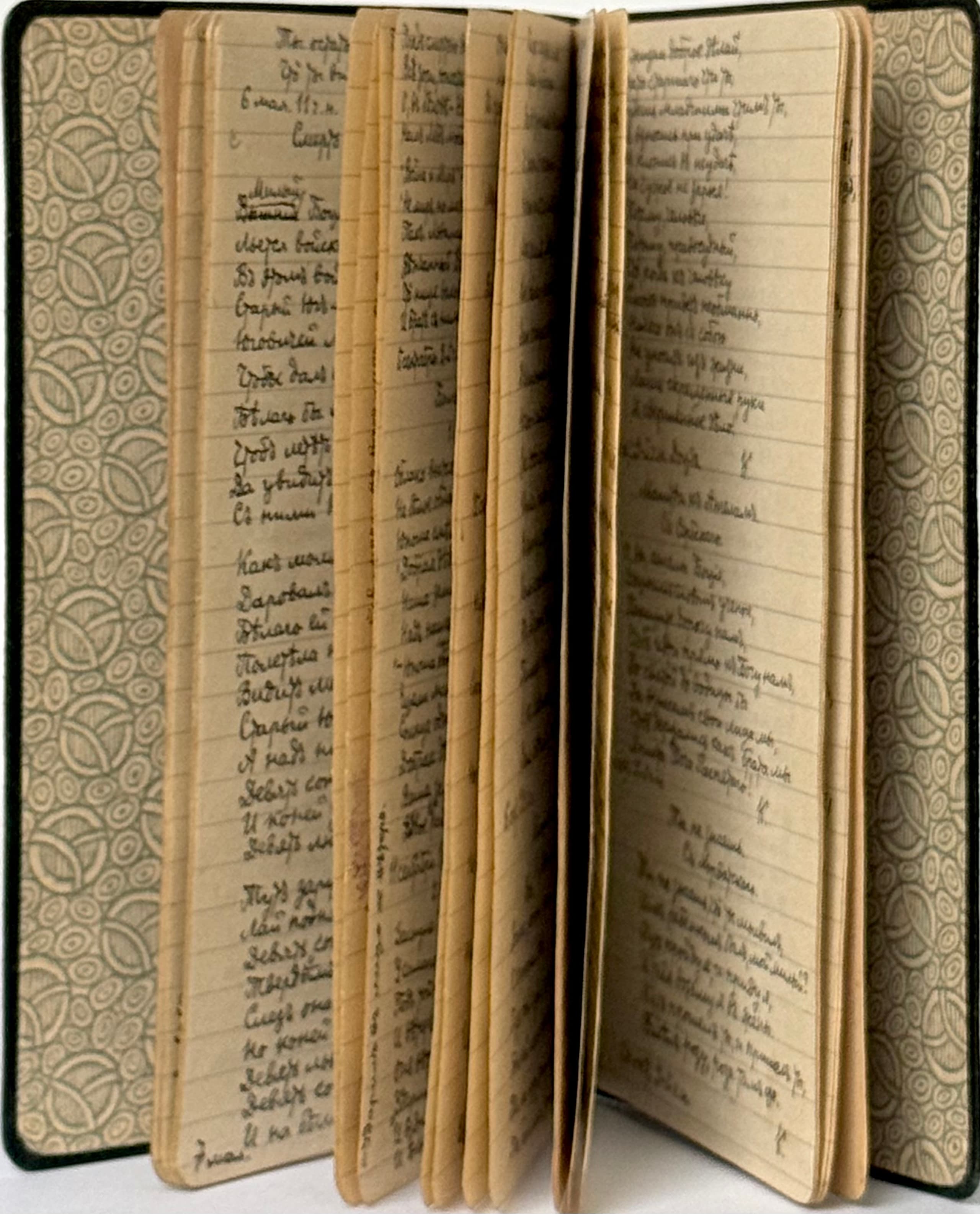
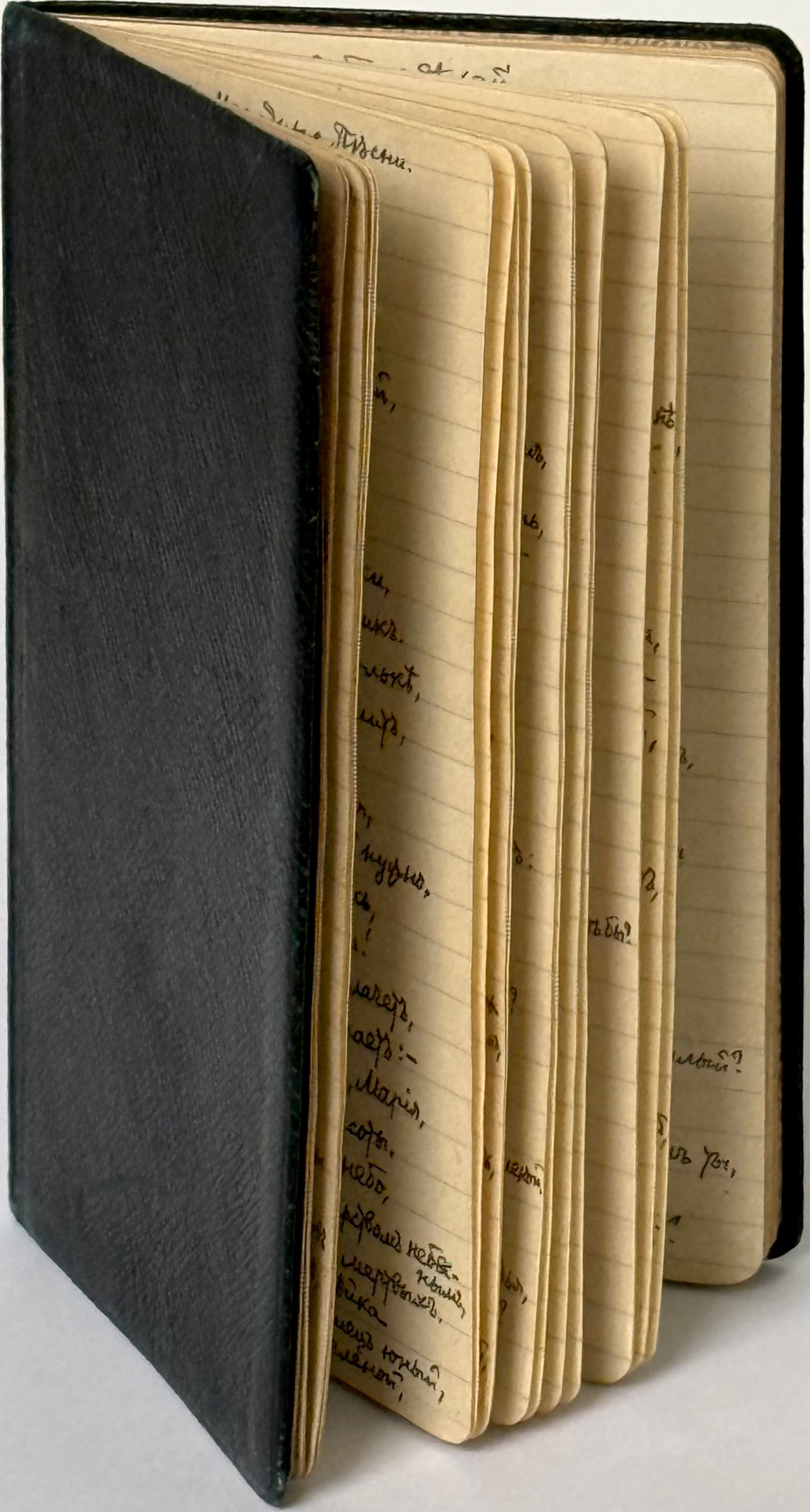
60 pages, 56 of which contain text; 13.8 x 8.7 cm.
Corrections, author’s comments, and insertions in the text.
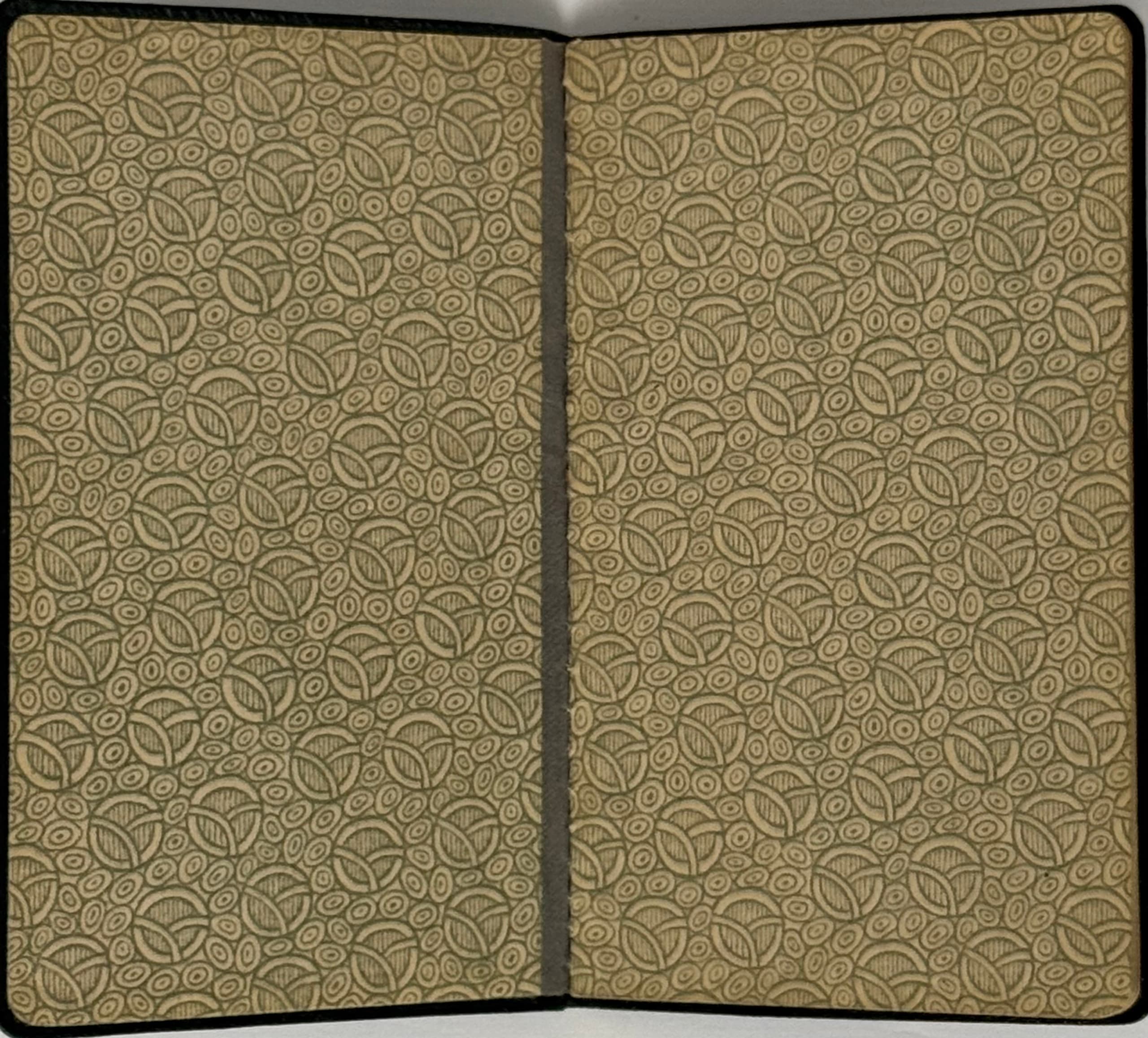
In a full leather binding of the period. Endpapers pasted over with ornamented paper. Owner’s stamped bookplate of Sergei Lifar on the endpapers, first and last pages.
Includes translations:
‘Ian Rakita (Zhizhka v Vifleeme)’ [‘Jan Rakita (Žižka in Bethlehem)’],
‘Vesna i vino’ [‘Spring and Wine’] by K. Wierzyński,
‘Bozhii rab’ [‘Servant of God’],
‘Molitva’ [‘Prayer’] by J. Lechoń (from Polish);
‘Chto ia tseniu. Liubov’ i smert’’ [‘What I Value. Love and Death’],
‘Smert’ materi Iugovichei’ [‘The Death of the Mother of the Jugovićes’] (from Serbian);
Bulgarian folk songs;
‘Begstvo L’va Tolstogo’ [‘The Flight of Leo Tolstoy’] by Bozhko Lavrich (from Croatian);
‘Markov sokol’ [‘Marko’s Falcon’] (from Serbian);
‘Kreshchenie Khristovo’ [‘The Baptism of Christ’] (from Serbian);
‘Gody za godami’ [‘Years After Years’] by Liudas Gira (from Lithuanian), and others.
The entries are dated with various dates in 1928 and signed with the letter “K.” Many of them indicate the place and time.
Balmont translated extensively from Polish, in particular the works of Adam Mickiewicz, Stanisław Wyspiański, Zygmunt Krasiński, Bolesław Lesmian, Jan Kasprowicz, and Jan Lechoń, and wrote extensively about Poland and Polish poetry. In the 1920s, the poet translated Czech, Bulgarian, Serbian, Croatian, and Slovak poetry. Balmont also considered Lithuania to be part of the Slavic world: his first translations of Lithuanian folk songs date back to 1908. Among the poets he translated were Petras Babickas, Mykolas Vaičius, and Liudas Gira; Balmont was close friends with the latter. Balmont’s book Northern Lights. Poems about Lithuania and Russia” was published in Paris in 1931. Many of his translations were published in the 1930s.
Of exceptional historical and cultural value.
Provenance: archive of S.M. Lifar (1905-1986).