MARIE-CESAR DE FAY OF LATOUR-MAUBOURG (1756-1831) 7 autograph letters signed to his friend Masclet, sub-prefect of Pas-de-Calais in Boulogne. February-May 1802 and April 1803.
Lot 17
500700
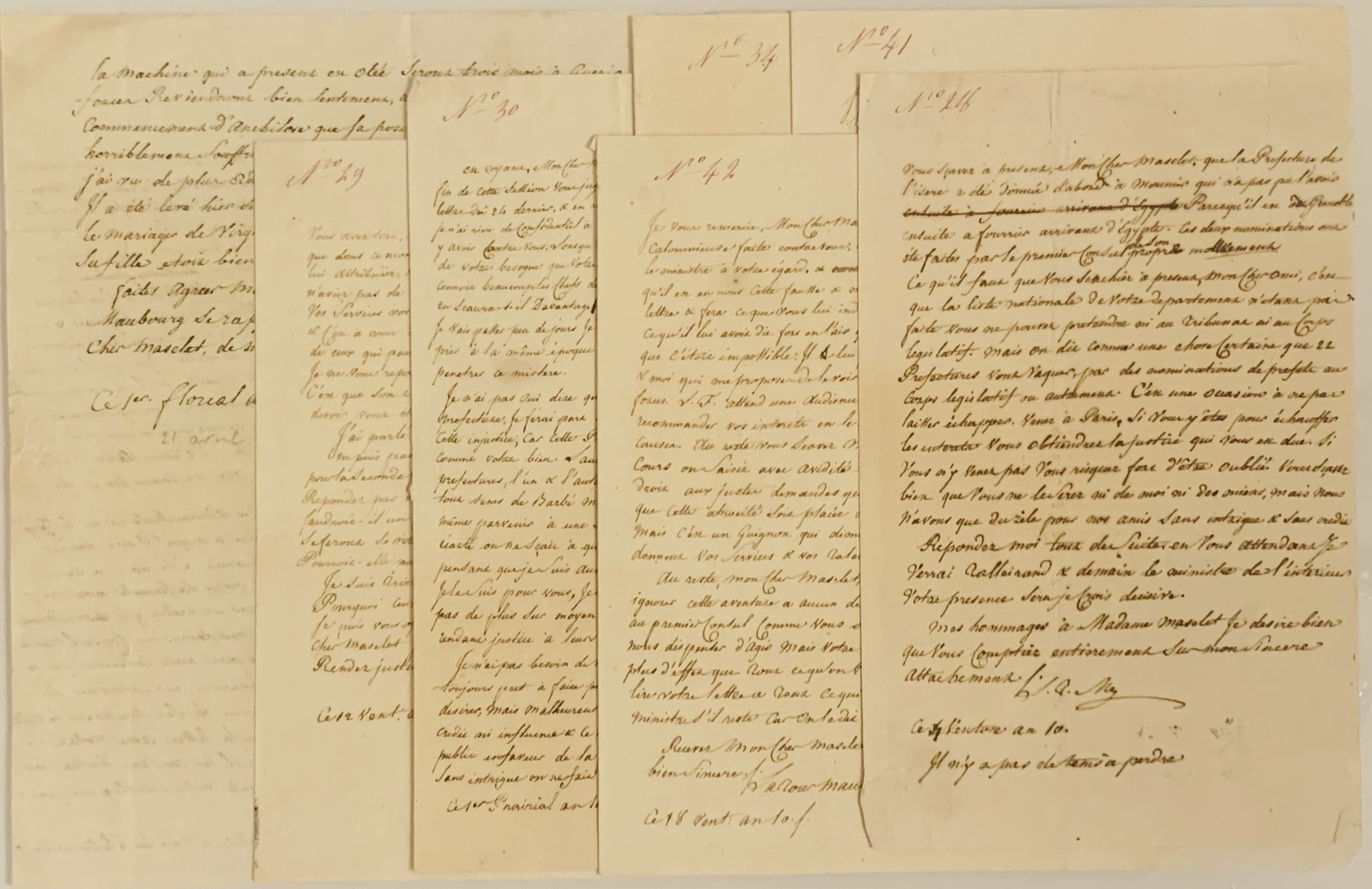
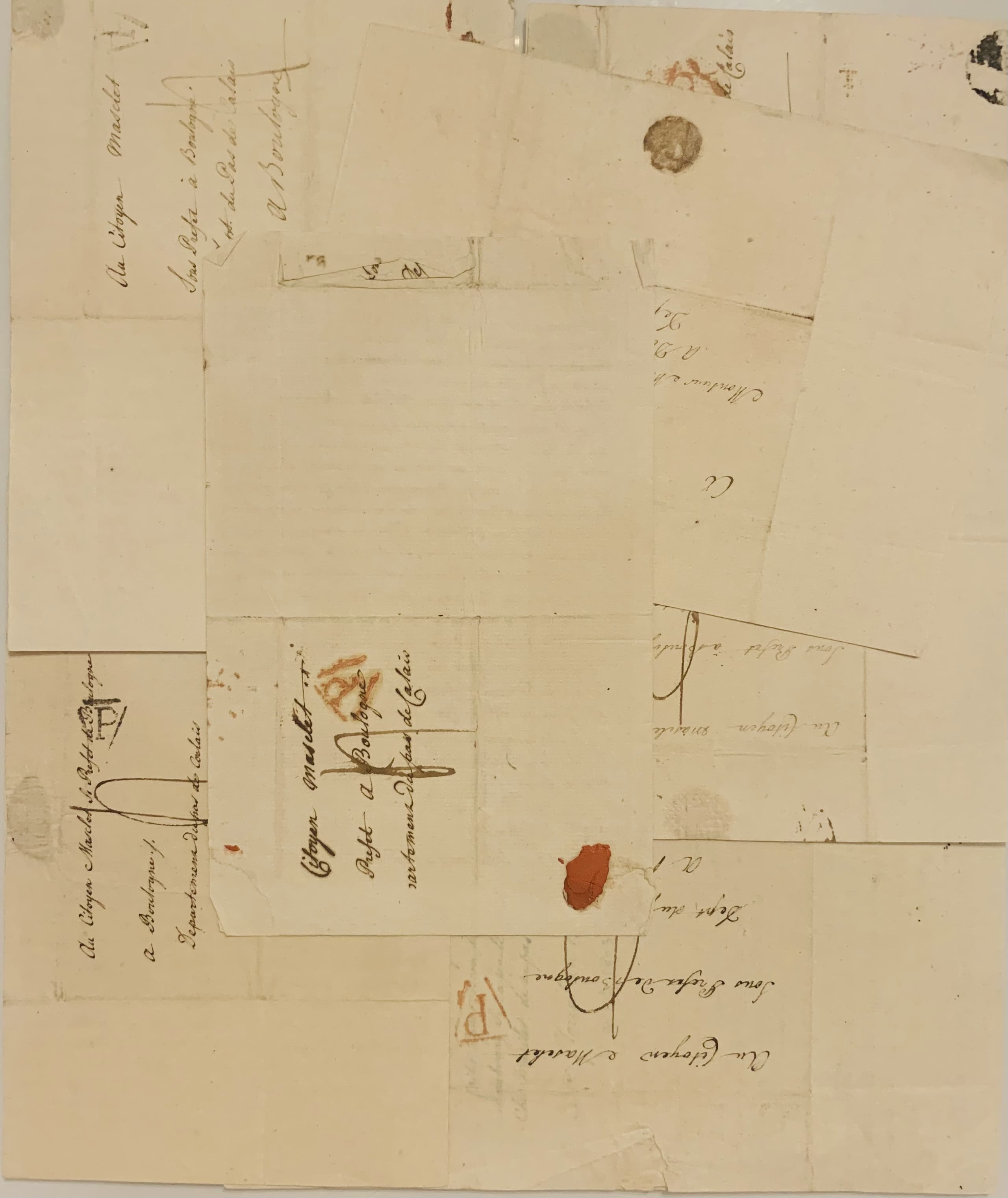
7 pp. ½ in-8 and in-12, address with postmark (postage paid) on the reverse.
Correspondence reflecting the new political regime of the Consulate and the power struggles within the new prefectural administration established by Bonaparte; valuable testimony from the sub-prefect of Boulogne at a time when Bonaparte was preparing to invade England.
He discusses with his friend the quarrels, decisions and intrigues surrounding appointments, with the sub-prefect hoping to obtain a prefecture. For Pas-de-Calais, Latour-Maubourg advises his friend, who has had the misfortune of displeasing the bishop, to have more peaceful relations with the clergy, who have become powerful with the Concordat. (...) The stumbling block for administrators is the clergy. It is a lever that the Government has deemed necessary and which it must strengthen in order to reap the benefits it promises. It is therefore up to its employees to see its point of view and trust in its firmness so as not to allow this class of civil servants to gain influence that could become dangerous (...). It is not to keep you in your jobs that I urge you to treat the priests with consideration, but to further the intentions of the Government (...). The prefecture of Isère, initially given to Mounier, was finally entrusted to Fourrier, who had arrived from Egypt. The appointment was made by the First Consul on his own initiative. What you need to know now (...) is that as the national list for your department has not been drawn up, you cannot claim either the Tribunate or the Legislative Body. But it is said with certainty that 22 prefectures will be filled by appointments of prefects to the Legislative Body (...). This is an opportunity not to be missed. Come to Paris, if you are there, to stir up interest, and you will obtain the justice you deserve. If you do not come, you run the risk of being forgotten (...) We have nothing but zeal for our friends without intrigue or credit (...). Etc.
Mention of Lafayette, Talleyrand, to whom Latour-Maubourg seems close, Maret, Dumas, Lameth... and Bonaparte, who appears in every conversation. Regarding La Fayette, who had broken his femur: La Fayette will not be crippled, that is certain. But the wounds from the machine, which has now been removed, will take three months to heal (...). He is in great pain and adds: He was lifted onto a chaise longue yesterday for the first time, for Virginie’s wedding. He was very tired (...). Further on, Lafayette, who has already seen Talleyrand and is awaiting an audience with Bonaparte, offers to help and recommend his friend to counter the minister’s coldness towards him...
Charles César de Fay de La Tour-Maubourg, General (1792), Count of the Empire. He was charged with bringing the King back to Paris from Varenne; he fled in August 1792 with La Fayette (his son-in-law); arrested by the Austrians, he was released with him After the Treaty of Campo Formio; he joined the 18 Brumaire, became a deputy (1801) and then a senator (1806).