MIKHAIL LARIONOV (1881-1964) COSTUME DESIGN FOR A SOLDIER FOR THE BALLET CHOUT (BOUFFON), WITH MUSIC BY PROKOFIEV AND A LIBRETTO BY SERGEI DIAGHILEV (THE BALLETS RUSSES PRODUCTION)
Lot 32
30 00040 000
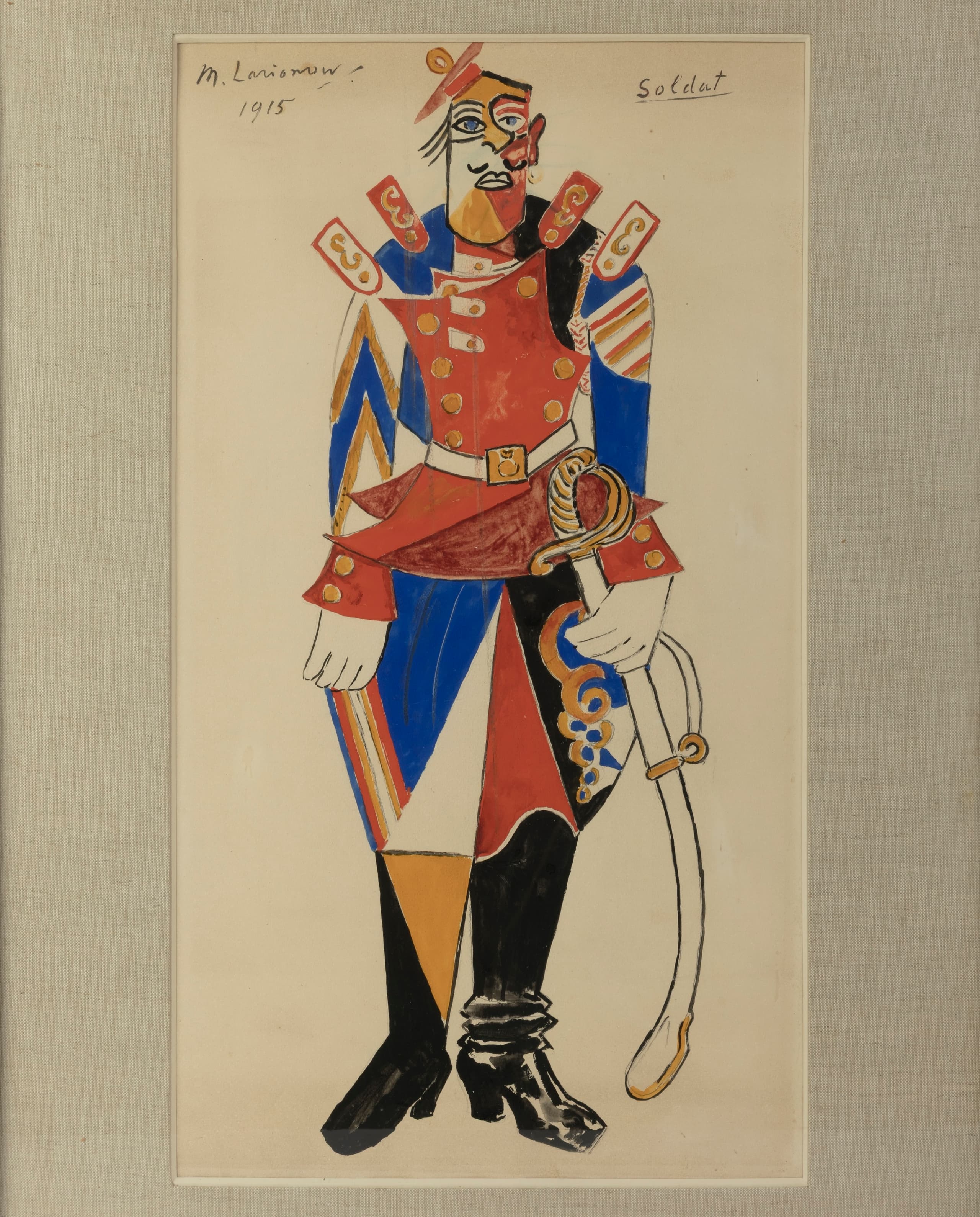
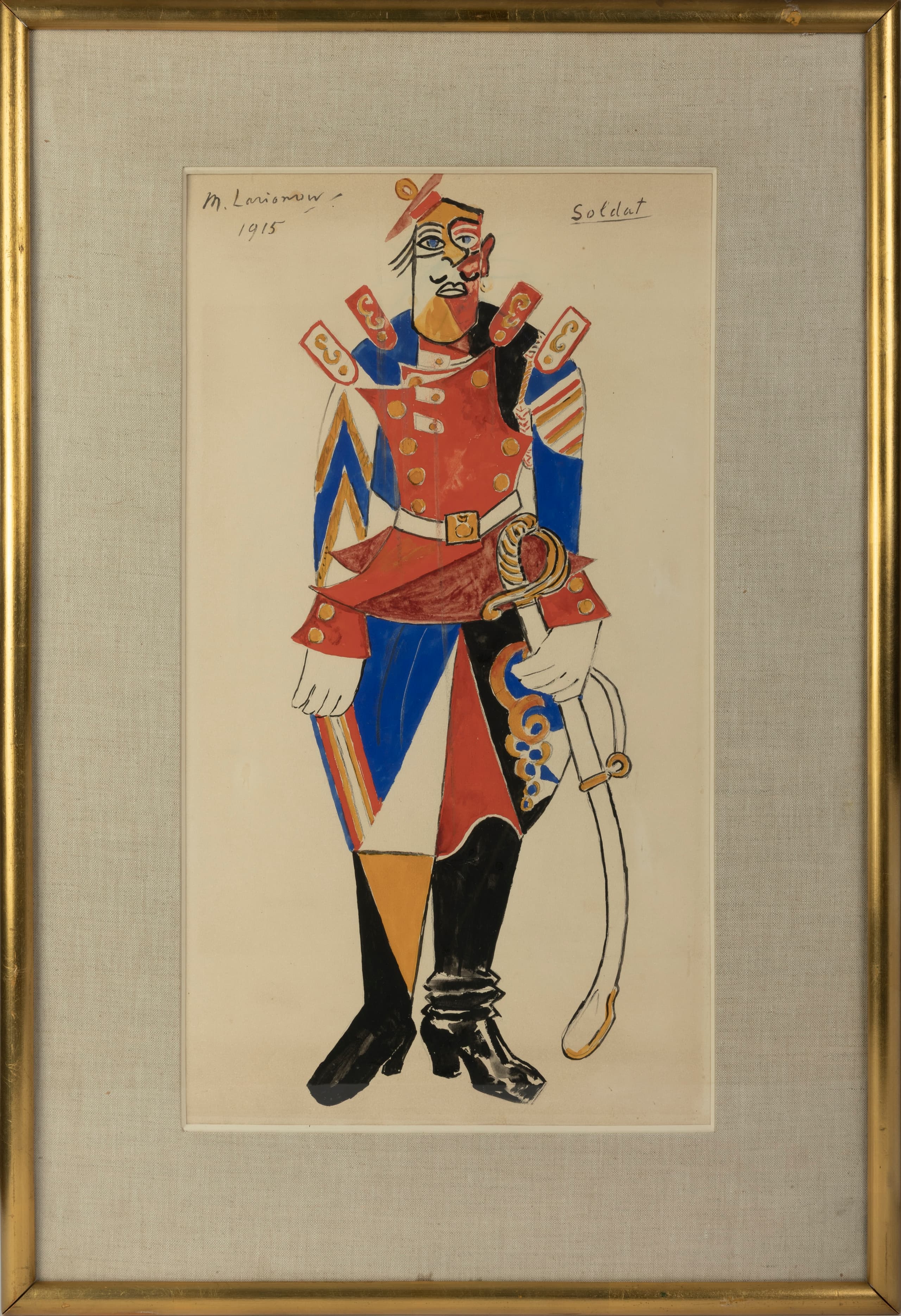
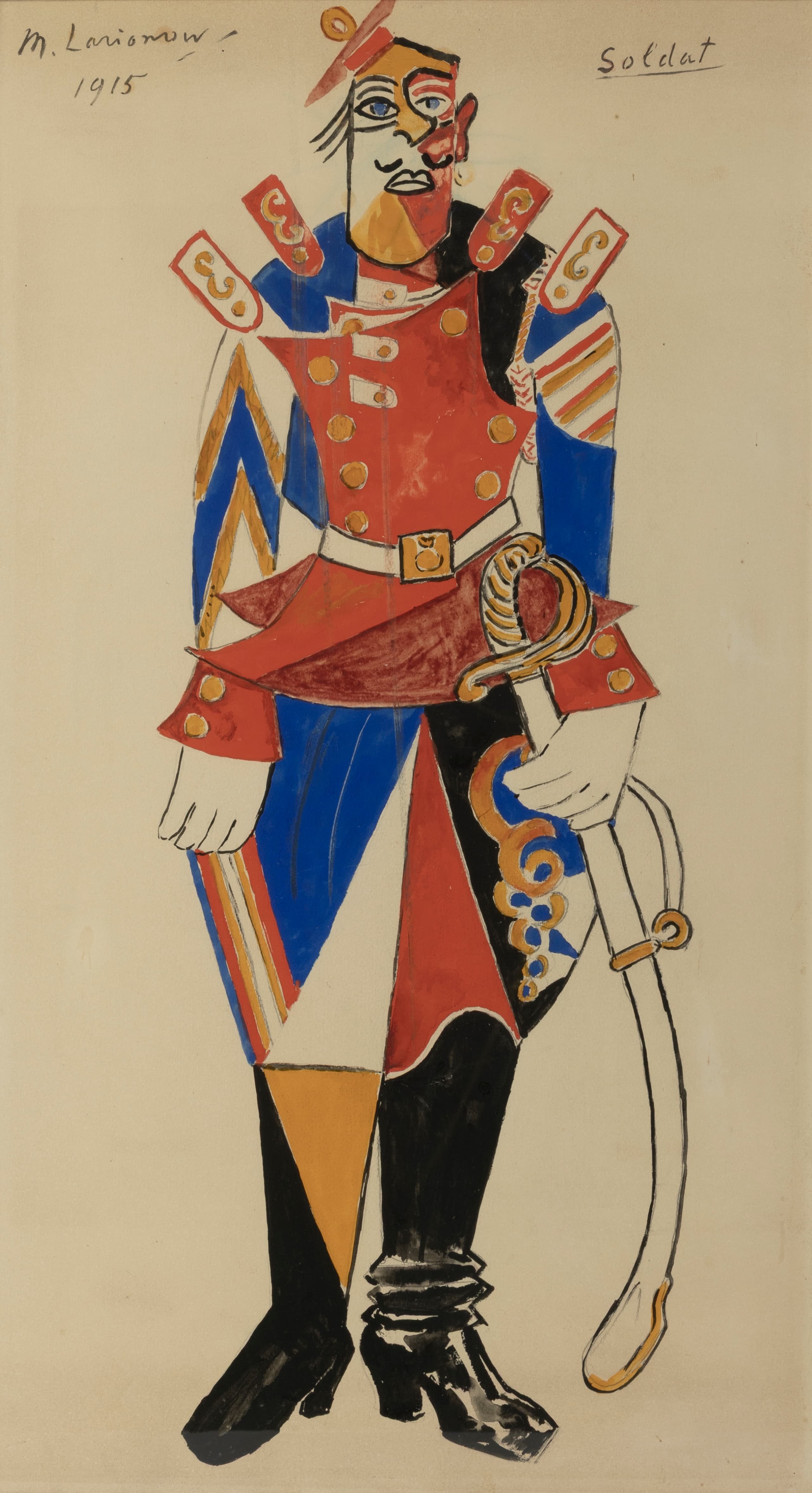
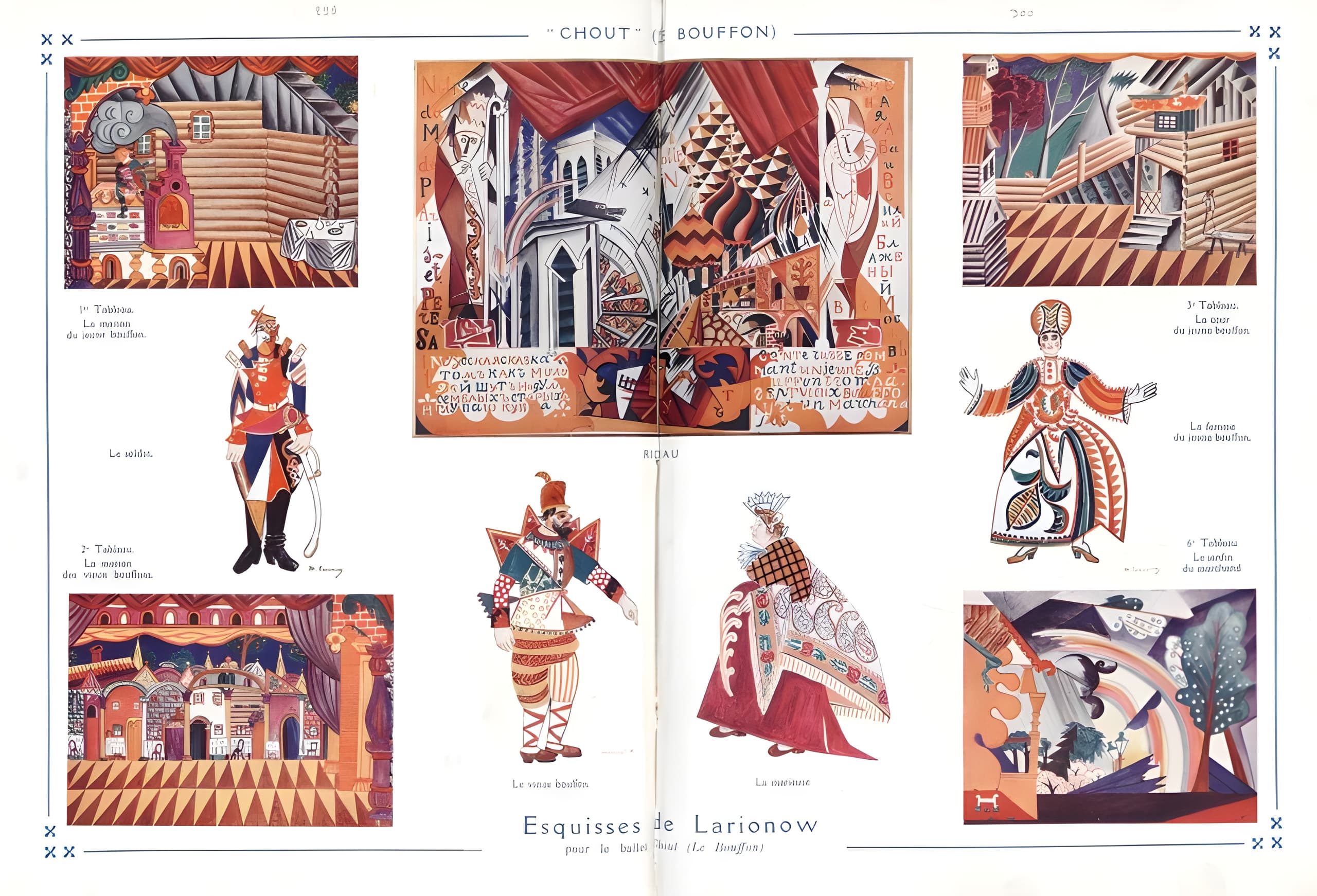
signed and dated ‘M. Larionow/ 1915’ (upper left), inscribed ‘Soldier’ (upper right)
gouache on paper
55.4 x 30.5 cm (à vue)
executed in 1915
PROVENANCE:
Private collection, France
Desbenoit-Fierfort et Associés (now: Nouel & Associés), Drouot – Richelieu, Paris, Tableaux et Sculptures Impressionnistes, XIXe et Modernes, Livres : Archives et Collection D’eraste Touraou, et a divers documentation et livres estampes tableaux modernes Ecole Belge et Ecole De Paris, 16.11.2011, lot 15
Private collection
LITERATURE:
Programme officiel des Ballets russes de Serge de Diaghilew: quatorzième saison, Théâtre de la Gaîté-Lyrique, mai 1921. Text by Jean Bernier (1894–1975) (illustrated in colour)
The present costume for a Soldier was created by Larionov in 1915 for the ballet ‘Jester’ (Chout), a one-act ballet in six scenes with five entr’actes by Sergei Prokofiev, to a libretto by the composer and Serge Diaghilev after Afanasyev’s Russian folktales.
The Chout was a unique production: Larionov not only designed but also staged it. Larionov developed his own system of recording choreography. His name appeared twice on the poster as artist-decorator and choreographer. Ilia Zdanevich, who came to Paris, wrote an article titled ‘Larionov the Choreographer.’
During the summer of 1915 Larionov prepared the designs, devising the libretto and visual concept and creating complex wire-framed costumes painted in imitation of lubok and folk toys, with bright ‘toy’ makeup for the performers.
Although the first version of the ballet was completed in 1915, the production—planned for May 1916—was postponed until after the First World War, and the premiere was delayed by six years.
The revised and expanded version was completed in 1920 and was ultimately first produced in its second version by the Ballets Russes, with designs by Mikhail Larionov and choreography by Larionov and Tadeusz Slawiński, and premiered on 17 May 1921 at the Théâtre de la Gaîté-Lyrique in Paris, conducted by Ernest Ansermet, with Slawiński as the ‘Chout’ and L. Sokolova as the ‘Choutikha’.
The ballet was well received, not least for its striking stage design.
The production was highly dynamic: sets moved in full view of the audience—the stove rolled out, tables shifted with plates and grotesquely oversized cutlery tied to them by ropes, and stagehands unrolled runner carpets.
The French ballet critic Léandre Veuillot wrote: “As for the design, the curtain, sets and costumes produce the feeling of a card game with the cards fanned and closed with a twist of the hand of a professional sharper: there is the impression of liveliness and of figures crushing and breaking to pieces (red and green, yellow and blue) and of desired naivety. They are laughed at, they are applauded, they are booed.”